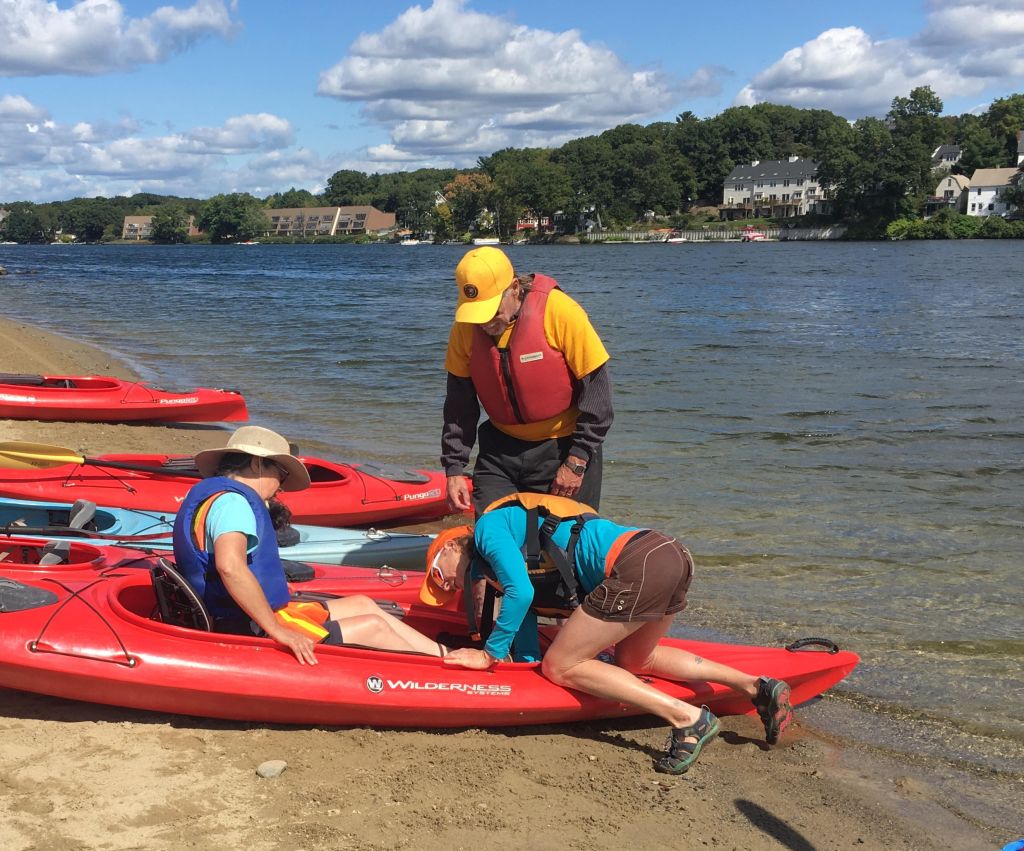
Kayaking can be magical. Some of us need support. Volunteers with the Blackstone Heritage Corridor helped me in and back out of the boat. The paddling? That was up to me.
Marjorie Turner Hollman helps authors self-publish their books. She is also a disability advocate, sharing information about Easy Walks (not too many roots or rocks, relatively level with firm footing, and something of interest along the way) in open space.Click to learn more.
Here are some lessons I’ve learned about asking for help/support, from years of practice. The recording I made here was first shared through Michael Whitehouse’sGrateful Growth Summit. Many thanks to Michael for spurring me to meet his challenge of creating a fifteen minute talk for this event. The recording has more “what to do” suggestions than are listed here.
“Why Learning to ask for help is a good thing…for your business”:
I’ve started writing a book on why learning to ask for help is a good thing… for your business, for your personal life, and for those you enlist to help. This post is not comprehensive. Below are a few tips that I will expand on as the manuscript is developed. Let me know if you have questions or comments, please!
Marjorie Turner Hollman helps authors self-publish their books. She is also a disability advocate, sharing information about Easy Walks (not too many roots or rocks, relatively level with firm footing, and something of interest along the way) in open space.Click to learn more.
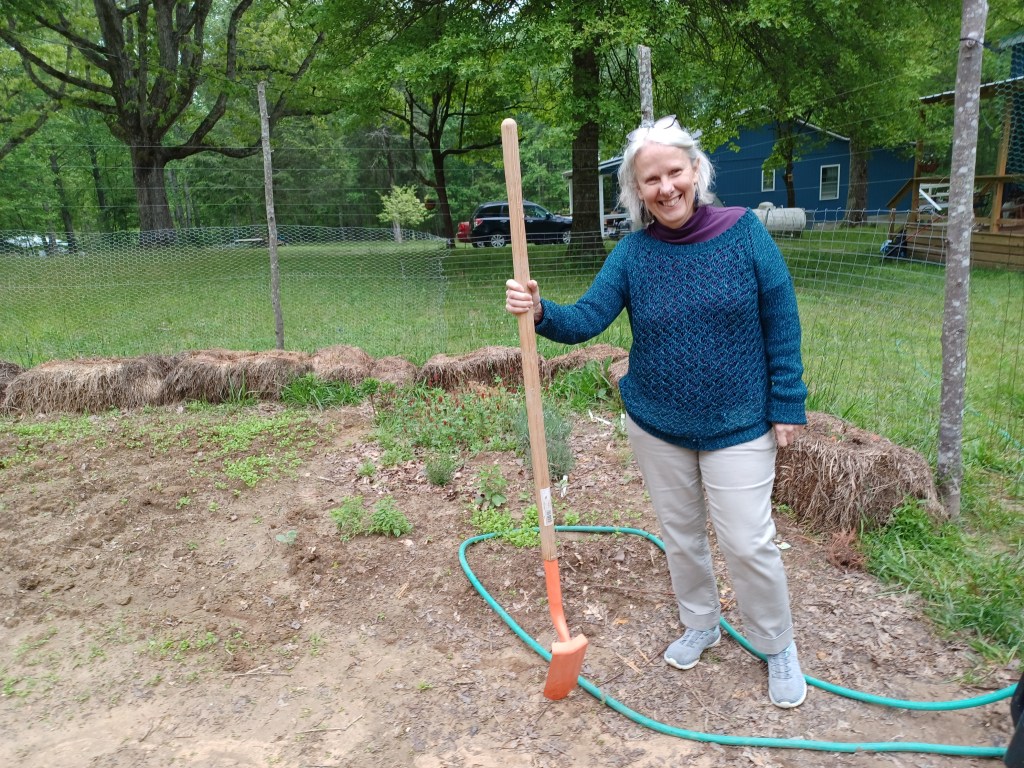
Something interesting can happen when we turn up old earth in a garden. Plowing a familiar furrow may lead us to encounter, when we’re lucky, something different, perhaps a pretty fragment of an old china plate or glass bottle.
We may worry, when writing, that we are covering old ground. Or, as teachers sharing the same lesson with different classes, we review the same concepts, over and over! However, the repetition itself may, without our realizing it, bring change into our lives. And that can make all the difference.
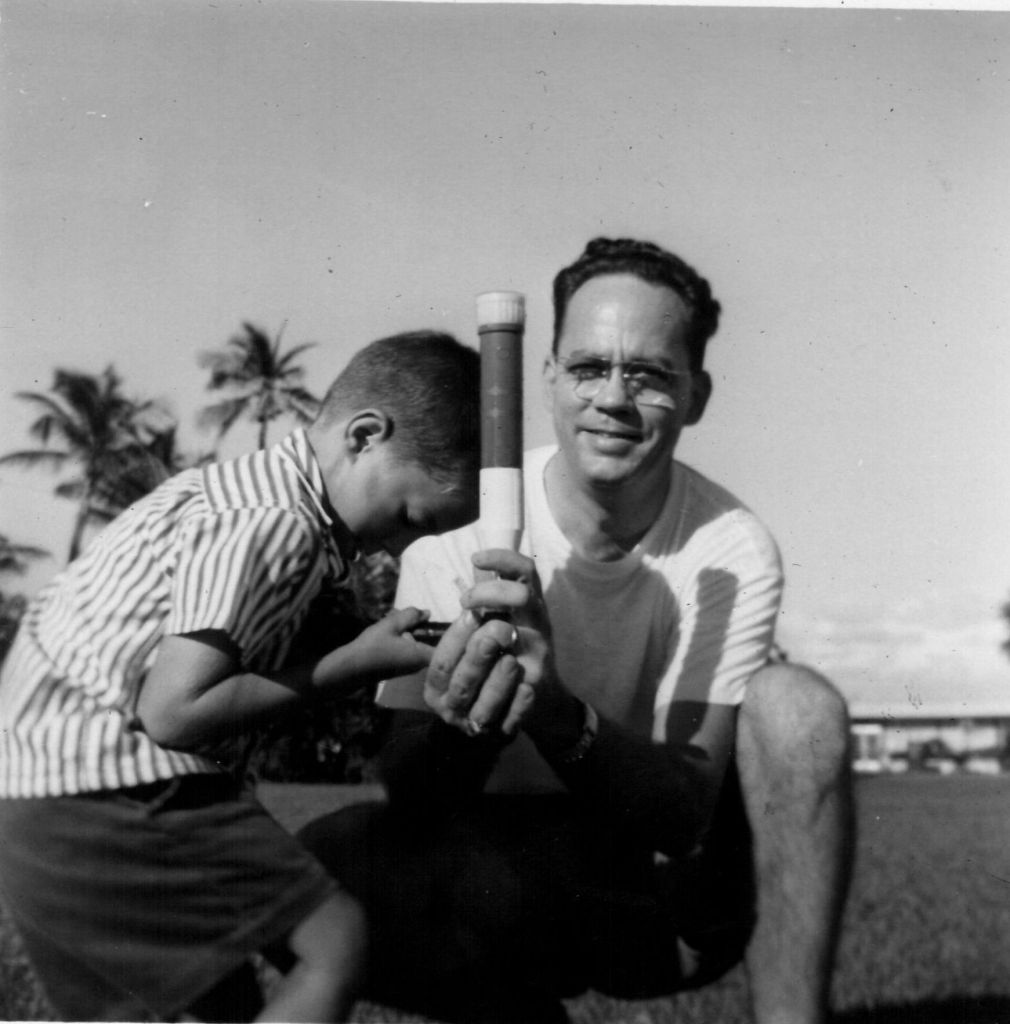
Dad helping my brother launch a water-filled rocket
LISTEN HERE:
Marjorie Turner Hollman helps authors self-publish their books. She is also a disability advocate, sharing information about Easy Walks (not too many roots or rocks, relatively level with firm footing, and something of interest along the way) in open space.Learn more.
My dad could do anything. Really. Whenever my siblings or I got stuck trying to complete any practical task, we turned to him, and predictably, he was able to fix, open, close, or repair it. Every single time.
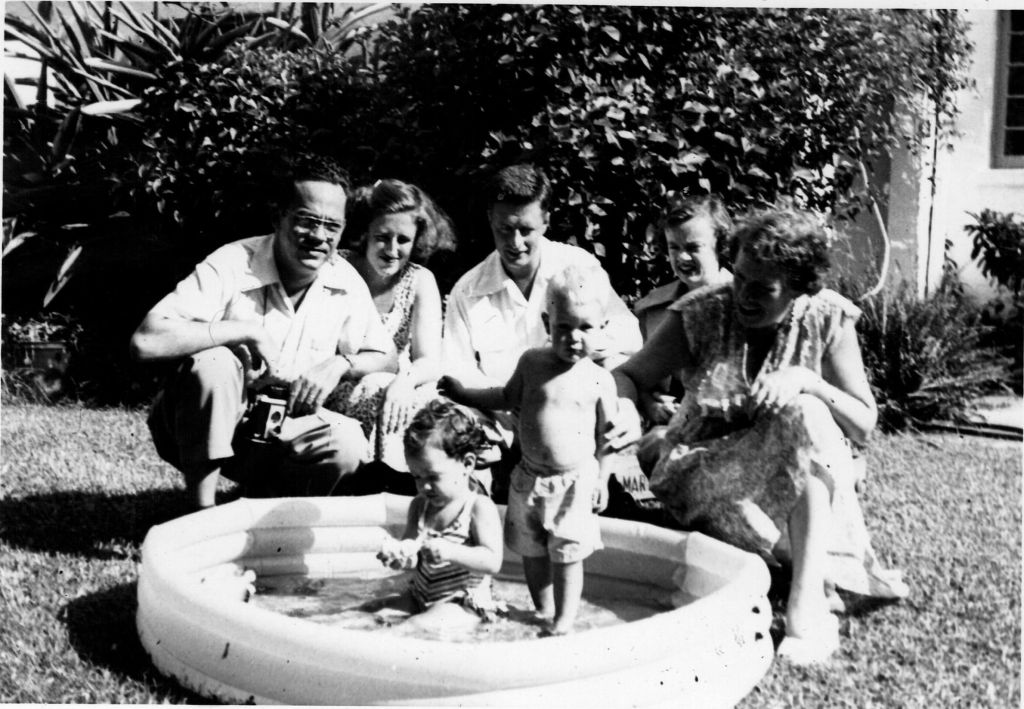
Dad and Mom on left, grands in pool, Ted and Betty, Grannie on the far right
LISTEN HERE:
Marjorie Turner Hollman helps authors self-publish their books. She is also a disability advocate, sharing information about Easy Walks (not too many roots or rocks, relatively level with firm footing, and something of interest along the way) in open space.Click to learn more.
The unfamiliar scent was overwhelming. I was suddenly a very young girl again and the wooden floor of my friends’ country kitchen had been transformed into polished terrazzo.
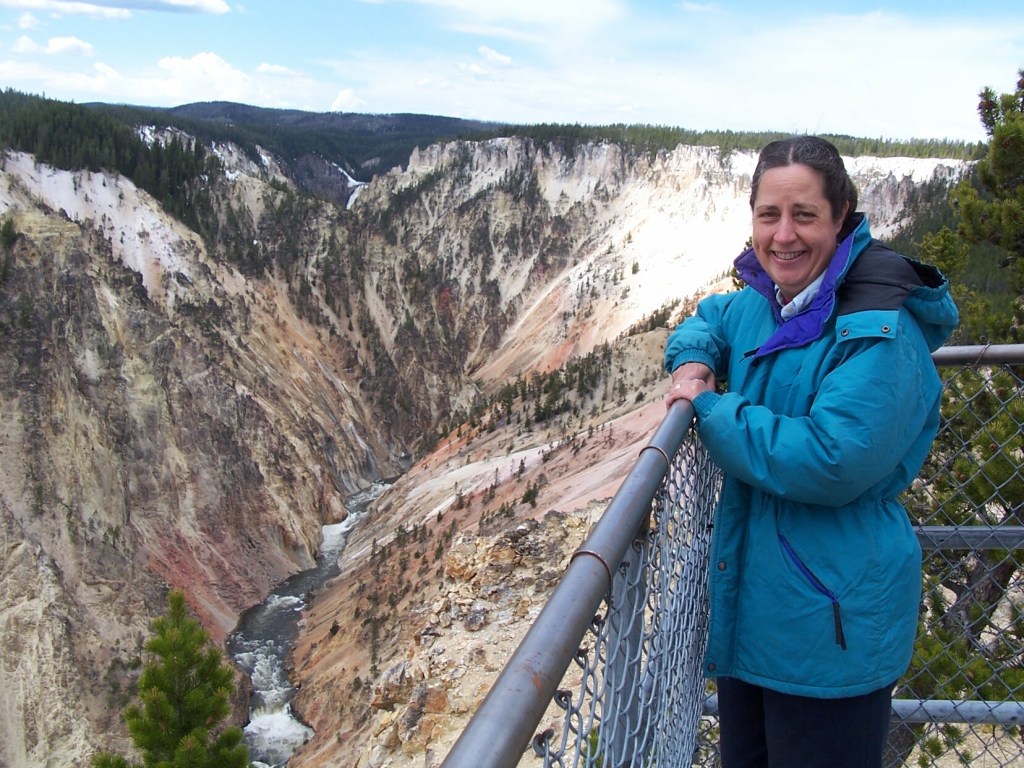
At the grand canyon of Yellowstone National Park. Some fears (like of heights!) are worth clinging to.
LISTEN:
Glancing through the glass window, she tucked an unruly lock of her dark, shoulder-length hair behind one ear. She leaned inside the office door, her dark eyes scanning the room; her knee-length skirt covered substantial hips.
“Marisol?” she asked, hoping my co-worker was nearby. My eyes darted down the piece of paper on my desk, hoping to fix on a useful phrase. “Marisol não está aqui,” I told her. Marisol isn’t here. I read with care from my “cheat sheet,” the unfamiliar syllables of Portuguese tumbling awkwardly off my tongue. The woman nodded, drew her head back and strode off.
Marjorie Turner Hollman helps authors self-publish their books. She is also a disability advocate, sharing information about Easy Walks (not too many roots or rocks, relatively level with firm footing, and something of interest along the way) in open space. Link to all Marjorie’s books.
LISTEN:
It’s better to give than to receive, so they say. Maybe you’ve heard this around the holidays, when gift-giving is a big thing. For children, like “share your toys!”, the phrase is often heard as a scold. Perhaps you were resentful that someone else got something you wanted. You might have felt disappointed in a gift you received and made the mistake of letting others know.
As we grow older and have more agency, the inclination to give can take on different dynamics.
Marjorie Turner Hollman helps authors self-publish their books. She is also a disability advocate, sharing information about Easy Walks (not too many roots or rocks, relatively level with firm footing, and something of interest along the way) in open space. Link to all Marjorie’s books.
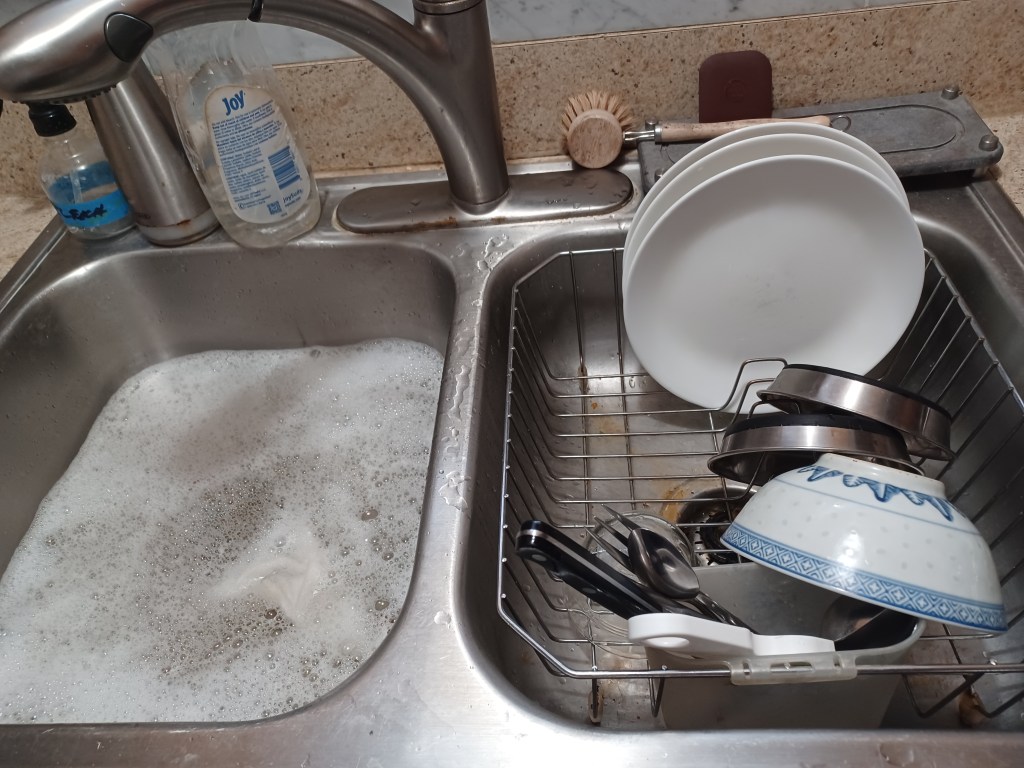
Another successful exercise of Zen Dishes
LISTEN HERE:
I returned to my home weakened, yet desperate to do anything. After surviving brain surgery that left my right side paralyzed, I was sent to a rehabilitation facility for two weeks. During my stay the staff had insisted we inmates (patients, that is) perform what they called “standing therapy.” We were encouraged, teased, and cajoled into standing for periods of fifteen minutes at a time. Most of my fellow inmates were stroke victims, almost all elderly, and they needed a lot of cajoling. I was much younger than the others, needed no cajoling, and resented the undisguised condescension in the therapists’ voices.
GUEST POST: Neil Dailey lives in the suburbs of Boston, Massachusetts, where his family has deep roots. He enjoys caring for and cooking for his family. He also enjoys gardening and collecting ephemera. An eclectic range of books fill his home. Henry Van Dyke’s “Poems of Tennyson,” “The Picture of Dorian Gray,” Michael Connolly, Nikos Kazantzakis, Robert Wilson, Martin Limón, Anthony Everitt’s biography of Hadrian, J.T. Maxwell’s “Red Brick Road,” Faulkner, and Joseph O’Callahan’s “A History of Medieval Spain” all find space. His battered copy of “Candide,” alas, crumbled. He is also a lawyer, and practices criminal defense law full time.
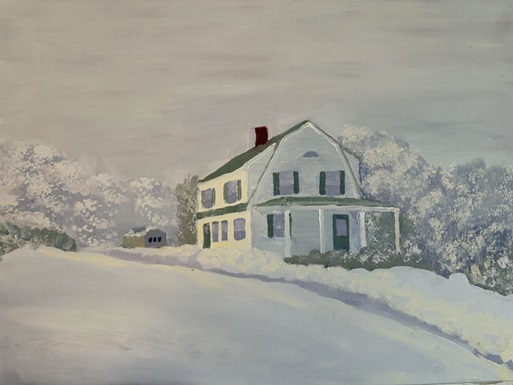
Here’s a peek at the latest creation from my “art studio.” I’ve been trying my hand at oil on canvas again. The image is a place I knew as a child as “Desmond Farm.”
Fragments of stone wall and the granite outcroppings scarred the land. Each stone seemed to appear from nowhere without logic or purpose. Even so, the stones appeared with insistent determination. When I heard the old New England farmer’s joke, it made sense. “This is the best land to farm, if you want to harvest stones.” The rocks and stones jostled and interrupted an uneven landscape. In summer, the land bristled brown and gold with grasses and dry prickly weeds which waved and shimmered in the bright summer sun.
Marjorie Turner Hollman is an author, creator, observer, and disability advocate who loves the outdoors. Link to all Marjorie’s books.
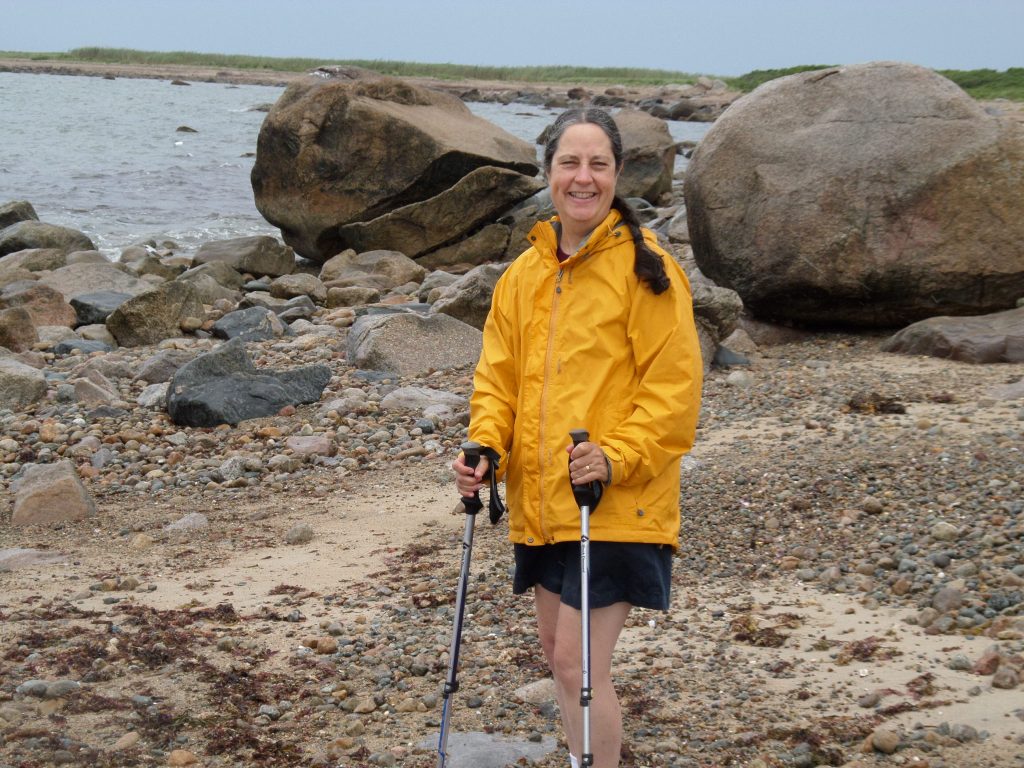
Visiting Gooseberry Island on a warm day (note the shorts–not what I wear in winter)
LISTEN HERE:
One of my favorite pieces of shoreline is on the southeast coast of Massachusetts. New England is well known for its rugged, rocky coast. This little spit of land, Gooseberry Island, juts out into Long Island Sound and has some sandy beaches and oversize boulders. A causeway allows visitors to drive out onto the island.
Rustic diving board alongside the Trestle Trail, Coventry, RI
I’ve most often been the one who waits for others to jump into any activity before I take the plunge; much more comfortable being a spectator than willing to take the risk of looking silly. But there came a time in high school when I grew bored with this reflexive behavior. This story began as a guest post for Sarah White, published in her blog, True Stories Well-told. Here’s the original article link: http://truestorieswelltold.com/2015/06/16/to-watch-or-to-participate/
Out on the Trestle Trail, Coventry RI with our adaptive tandem
I was reminded of this story when I spotted a diving board alongside the Trestle Trail in Coventry, RI as I was pedaling on the back of our adaptive tandem bicycle.
Spectator or ParticipantFirst published in “True Stories Well Told,” website. June 15, 2015
In my last year of high school I felt restless. When my friends told me the swim team needed an additional springboard diver to constitute a team for competition, with their encouragement, I “dove” in.
Yeah, no….. Clinging to the fence overlooking the Grand Canyon of Yellowstone. No joke, it made me cry…
I have an aversion to heights—something happens in my gut when I peer over the edge of a seeming abyss.
After saying “yes” to trying spring board diving, here I was standing on the edge of a diving board, being asked to increase my distance from the water. When I first stood at the end of the 1-meter diving board and was urged, “Jump up,” all I wanted to do was to get down as fast as possible.
Many of my early school years were spent as a spectator. I was always the one to wait, and to let others go first. Now I wanted to see what might happen when I tiptoed into this new experience.
That’s where Mr. Crane came in. The parent of one of my fellow divers, he arrived after work each afternoon in his coat and tie, ready to watch and advise us in our diving efforts. As soon as he stood at the edge of the pool we began taking our turns on the board in earnest.
Among us were two state diving champions, another who came in close to top in the state, a few experienced divers, and me. It didn’t matter—we each got his undivided attention, precise suggestions, and his encouragement to try again.
For an entire year, I headed to the pool each day after school, wriggled into my bathing suit, and hit the water. Learning each new dive felt terrifying, and six different “dives” were required to compete. Mr. Crane metaphorically held my hand as I struggled to learn each of the main dives: back dive, front dive, inward, reverse, half twist, and forward 1½. By the end of the year, I had made it. I could complete these six dives, more or less, with some degree of skill.
One day another coach approached me, asking if I would like to add a few more dives to my list so I could help the team participate in a larger event. “Uh, no, I don’t think so,” was my answer. I’d reached the limit of my short-lived springboard diving career.
When I left for college, people wondered if I would continue to dive. Not a chance. College diving starts with the 3-meter board and moves on up to the 10-meter platform—thirty feet up. This was not my cup of tea at all. But I had learned that I could step out of the crowd, stop being a spectator, and participate.
I later learned that Mr. Crane had never been on a diving board in his life. I had no idea whether he could even swim. It didn’t matter. He paid attention, understood how bodies moved, and was able to teach us. Whether he could dive or not was immaterial. He stood at the pool’s edge in his coat, tie, and business trousers, and described what we each needed to do to be more skillful, and better able to cut a clean line into the water as we dove. And it worked.
I have often looked back on this time, and felt such deep gratitude, not only for those friends who encouraged me to try, but for Mr. Crane, who offered me his attention, regardless of what I might do with it. He was my model for what teaching is about—showing up, being there, offering encouragement, and not worrying about the end result. I have carried these experiences with me throughout many different life circumstances.
Another lesson learned? That, like Mr. Crane, I didn’t always have to go out on a limb or a diving board to be able to help others. With my feet planted firmly on the ground I can let my eyes, my voice, and my heart travel wherever others need me.
Many thanks to Robert (Bobbie) Stones, Jeff Barnett, Kirk Seitz, Annie Kepler, Donnie Crane, and Mr. Crane, who believed in me way back when.