Marjorie Turner Hollman is an author, creator, observer, and disability advocate who loves the outdoors. Link to all Marjorie’s books.
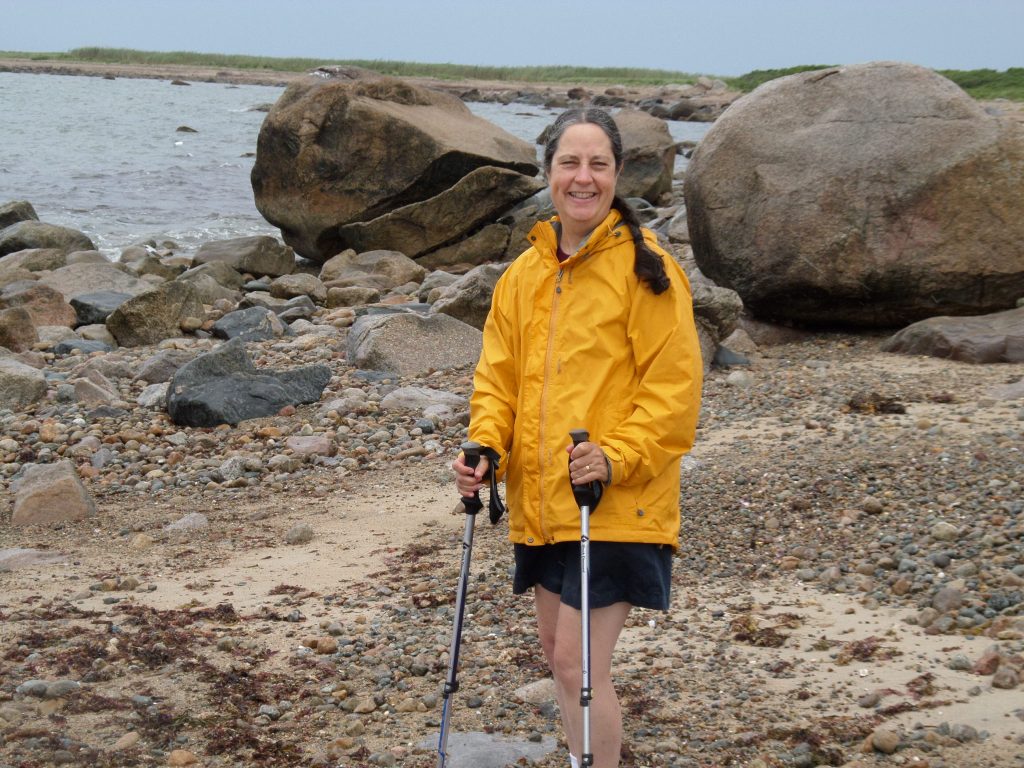
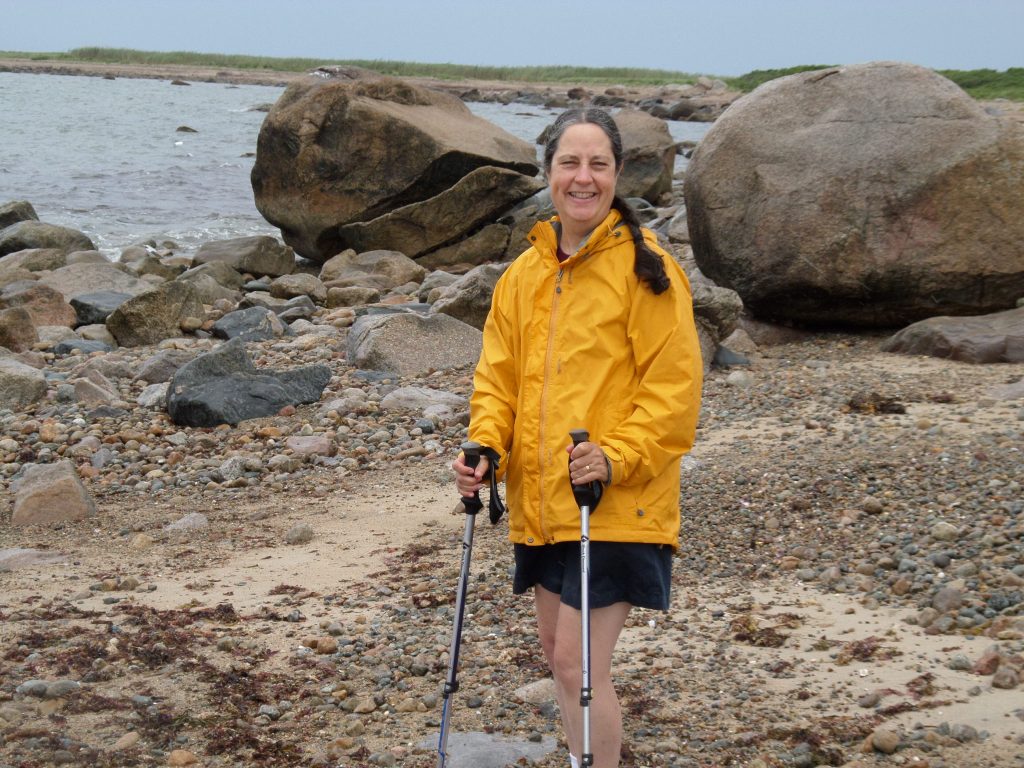
Visiting Gooseberry Island on a warm day (note the shorts–not what I wear in winter)
LISTEN HERE:
One of my favorite pieces of shoreline is on the southeast coast of Massachusetts. New England is well known for its rugged, rocky coast. This little spit of land, Gooseberry Island, juts out into Long Island Sound and has some sandy beaches and oversize boulders. A causeway allows visitors to drive out onto the island.
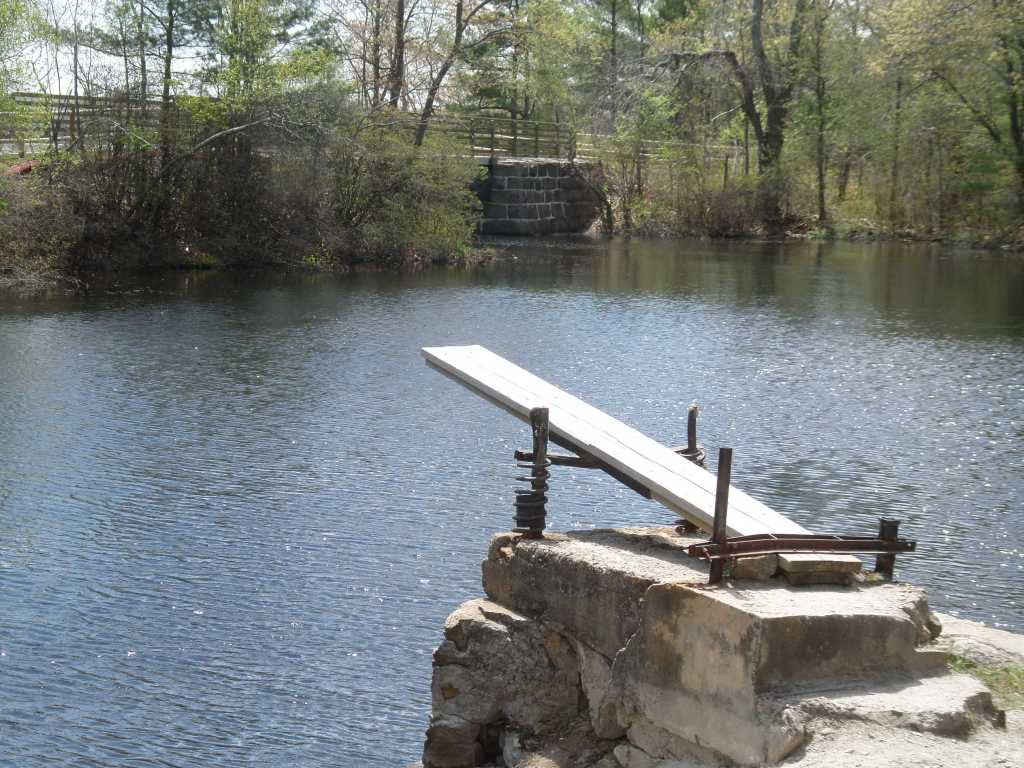
Rustic diving board alongside the Trestle Trail, Coventry, RI
I’ve most often been the one who waits for others to jump into any activity before I take the plunge; much more comfortable being a spectator than willing to take the risk of looking silly. But there came a time in high school when I grew bored with this reflexive behavior. This story began as a guest post for Sarah White, published in her blog, True Stories Well-told. Here’s the original article link: http://truestorieswelltold.com/2015/06/16/to-watch-or-to-participate/
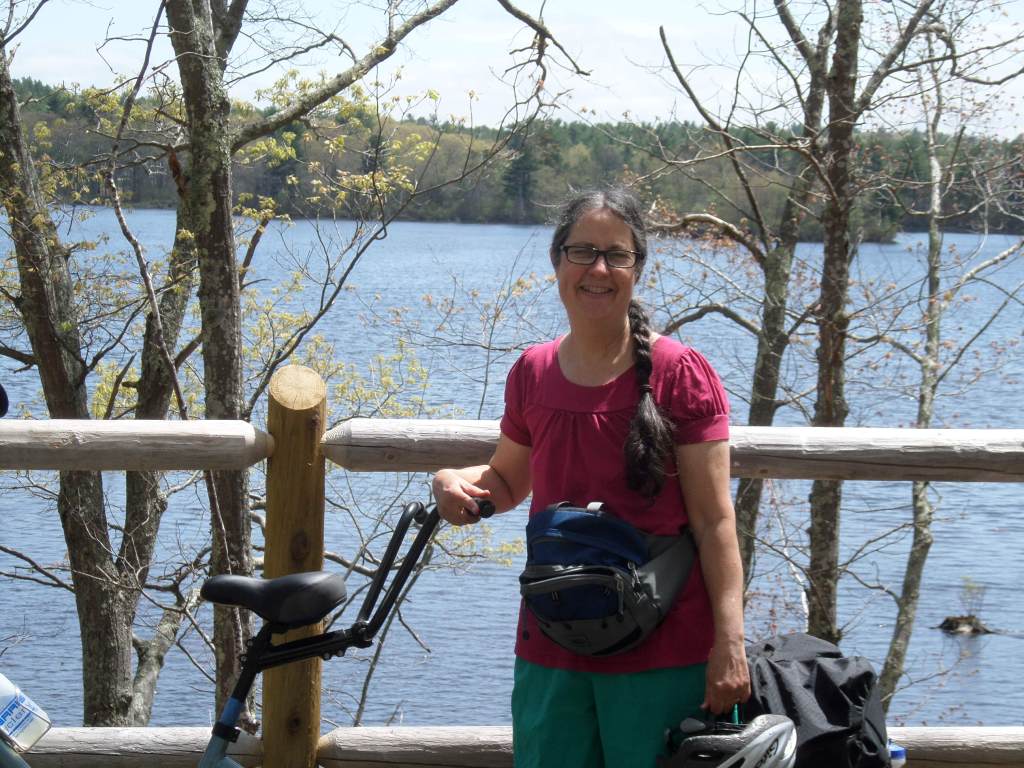
Out on the Trestle Trail, Coventry RI with our adaptive tandem
I was reminded of this story when I spotted a diving board alongside the Trestle Trail in Coventry, RI as I was pedaling on the back of our adaptive tandem bicycle.
Spectator or ParticipantFirst published in “True Stories Well Told,” website. June 15, 2015
In my last year of high school I felt restless. When my friends told me the swim team needed an additional springboard diver to constitute a team for competition, with their encouragement, I “dove” in.
Yeah, no….. Clinging to the fence overlooking the Grand Canyon of Yellowstone. No joke, it made me cry…
I have an aversion to heights—something happens in my gut when I peer over the edge of a seeming abyss.
After saying “yes” to trying spring board diving, here I was standing on the edge of a diving board, being asked to increase my distance from the water. When I first stood at the end of the 1-meter diving board and was urged, “Jump up,” all I wanted to do was to get down as fast as possible.
Many of my early school years were spent as a spectator. I was always the one to wait, and to let others go first. Now I wanted to see what might happen when I tiptoed into this new experience.
That’s where Mr. Crane came in. The parent of one of my fellow divers, he arrived after work each afternoon in his coat and tie, ready to watch and advise us in our diving efforts. As soon as he stood at the edge of the pool we began taking our turns on the board in earnest.
Among us were two state diving champions, another who came in close to top in the state, a few experienced divers, and me. It didn’t matter—we each got his undivided attention, precise suggestions, and his encouragement to try again.
For an entire year, I headed to the pool each day after school, wriggled into my bathing suit, and hit the water. Learning each new dive felt terrifying, and six different “dives” were required to compete. Mr. Crane metaphorically held my hand as I struggled to learn each of the main dives: back dive, front dive, inward, reverse, half twist, and forward 1½. By the end of the year, I had made it. I could complete these six dives, more or less, with some degree of skill.
One day another coach approached me, asking if I would like to add a few more dives to my list so I could help the team participate in a larger event. “Uh, no, I don’t think so,” was my answer. I’d reached the limit of my short-lived springboard diving career.
When I left for college, people wondered if I would continue to dive. Not a chance. College diving starts with the 3-meter board and moves on up to the 10-meter platform—thirty feet up. This was not my cup of tea at all. But I had learned that I could step out of the crowd, stop being a spectator, and participate.
I later learned that Mr. Crane had never been on a diving board in his life. I had no idea whether he could even swim. It didn’t matter. He paid attention, understood how bodies moved, and was able to teach us. Whether he could dive or not was immaterial. He stood at the pool’s edge in his coat, tie, and business trousers, and described what we each needed to do to be more skillful, and better able to cut a clean line into the water as we dove. And it worked.
I have often looked back on this time, and felt such deep gratitude, not only for those friends who encouraged me to try, but for Mr. Crane, who offered me his attention, regardless of what I might do with it. He was my model for what teaching is about—showing up, being there, offering encouragement, and not worrying about the end result. I have carried these experiences with me throughout many different life circumstances.
Another lesson learned? That, like Mr. Crane, I didn’t always have to go out on a limb or a diving board to be able to help others. With my feet planted firmly on the ground I can let my eyes, my voice, and my heart travel wherever others need me.
Many thanks to Robert (Bobbie) Stones, Jeff Barnett, Kirk Seitz, Annie Kepler, Donnie Crane, and Mr. Crane, who believed in me way back when.
This happened many years ago, but it still makes me smile.
My daughter came home from her last track meet of the year. As we ate dinner together she told me about the track meet, and then…
“Oh, that speech in English class today? Guess what? Somebody else also brought in chocolate chip cookies to demonstrate.”
“Oh?” I prompted, attempting to conceal my anxiety that this was going to turn into a catastrophe. (I have a habit of imagining disaster at every turn, but have never been very good at predicting catastrophes that have actually occurred.) There have been some doozies, just not ones I ever imagined.
I was a contrary child, picky about many so-called “normal foods” such as peas and carrots, green beans, broccoli or onions. I did, however, adore liver, spinach, and prunes. It was not an easy childhood.
“Hit ‘em harder, Mom,” I was said to have coached my mother. We were visiting my mother’s great Aunt Em, known to all, including her grandchildren, simply as Aunt Em. She was also known as “The aunt who lived in her barn.”
She had invited us to gather some quail from her dovecote for our dinner. My mother agreed but worried that my sensitive spirit might be disturbed by seeing small birds killed for our meal. Little did she know….
“Now I know who my real friends are.” We’ve probably all heard this; maybe we’ve said it ourselves. I know I’ve thought it. That “Now” can apply to countless situations. The shock, hurt, and often the bitterness conveyed by these words are transparent.
When encountering someone I had lost touch with, the story they share with me is often of an earth-shaking life change: a family death, divorce, illness, becoming a family caregiver. Each circumstance involves upheaval, with increased demands that feel overwhelming. These encounters often end with “Now I know…” A nod, a shrug, affixing a sad smile on my face is about all I can manage to offer.
It’s easy to feel outrage toward those apparently unfeeling friends, family members, or even anonymous government entities who let us down. No matter the level of support we do receive, in these crises, nothing ever feels like it is enough.
I’ve had time to think about this predicament a lot while learning to live in a changed body/changed life myself. Many loved ones did step in (repeatedly). New people entered my life (eventually). And yet, I am able to see how my life has played out only in retrospect. In the midst of big life changes it is usually impossible to imagine anything changing. But it will.
This blog and my books often make note of my challenges in getting outside. (Total paralysis on my right side from life-saving brain surgery that has partially resolved.) Many of you have your own reasons for seeking out Easy Walks. So… what has made the difference in helping me get outside safely? Family, yes. Friends, yes. People who are willing to drive me to far-flung destinations, yes. However, learning how to best use physical supports to aid me in walking outdoors has been a more challenging quest. Tools I have found useful have varied as my body has healed and become capable of doing more on my own.
When I returned home from the hospital after brain surgery in 1993, I did a great deal of sitting. Getting across a room was an effort; reaching the other end of the house to use the bathroom was a major undertaking. I spent a lot of time observing my healthy, active children and visiting with neighbors from my cushioned rocker in our living room.
By my side, ready at a minute’s notice, was the cane I had brought home from the hospital. Ugly stainless steel, four little feet at its base to provide better balance, this cane remained standing even when I could not.
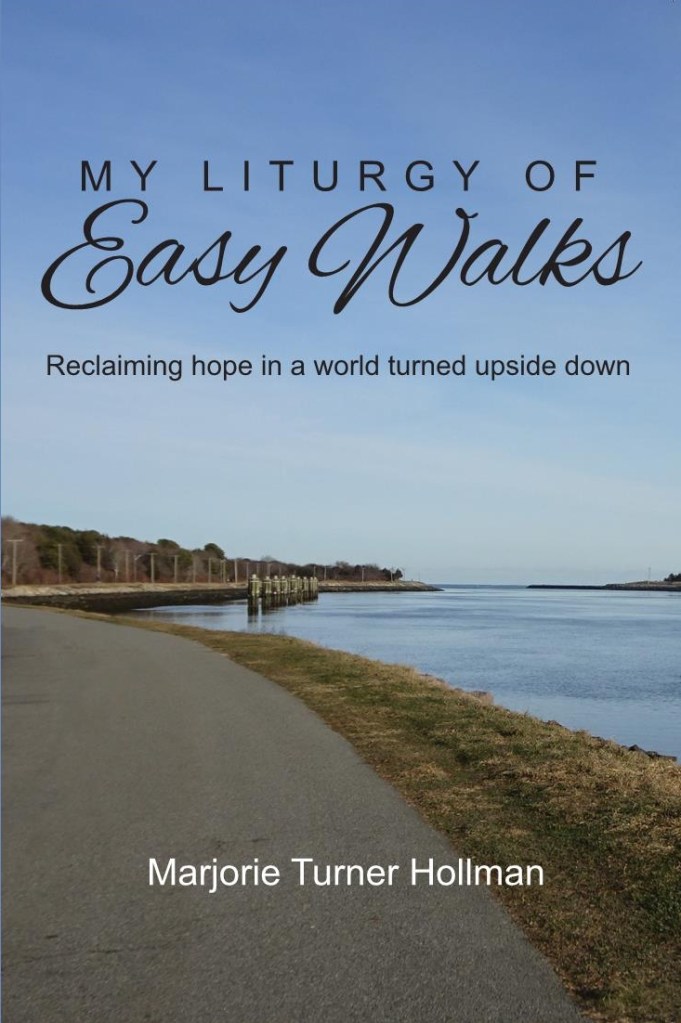
One of the essays in my memoir, My Liturgy of Easy Walks: Reclaiming hope in a world turned upside downrecalls a childhood game we played in the midst of one Florida summer. My siblings, friends and I gathered each night in the South Florida heat, shut our eyes tight and spun in circles. One person sat out the game, perched on the wall, keeping watch over us. We took turns climbing up onto the wall, assuming the role of watcher. When up on the wall we kept our eyes open, ready to alert anyone wandering near the street or too close to the wall.
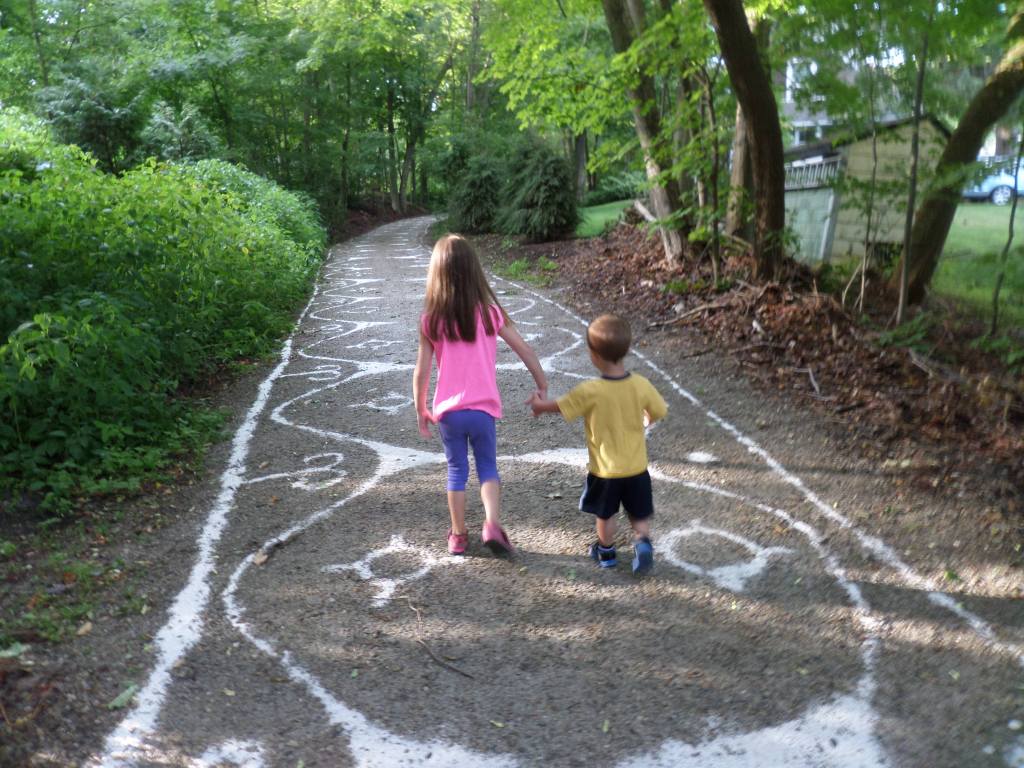
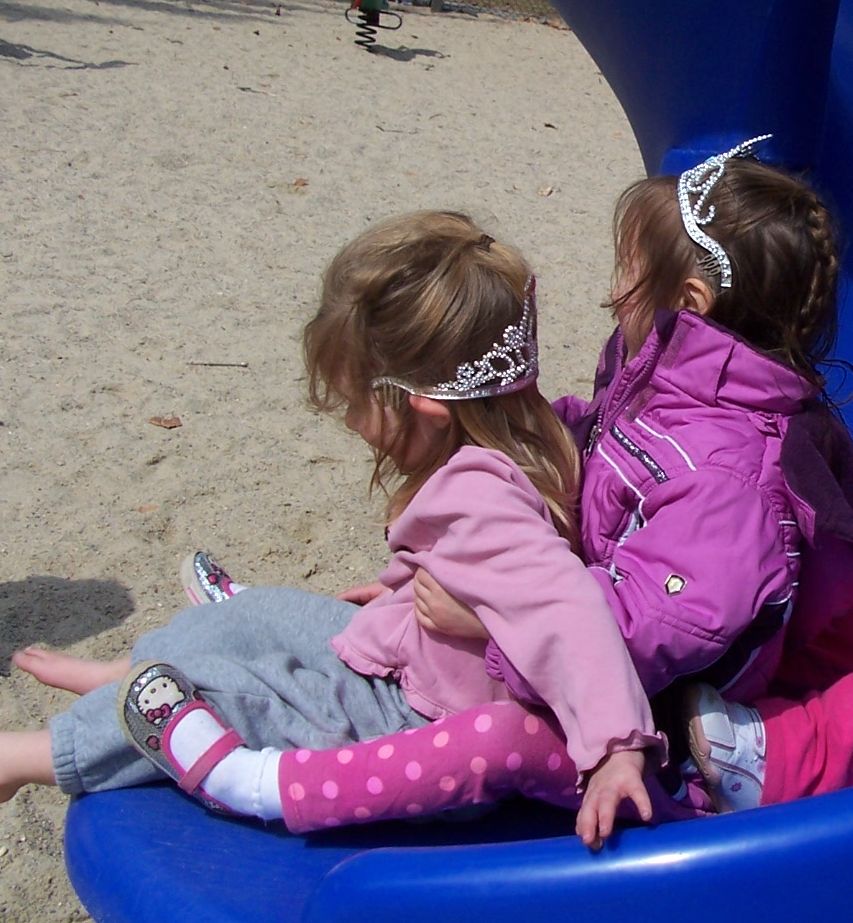
Going in circles or zooming down a slide, kids just want to have fun
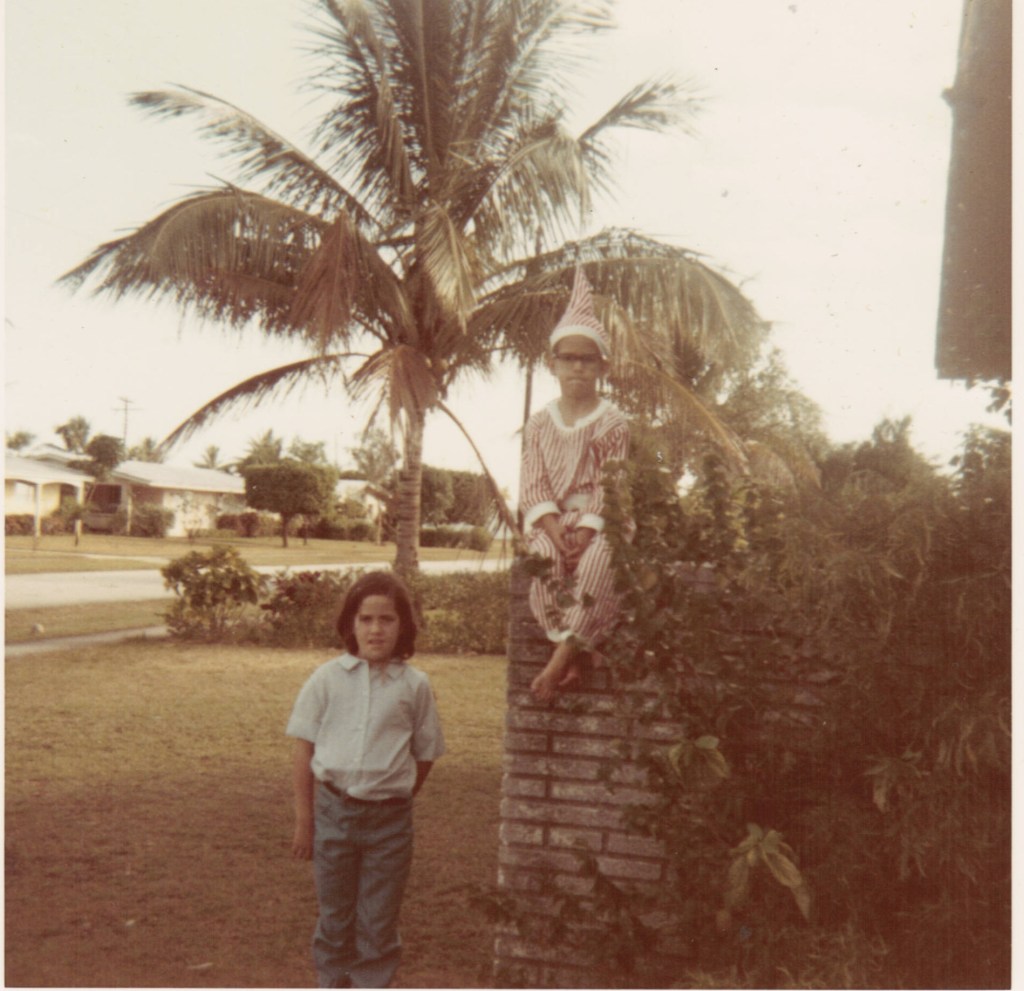
I recently found a picture of my younger brother sitting on that wall, with my younger sister standing next to him. Sometimes a photo can make the difference in understanding a story…or not. Here’s the essay, just one of many included in the book. Enjoy.
Watching
The basic premise of the game, that summer of 1965 in South Florida, was for all of us to shut our eyes and turn around in circles in our front yard. Our goal was to keep spinning till we grew dizzy. A designated “watcher” sat on the five-foot-high brick wall that jutted a few feet out into my parents’ yard. The watcher’s job was to keep their eyes open and warn spinning children if they drew too close to the wall, or ventured near the street.
Years ago I was living in a house with constant construction upheaval. The house was a “fixer-upper” and when we moved in I had little idea what that would mean. The tasks required to make the house stable and functional were endless. Clearing the mess and dust felt overwhelming so most cleaning was left undone. It was only when the marriage ended and construction ceased that I felt in my bones how hard it had been to live with constant upheaval.