We visited the Marginal Way in Ogunquit on an overcast spring weekend. It was given this name because it brings visitors to the “margin” between land and sea.
Warmer days offer a great excuse to get outdoors (as though we need an excuse). Grass is poking up through the soil. Maple trees are setting out buds that trim the woods’ edges with a reddish hue. My spring favorite, skunk cabbage, unfurls its shiny, rubbery looking shoots on the edge of, and sometimes in the middle of woodland streams and wetlands.
You probably know what someone means when they say they are headed over to the local rail trail. These paved or stone dust developed paths, rail trails, have become a generally recognized part of modern life. The transformation of abandoned rail beds into walkable or bikeable paths has created a growing network of trails intended for recreational walking, bicycling, and other non-motorized uses.
The Stanley Woolen Mill is one among many textile mills that used to create valued textile products and provided essential employment throughout New England. The mills went into decline in the early 20th century and most of the infrastructure of these mills has been put to alternate use, abandoned, or demolished.
Call us contrarian, but we much prefer visiting beaches almost any other time than summer. Off season, beaches are uncrowded, parking is much less problematic, and you are quite likely to spot migrating waterfowl just off shore. For all these reasons and more we set off on a brisk, windy, March day to explore Napatree Conservation Area at Watch Hill, Westerly, RI. The Watch Hill Conservancy holds a conservation easement for this area. Here’s a link that can answer many frequently asked questions about Napatree.
Along the way in our travels we have spotted signs that make us laugh. My guess is that humor was not the intention when the sign was put up. Maybe it’s just our wacky perspective on life, but whatever the cause, these signs have made us stop, think, and often giggle. I share these photos with you in the hope that they will bring a smile. Perhaps you’ll spot some humor on the trail in your travels too.
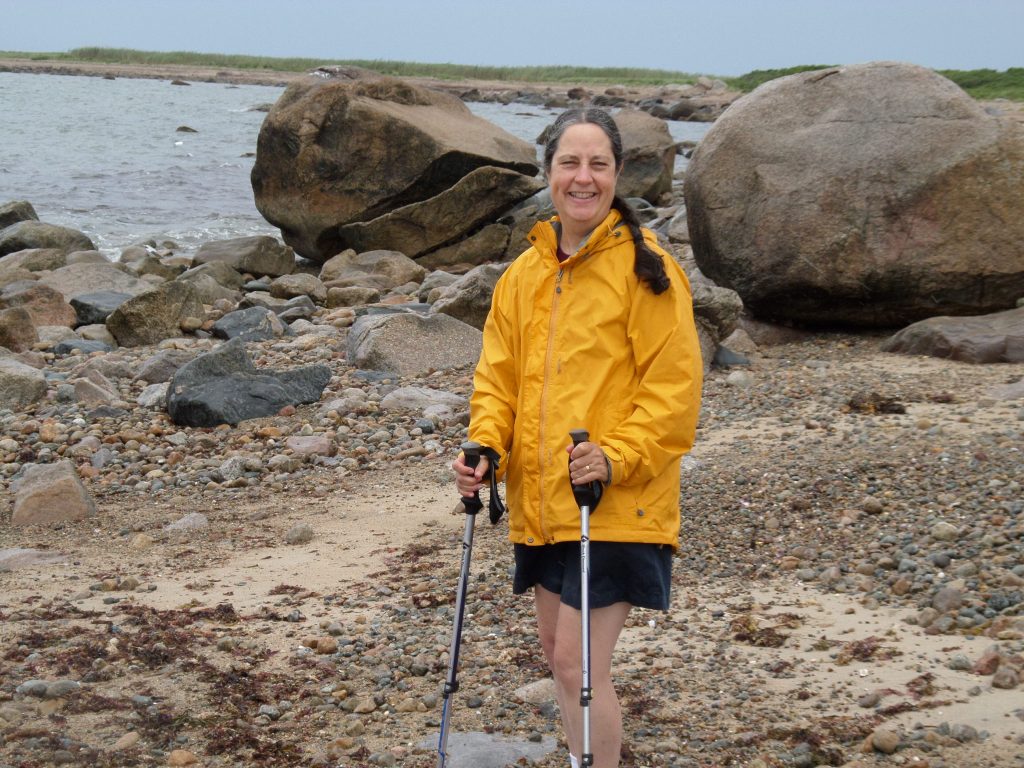
This blog and my books often make note of my challenges in getting outside. (Total paralysis on my right side from life-saving brain surgery that has partially resolved.) Many of you have your own reasons for seeking out Easy Walks. So… what has made the difference in helping me get outside safely? Family, yes. Friends, yes. People who are willing to drive me to far-flung destinations, yes. However, learning how to best use physical supports to aid me in walking outdoors has been a more challenging quest. Tools I have found useful have varied as my body has healed and become capable of doing more on my own.
When I returned home from the hospital after brain surgery in 1993, I did a great deal of sitting. Getting across a room was an effort; reaching the other end of the house to use the bathroom was a major undertaking. I spent a lot of time observing my healthy, active children and visiting with neighbors from my cushioned rocker in our living room.
By my side, ready at a minute’s notice, was the cane I had brought home from the hospital. Ugly stainless steel, four little feet at its base to provide better balance, this cane remained standing even when I could not.
This was our first visit to the eastern shore of Newfoundland. No matter how much research we do, we always find more that surprises us. This is the joy and challenge of traveling to new places.
A highlight of our trip to Newfoundland was returning to Gros Morne National Park on Newfoundland’s western coast. When visiting a place for the first time we often say, “We need to come back.” Much less often are we able to say, “It’s so good to be back,” especially when referring to more far-flung destinations. At the bottom of this article are links to previous posts on our earlier visit to Gros Morne.



 Marjorie Turner Hollman