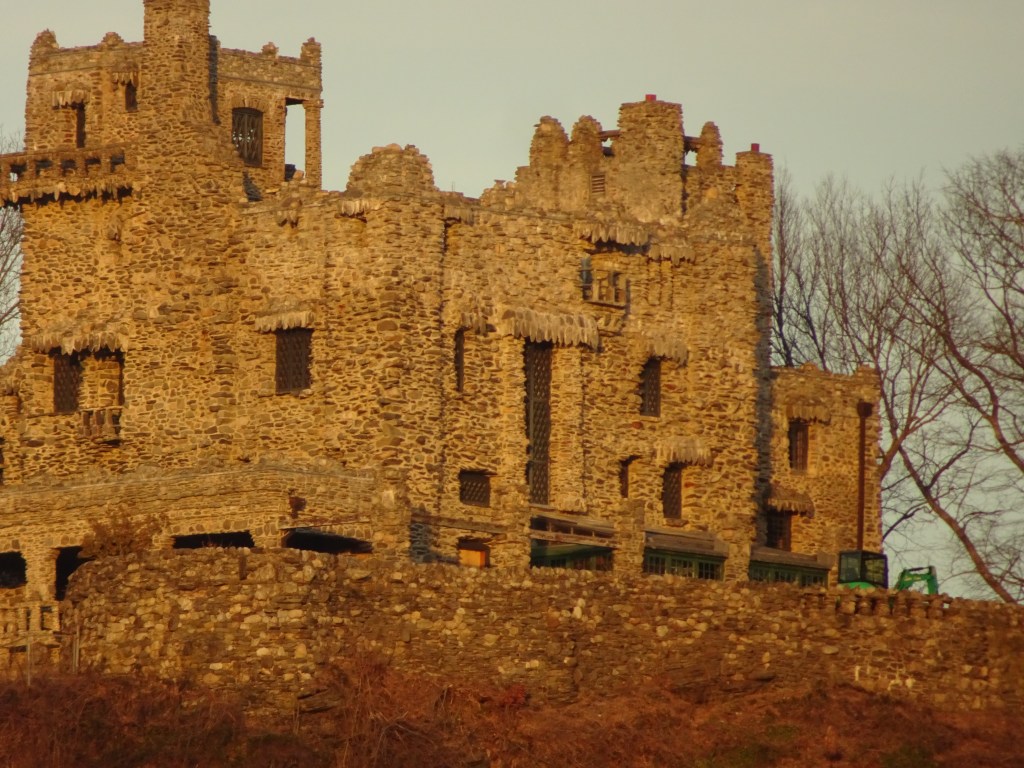
A mild winter’s day seemed just the time to take a day trip to East Haddam, Connecticut to visit Gillette Castle State Park, overlooking the Connecticut River. We had been to this area in the past for a winter boat ride along the river (February and March) in hopes of seeing bald eagles that winter in the area. The river stays open through winter and thus provides ideal hunting for eagles through the winter months. Our first trip favored us with multiple eagle sightings, but on this more recent visit we were not as successful. We caught a glimpse of what looked like an eagle soaring into the clouds overhead, but we’re not bird experts, and the glimpse we got was brief.
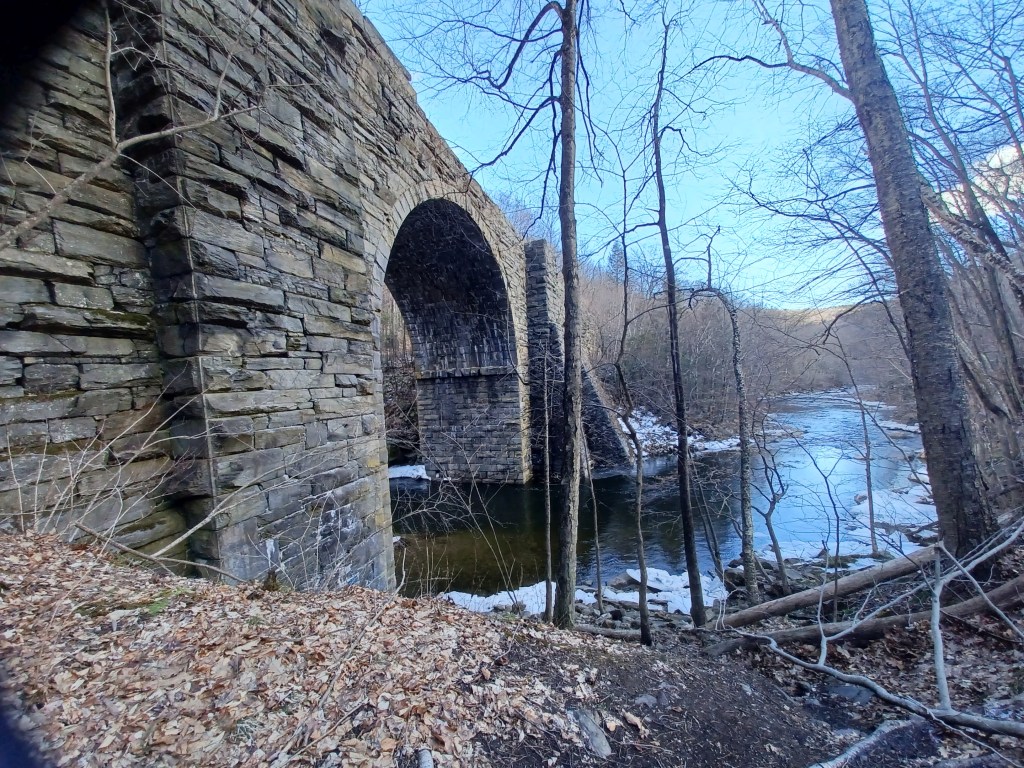
Often outdoor walking locations are “hiding in plain sight.” Locals know about what makes a specific place special. There may be a pull off for a good place to explore, but no sign is posted to assure visitors they have found the right location. The Keystone Arch Bridges trail starts in Chester MA and heads into Middlefield and Becket.
Signpost at the roadside
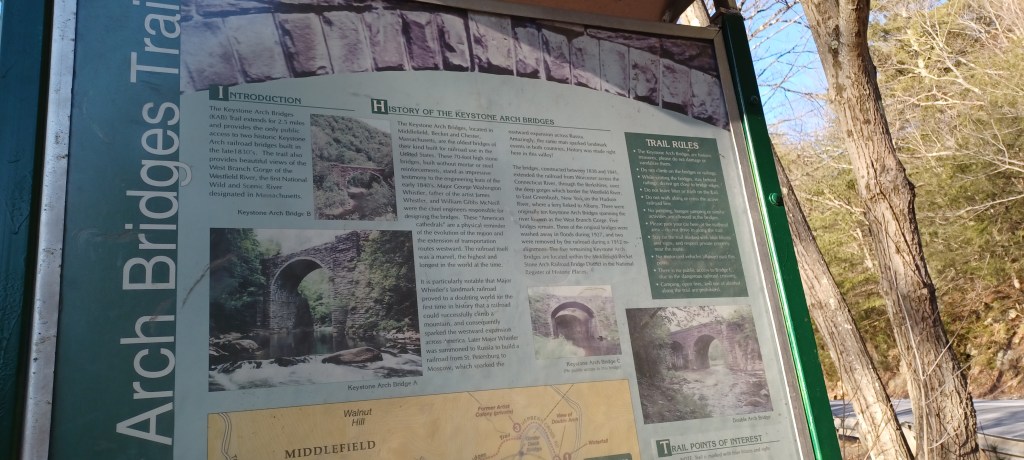
Clear signage has now been posted directing would be visitors where to find parking and get views of the dry laid stone railroad bridges that were built in the early 1840s to carry trains over the Westfield River. For background on the history of these bridges, learn more here. Information signs have been recently placed on Middlefield Road, next to Hebert Cross Road in Chester. Parking for about nine cars is available off road just past the sign.
Ice can be a huge barrier to getting out in winter. For those of us with mobility challenges (and others) it can keep us inside, missing out on the beauty that is found in colder weather. In general, newly fallen snow is pleasant to walk through. With little snow so far this winter in New England (at least southern New England) we have been able to get out fairly often without the concern of ice. A beautiful spot we revisited recently after a light snow is a Mass Audubon property, Pierpont Meadow in Dudley, MA.
New England is often an icy, pretty cold place to be in winter. However, the winter, 2022-23 has mostly had little snow, has been relatively warm and thus we have found little or no ice on local trails (at least where I am in south central MA). We generally avoid Cape Cod in summer since that is where everyone else seems to head. Instead, we wait for cooler weather then set out for locations on the Cape within about an hour or two from our home.
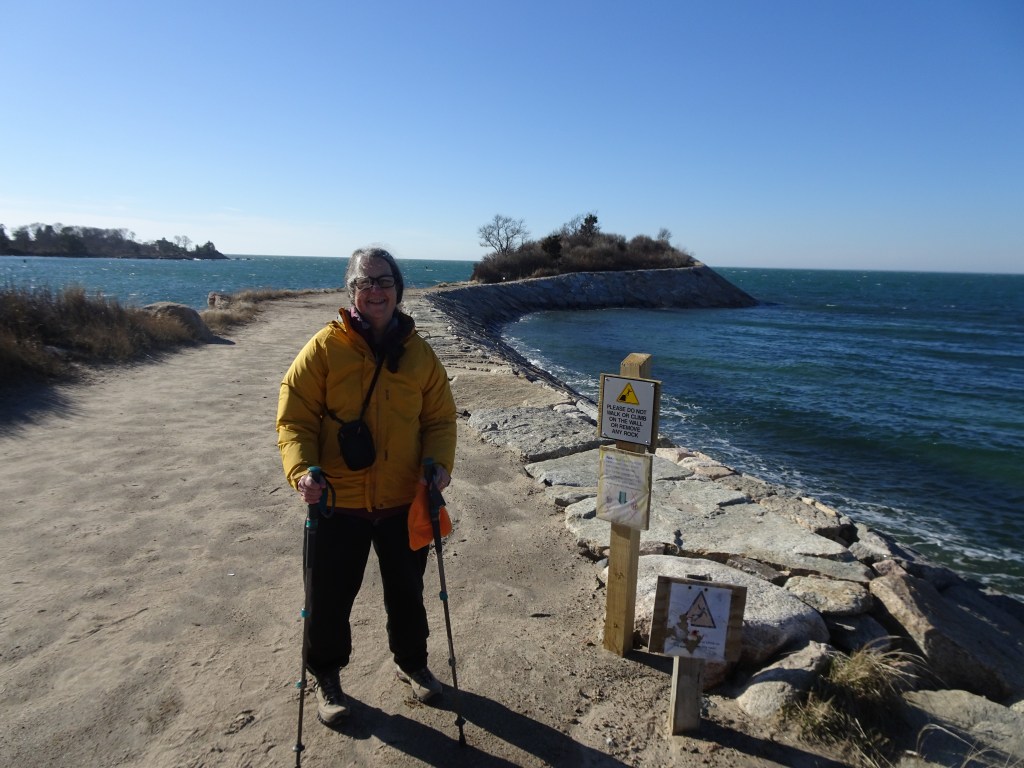
A January day with temperatures in the 40s seemed a good time to visit the Cape. I had wanted to visit the Knob, in Woods Hole, MA since I heard about it. This conservation land is part of the Salt Pond Bird Sanctuaries properties. When I had last checked, the trail out to a peninsula in Buzzards Bay had been closed for repairs. I felt sure it was still closed, but the website for this destination indicated the trails were open to the public again. In case this turned out not to be accurate, we made a plan B to stop at the Shining Sea bikeway. (We ended up stopping later at the shoreline access for the bikeway anyway.) Here’s an early fall visit to the bikeway.
Thanks so much to Marilyn St. Doré for making the time to help us understand how she and her husband Dave successfully get out on the trail. They take Easy Walks, but often agree to venture on more challenging trails too. After reading this story, you may realize that you too can make a difference in the life of someone you know. Here’s Marilyn and Dave’s story. MTH
Having fun on the trail
We began hiking 2 ½ years ago during the pandemic as a way to stay healthy and not sit in front of the tv now that we were retired. We never dreamt at that time that we’d love hiking so much, so much so, that we try to hike nearly every dry day that we are able all year long. This is no small feat as my husband is visually impaired, legally blind to be more specific. He can barely see beyond his feet and then only shadows and maybe color in his peripheral vision. During this time, he’s come to rely on me to be his guide on hikes. What follows are some of the things I do to help him enjoy his time on the trail as well as keep him as safe as I can.
It is easy to grow bored walking the same route day after day. What we see and feel becomes routine, as though there is nothing new to experience. However, the flip side of this is that by taking the same path, visiting the same area frequently, we can learn to observe small changes, incremental changes that are not always obvious at first glance.
Here’s an extensive list of hiking tips for those with mobility limitations–these can apply to anyone else too. Take a look. Thanks to Vacyou.com magazine for inviting me to contribute.
I have limited mobility, (paralysis in my right leg), have traveled and hiked extensively in the U.S., and have enjoyed exploring trails in Canada and Ireland. Learning the right questions to ask has made a big difference for me by helping people understand what I needed to know to better enjoy my time in the outdoors.
Questions I ask before setting out include: Where can I find places to walk that are not rooty or rocky, are relatively level with firm footing, and have something of interest along the way? Are dogs allowed? Are there bathrooms? Is there a fee to visit? Are trails well marked? What can you tell me about parking?
With practice you will find your best “questions to ask yourself” that will help you make an educated choice about how and where you want to go. Here are my tried and true accessibility tips that can help you get the most out of an outdoor hike (or walk).
You know your own situation best, so these are suggestions, not guarantees that they will work you.
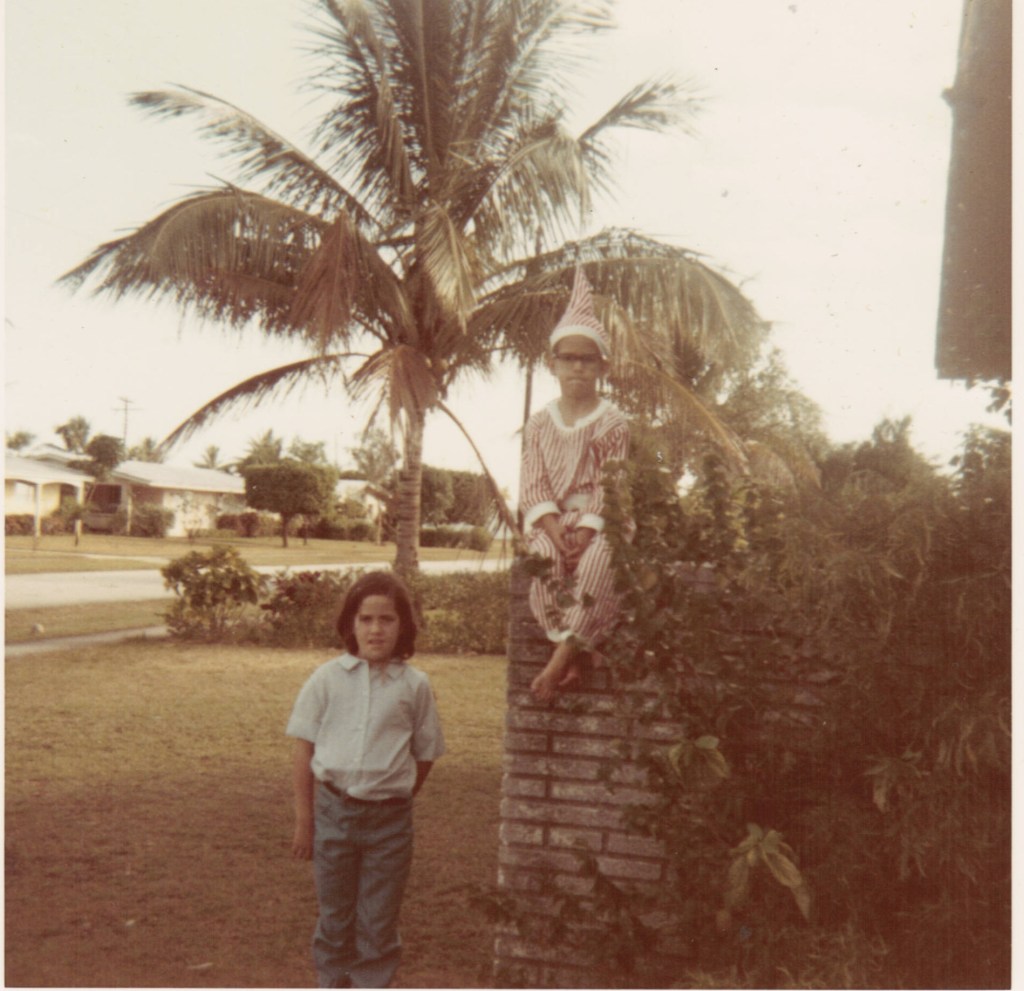
One of the essays in my memoir, My Liturgy of Easy Walks: Reclaiming hope in a world turned upside downrecalls a childhood game we played in the midst of one Florida summer. My siblings, friends and I gathered each night in the South Florida heat, shut our eyes tight and spun in circles. One person sat out the game, perched on the wall, keeping watch over us. We took turns climbing up onto the wall, assuming the role of watcher. When up on the wall we kept our eyes open, ready to alert anyone wandering near the street or too close to the wall.
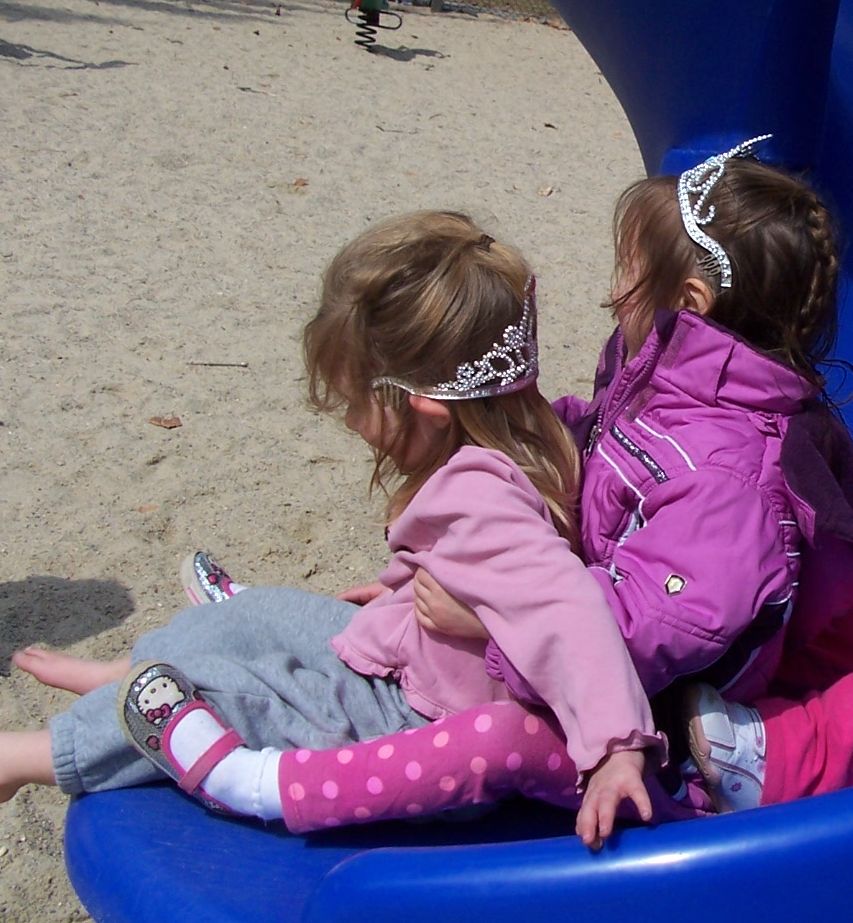
Going in circles or zooming down a slide, kids just want to have fun
I recently found a picture of my younger brother sitting on that wall, with my younger sister standing next to him. Sometimes a photo can make the difference in understanding a story…or not. Here’s the essay, just one of many included in the book. Enjoy.
Watching
The basic premise of the game, that summer of 1965 in South Florida, was for all of us to shut our eyes and turn around in circles in our front yard. Our goal was to keep spinning till we grew dizzy. A designated “watcher” sat on the five-foot-high brick wall that jutted a few feet out into my parents’ yard. The watcher’s job was to keep their eyes open and warn spinning children if they drew too close to the wall, or ventured near the street.
Years ago I was living in a house with constant construction upheaval. The house was a “fixer-upper” and when we moved in I had little idea what that would mean. The tasks required to make the house stable and functional were endless. Clearing the mess and dust felt overwhelming so most cleaning was left undone. It was only when the marriage ended and construction ceased that I felt in my bones how hard it had been to live with constant upheaval.
The Mowry Conservation Area on Old Forge road in Smithfield, RI is relatively small (forty-four acres), with two clearly marked loop trails. A burbling trout stream (actually part of the Woonasquatucket watershed) flows past the entrance of the property, with a small footbridge that provides easy access to the land on the other side of the stream.






 Marjorie Turner Hollman