Marjorie Turner Hollman is a writer who loves the outdoors. Link to all Marjorie’s books.
LISTEN HERE:
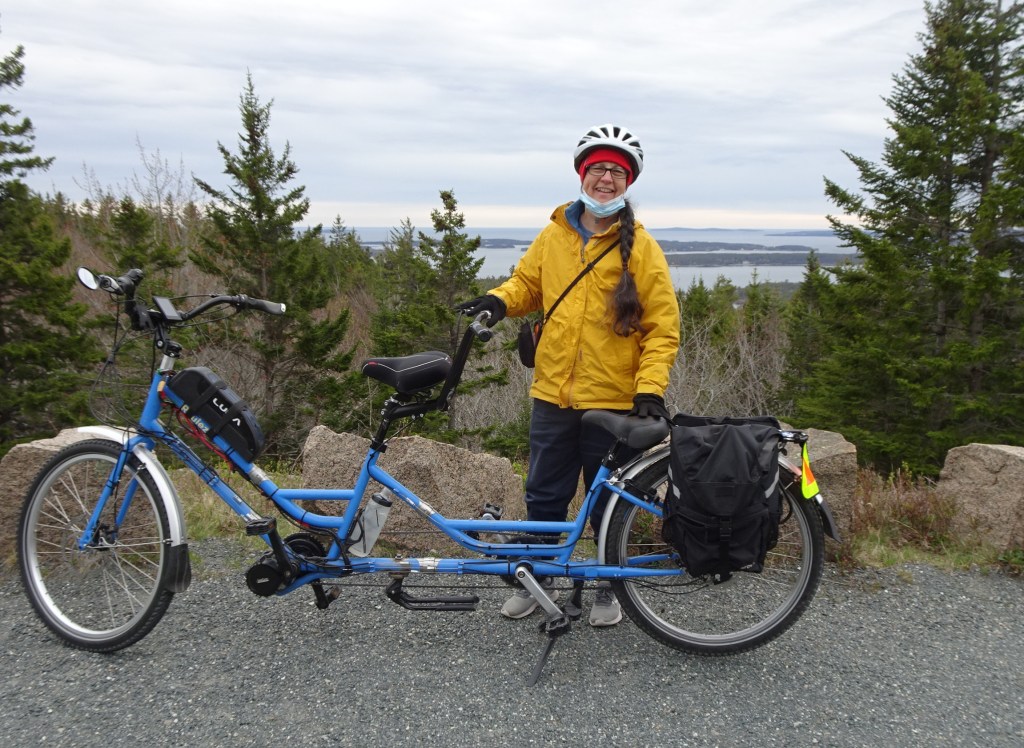
We humans are prone to “enthusiasms.” Even though we want to distinguish ourselves from others, being attracted to what “everyone else” is doing seems to be in our makeup. I saw this most recently during the Covid Pandemic that began in 2020. Suddenly deprived of indoor entertainment and ways of gathering safely, crowds headed outdoors and soon parks and trails were jammed with visitors. It became so bad that those overseeing these outdoor spaces felt forced to close them because of concern for contagion. We ourselves continued to ride our tandem bicycle, but shifted our habit of riding on rail trails, instead turning to quiet country roads to spend time outdoors away from crowds.
Other crazes have come and gone—Beanie Babies—remember them? Or not. Dance crazes, the Beatles, yo-yos, pet rocks, hula hoops. The word “craze” or “fad” denotes a sort of derangement of mind. A temporary compulsion to “join the crowd” for whatever is the next New Thing.

In her own time, EJ Phillips, my great-great grandmother, was quite aware of the bicycle “craze” of the 1890s. In her letter from Detroit, May 15th, 1896, she wrote to her son,
“About eight men and two women in our [Theater] Company have their bicycles with them, and ride from 10 to 20 miles a day. Gustave Frohman is an enthusiast on the subject, and I think will kill himself overdoing the thing.”
Later that same year EJ wrote to her son from Milwaukee,
Novr 2nd. 1896 Does Ted, [EJ’s grandson, my grandfather] enjoy his tricycle? I dare say he keeps you in constant dread of something happening to him. I hope he will be very careful and look out for wagons, Bicycles, Trolleys & Steam cars! But he is a good little boy and I think he will be careful for his Papa and Mama’s sakes.
Her grandson was six at the time and surely able to get around easily with his tricycle. Her pride and pleasure in her grandchild was compromised by her cautious nature. She expressed motherly concern throughout the over 1000 letters our family has.

Besides her worry about people “overdoing,” the “bicycle craze” also had a substantial effect on her own livelihood (and others in the theater world). The audiences for their theatrical performances were substantially reduced. She wrote,
“The business has not been good since we left N.Y. Men, women and children are all riding bicycles in every town. No business being done anywhere in any line save bicycles! There never was such a general craze before.”
As with most enthusiasms—fads, crazes— they are generally short-lived. EJ wrote of her hope that the obsession for all things bicycling might abate.
“For these two weeks it has been so bad that we all feel our season in Chicago cannot last for 12 weeks, and we look for closing much earlier. Some say 6 weeks and I say four. But by the time June comes people may be tired of riding the bikes and like to take the theatre in.”

Like most “crazes,” the passion for bicycles ran its course, eventually replaced by the new craze for automobiles (which even in the 21st century has not apparently abated!) However, like many other pursuits, the love of bicycling has never disappeared, and in some countries is an important mode of transportation. It is gaining popularity in the U.S. as concerns grow about how cars and trucks have come to dominate our communities.
In 1892 the tune, “A bicycle built for two (actually titled “Daisy, Daisy”), was composed and is still sung today. It’s possible the EJ was acquainted with what had become a popular tune in that day.
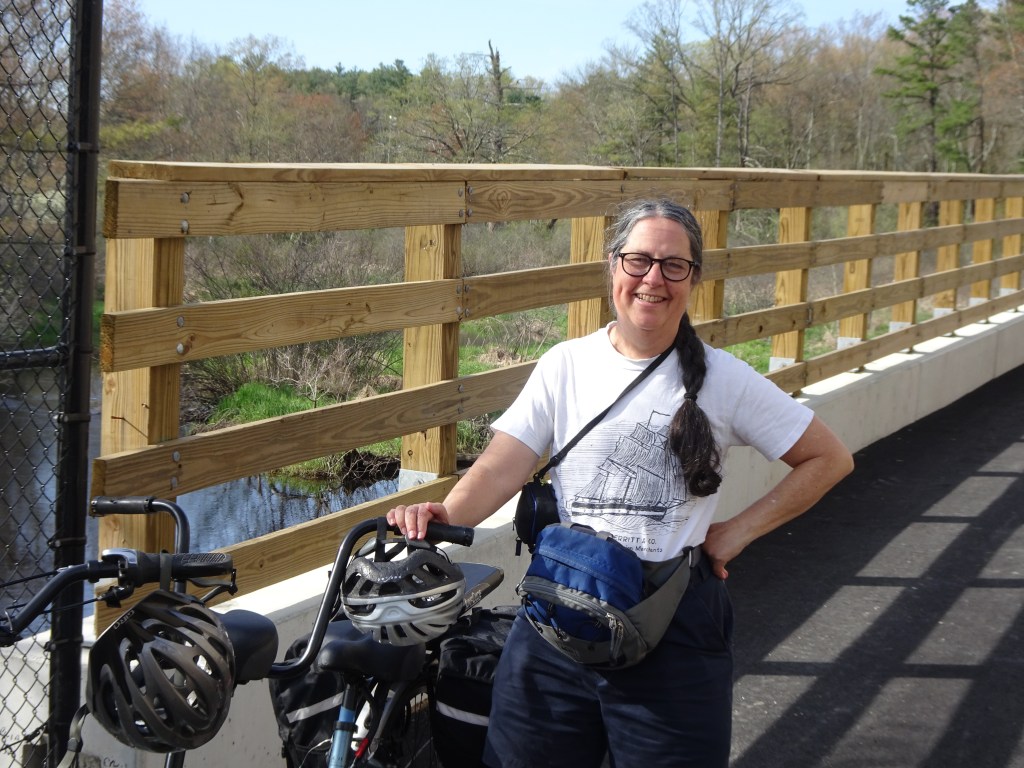
As my husband and I ride our tandem bicycle, our “bicycle built for two” brings smiles. Spotting us, people often launch into a rendition of the still popular tune. The sassiness and joy of the song still tickles our fancy. For some, the bicycle is a basic form of transportation. For others, an old craze has been transformed into an essential part of our life.
Marjorie

Marjorie Turner Hollman is a writer who loves the outdoors, and is the author of Easy Walks in Massachusetts, 2nd edition, More Easy Walks in Massachusetts, 2nd edition, Easy Walks and Paddles in the Ten Mile River Watershed, Easy Walks South of Boston and Finding Easy Walks Wherever You Are. Her memoir, the backstory of Easy Walks, is My Liturgy of Easy Walks: Reclaiming hope in a world turned upside down.
 Marjorie Turner Hollman