
Marjorie Turner Hollman helps authors self-publish their nonfiction books. She is also a disability advocate, sharing information about Easy Walks (not too many roots or rocks, relatively level with firm footing, and something of interest along the way) in open space. Link to all Marjorie’s books.
LISTEN:
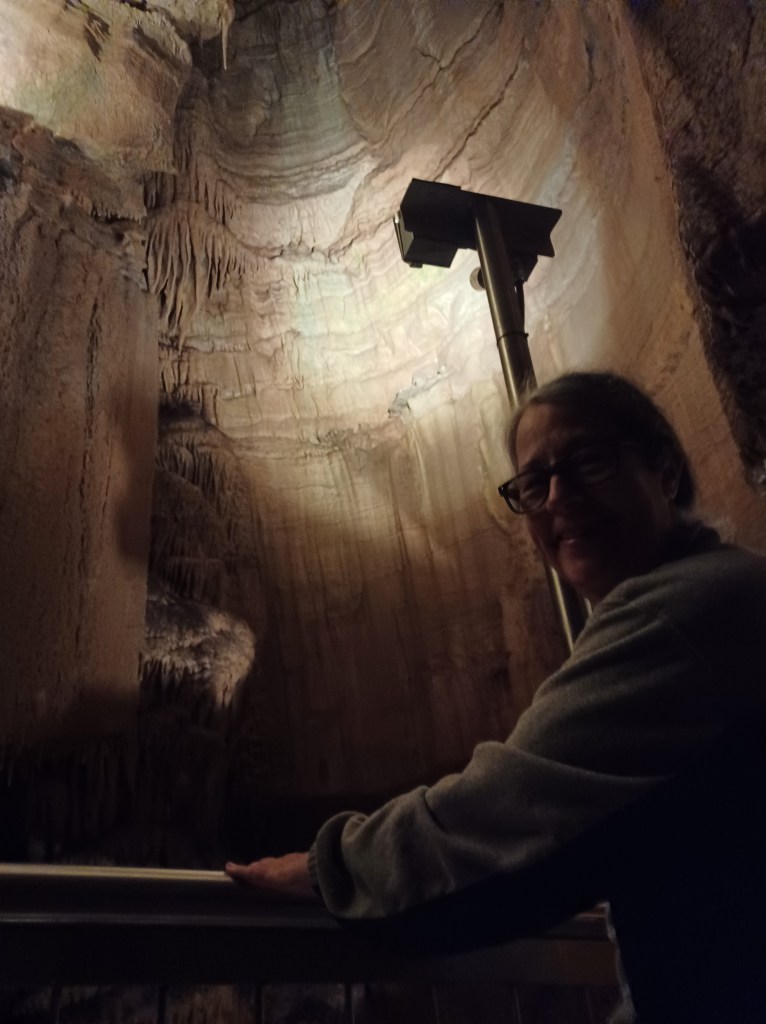
Nearly 500 miles of cave passage have been mapped to date with explorations ongoing. Despite the name, however, Mammoth Cave National Park, has much more than caves to enjoy.
When you visit, be sure to make time to tour the quality exhibits in the Visitor Center that are free for all to enjoy.
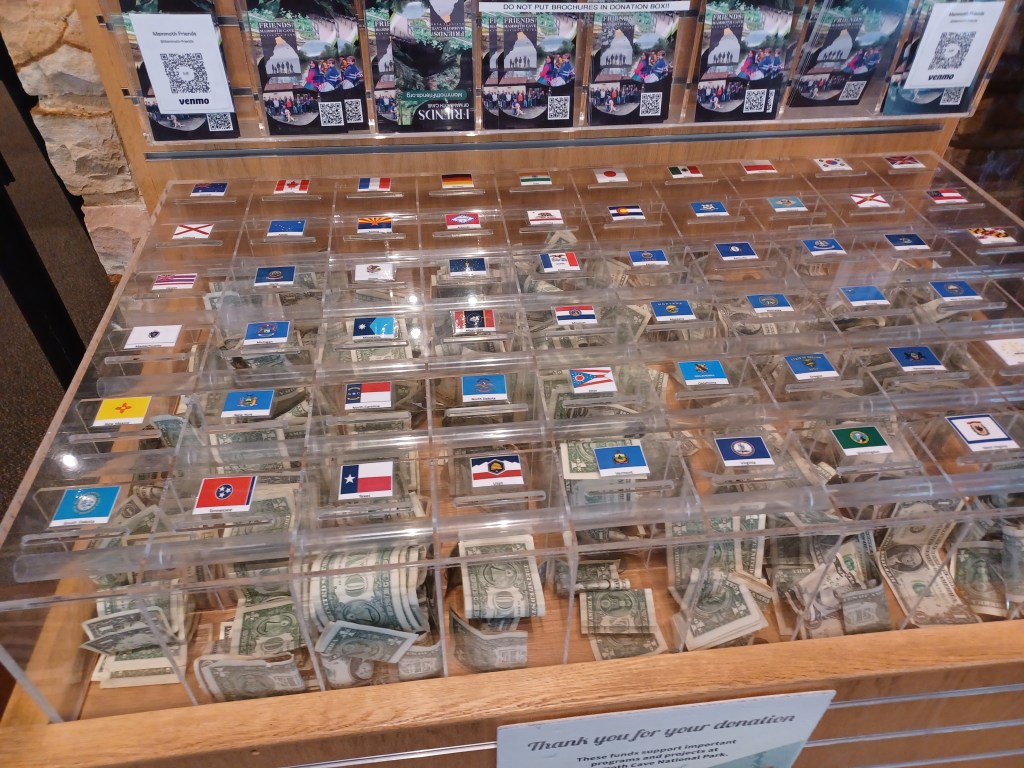
The donation box next to the entrance was especially intriguing, since it was set up for contributions by country. Dollar bills were stuffed almost to overflowing underneath the national flags of multiple countries, including, of course, the U.S.
This is a heavily visited national park. For cave tours, especially the handicapped accessible cave tour, plan ahead. We did not. We were, however, able to sign up for two that were not labeled specifically accessible. We managed well regardless.
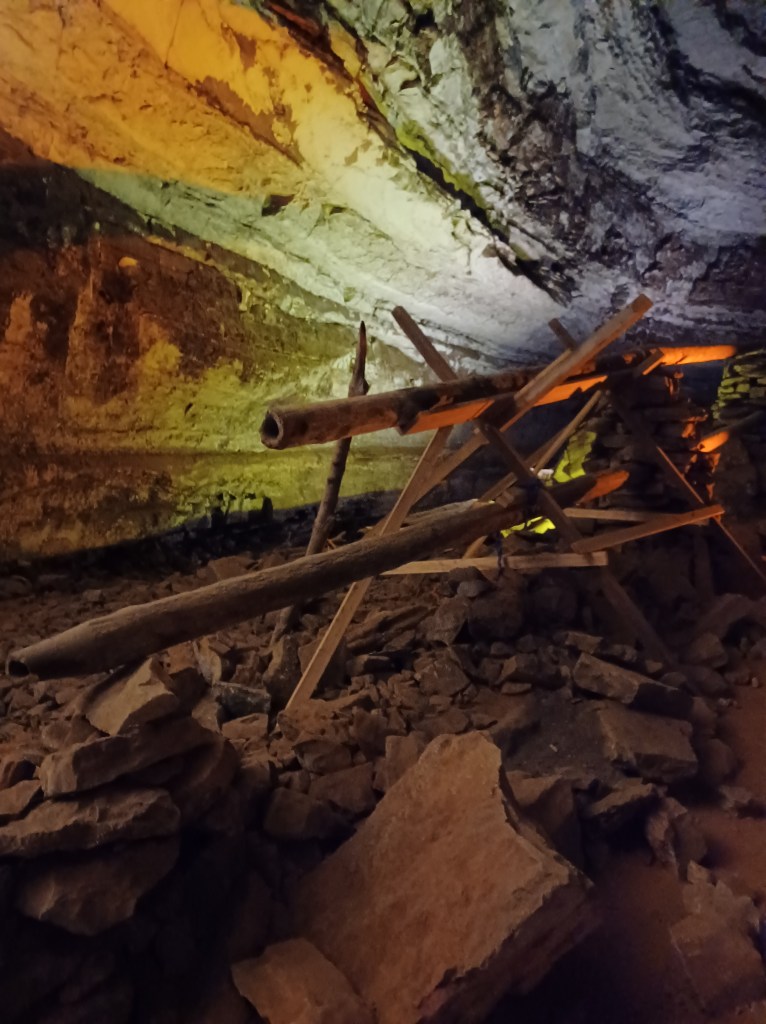
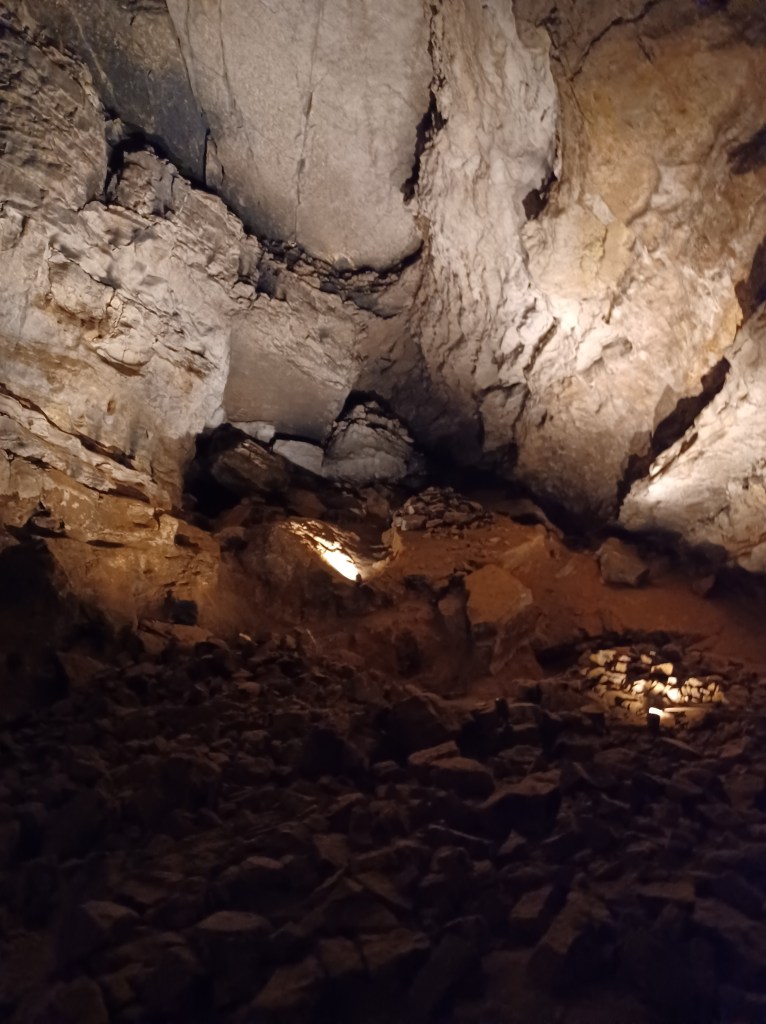
Historical artifacts in the cave offer insight into how humans used the cave for industrial purposes, especially during the Revolutionary war, when bat guano was used as a source of material to produce gunpowder.
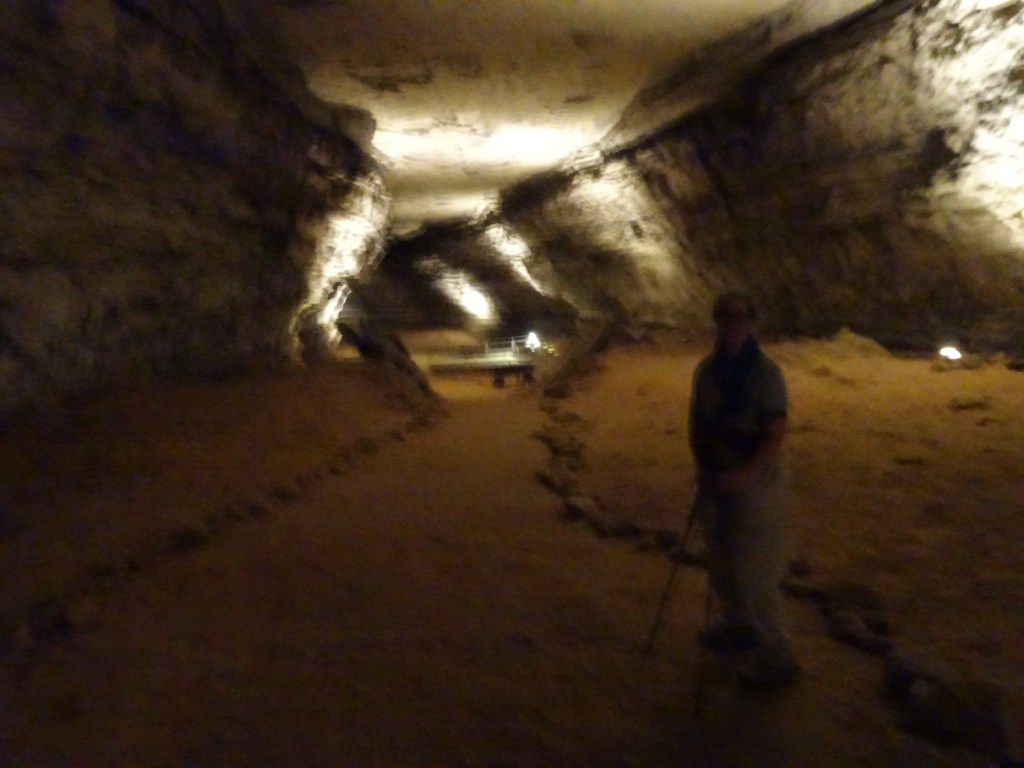
Mammoth Cave earned its UNESCO World Heritage site designation primarily because it is the world’s longest known cave system. This fact is not evident to casual visitors like us. (Public access is limited to a tiny fraction of the known branches of this extensive network of passages.) For researchers, serious cavers, and other scientists, it offers unmatched opportunities to learn more about cave environments.
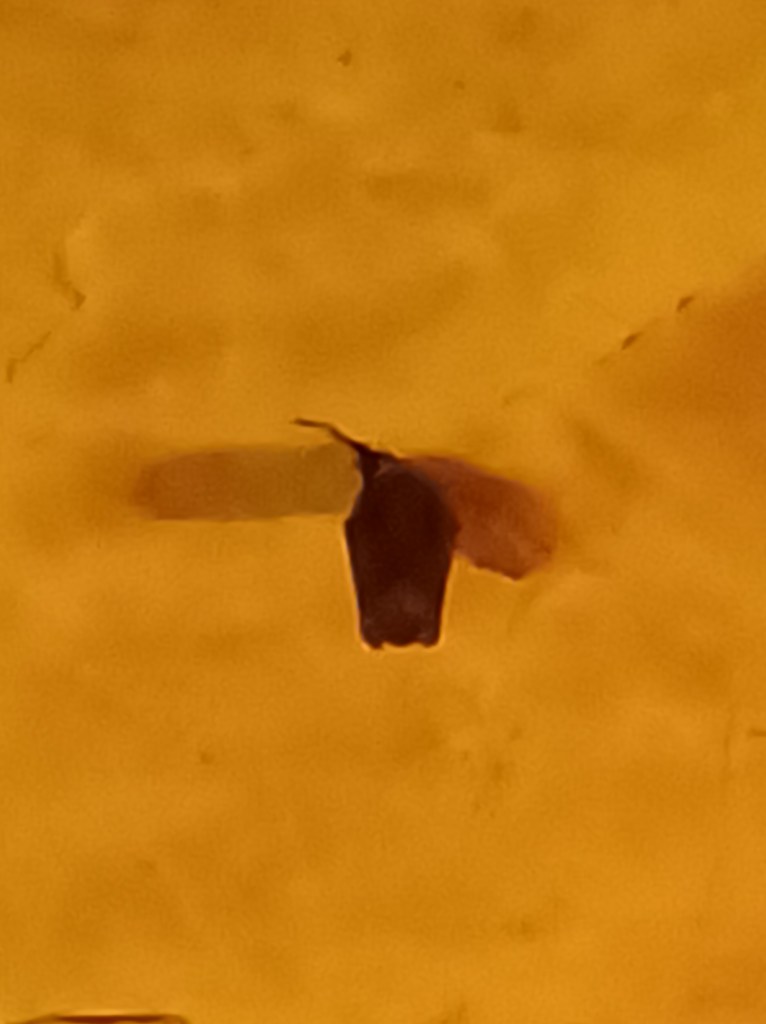
The cave tours we took were awe-inspiring. Little brown bats added extra interest as they hid in plain sight, clinging to cracks in the ceiling as we walked underneath them on our self-guided cave exploration.
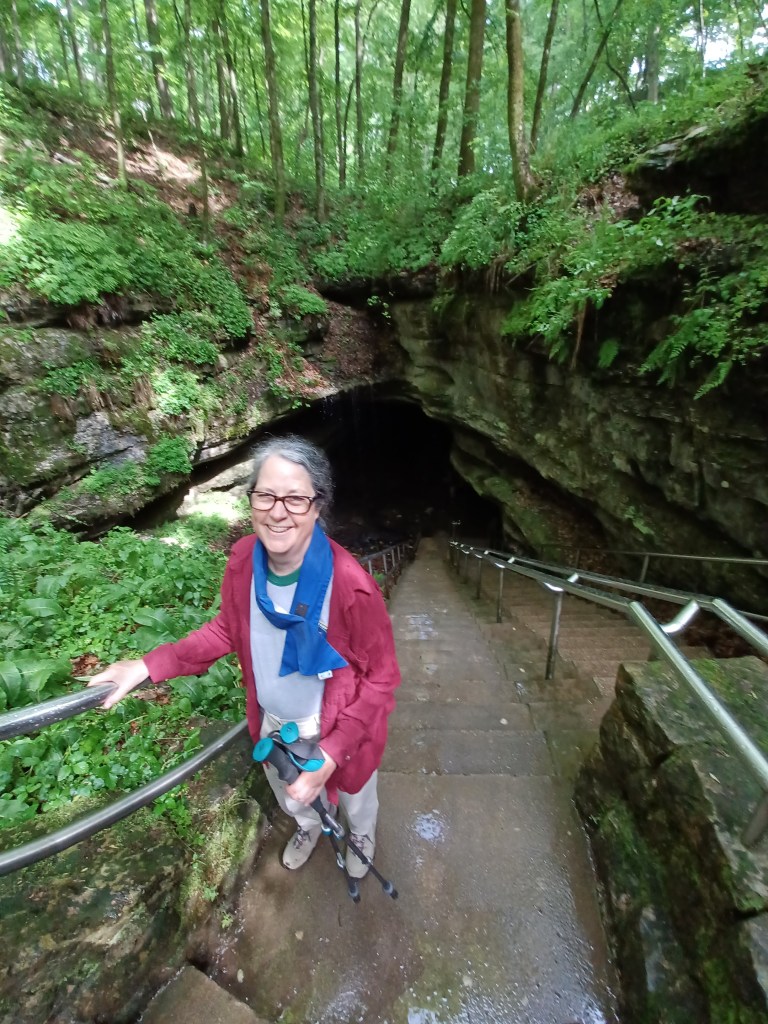
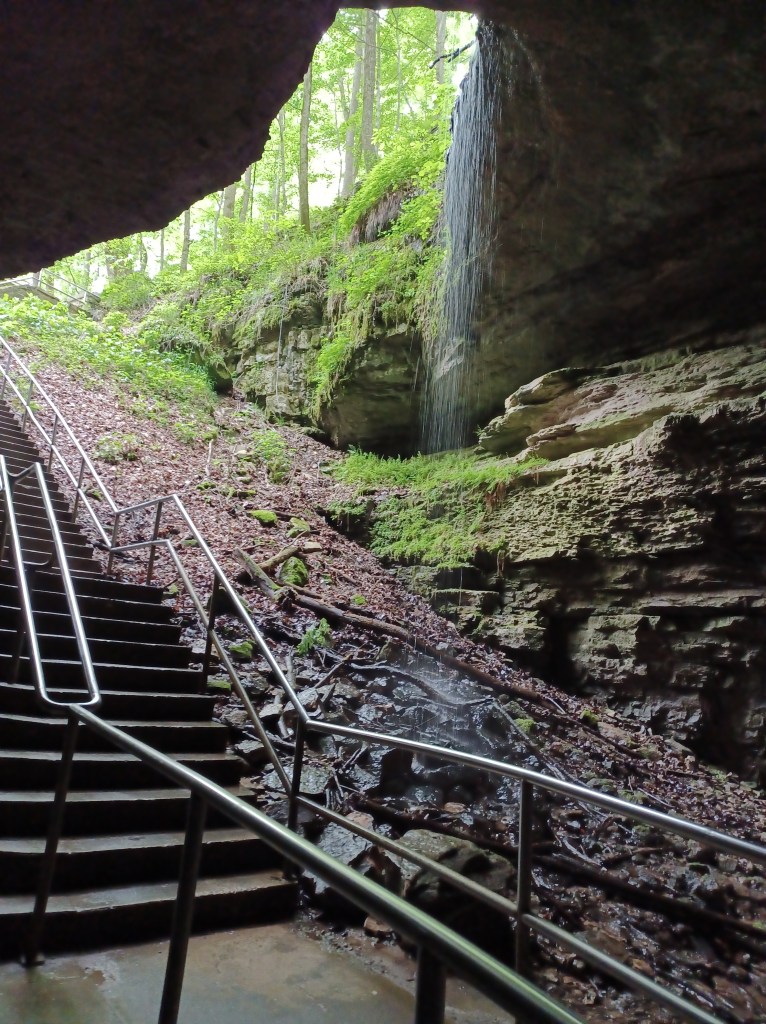
The park had a brief downpour while we were taking our self-guided tour of the cave system. We waited out the rain, only getting slightly wet as we headed up the stairs to the surface, ducking underneath the waterfall that was cascading into the historic entrance to the cave.
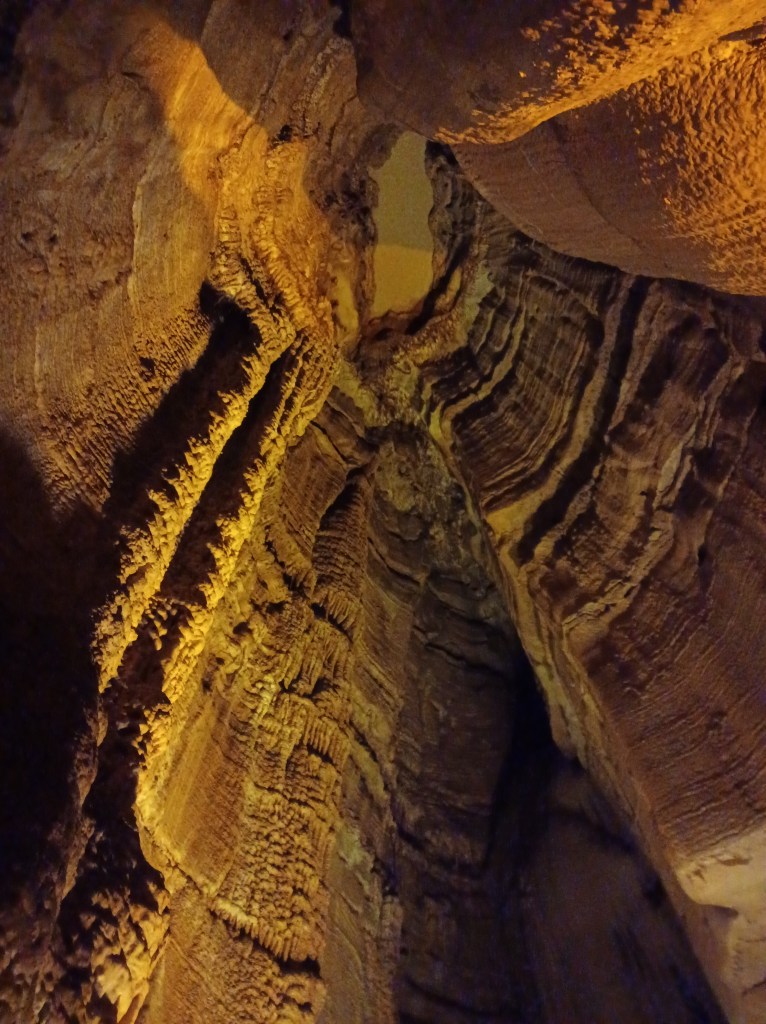
The Frozen Niagara tour, with stunning “pretties” cave formations, is equipped with handicapped-accessible stainless steel railings that provided the support I needed in the semi-darkness of the cave. The sections that are open to the public are dimly lit to prevent algae growth. The low light can offer challenges for those us not sure of foot.
A rail trail follows the path of the train that served commercial enterprises at the cave back in the day before this was a national park. We chose not to ride our adaptable tandem bicycle on the trail since it is rather narrow, only about six feet wide. It would have worked better (for us) as a walking trail than a place to tour by bicycle.
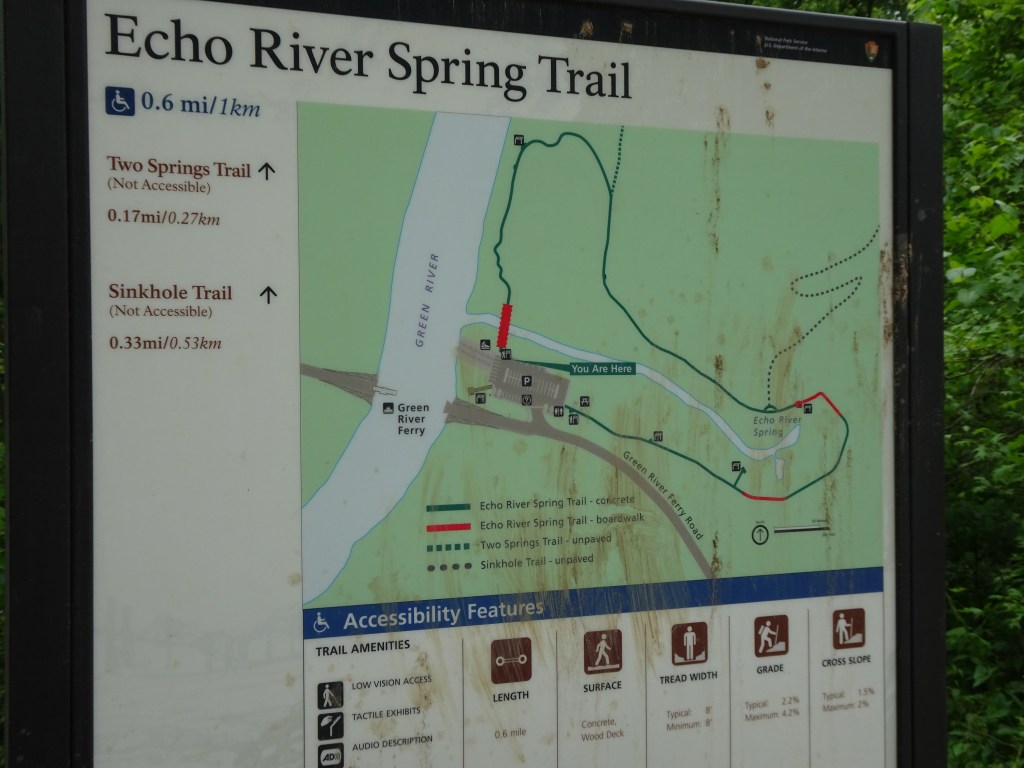
Miles of hiking/walking trails are maintained throughout the park. Before heading on to our next destination, we took time to explore a handicapped accessible path around the Echo River Springs loop trail. (The park also features two additional handicapped accessible trails.)
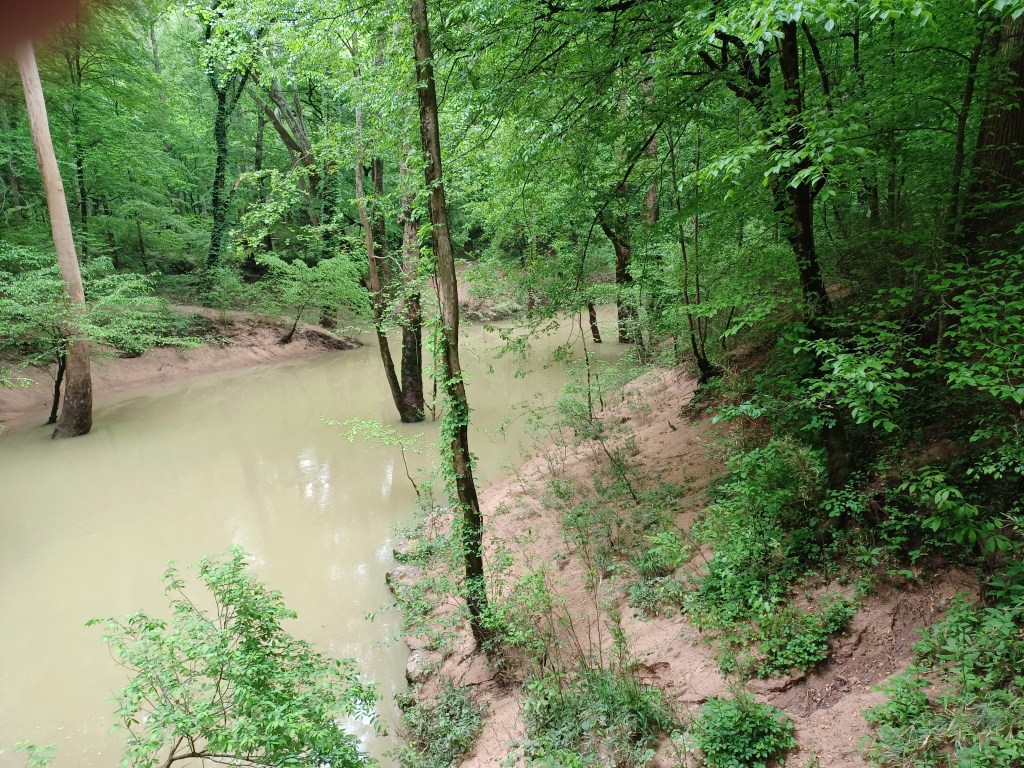
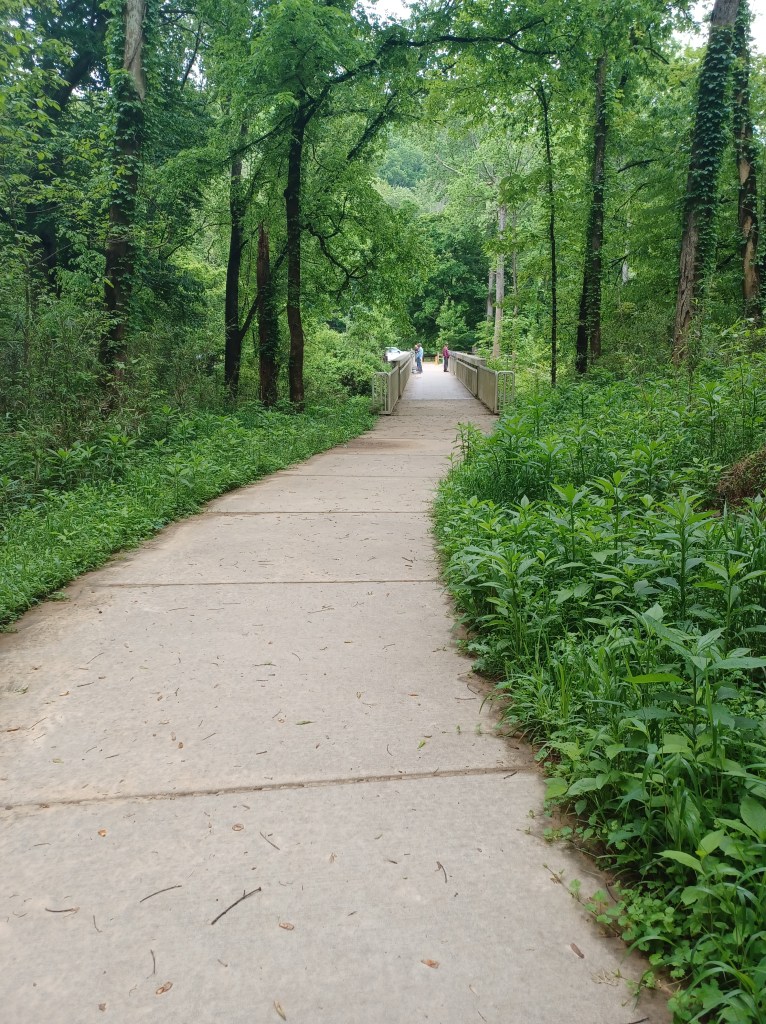
The bubbling spring is visible from the path, and its waters empty into the Green River. Echo River Springs trail provides a wide, paved, cement sidewalk adjacent to the Green River and into the surrounding woodland around the spring.
After the rain from the day before, the dirt paths heading away from the handicapped accessible loop were messy, muddy, and treacherous.
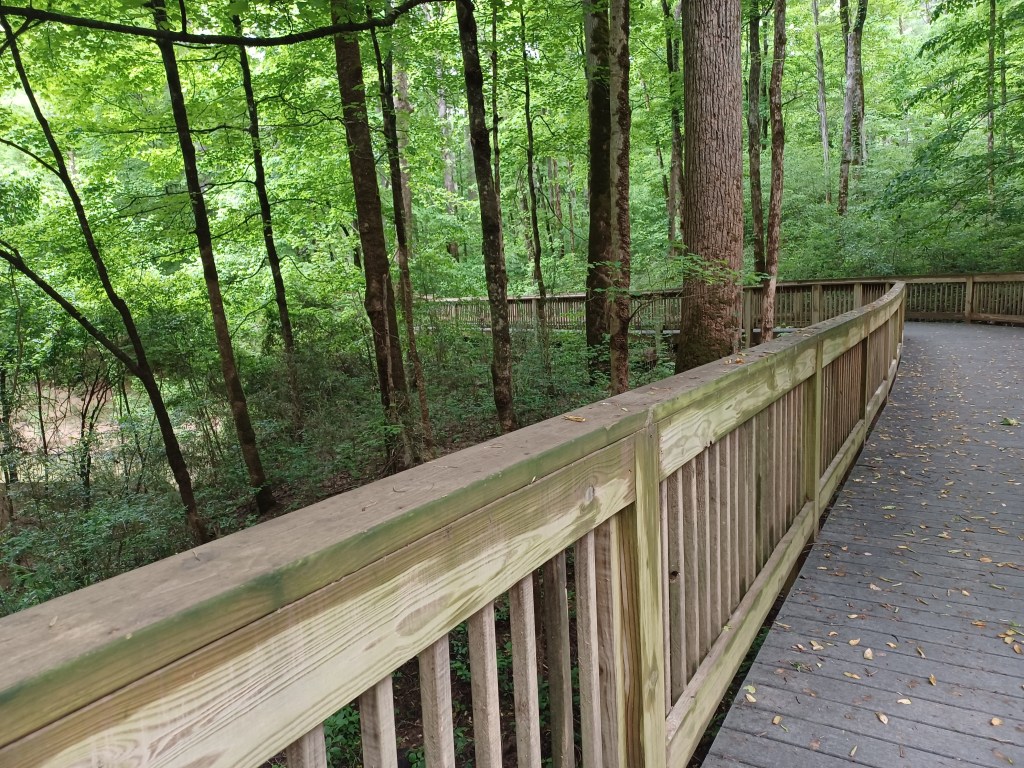
As we explored we felt a few sprinkles, but the cement surface of the walkway and textured lumber on the boardwalk next to the spring provided solid footing.
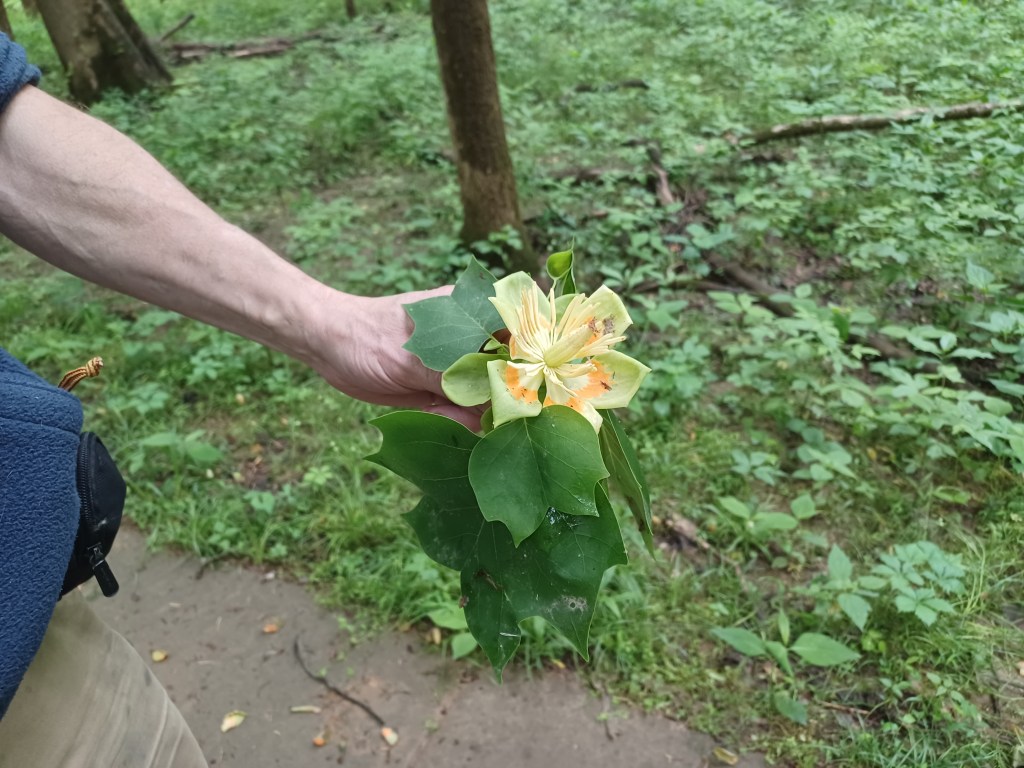
The surrounding woodland was filled with bird song. We recorded on the Merlin app the songs of wood thrush, cardinals, scarlet tanagers, warblers recently migrated to the area, woodpeckers, and crows.
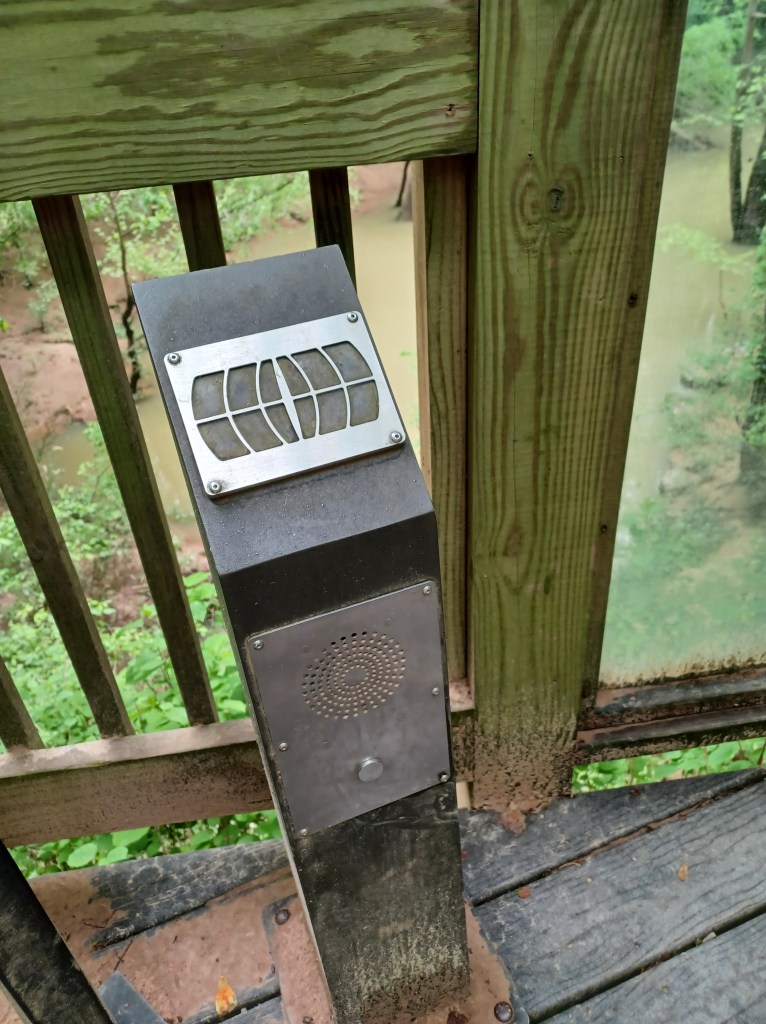
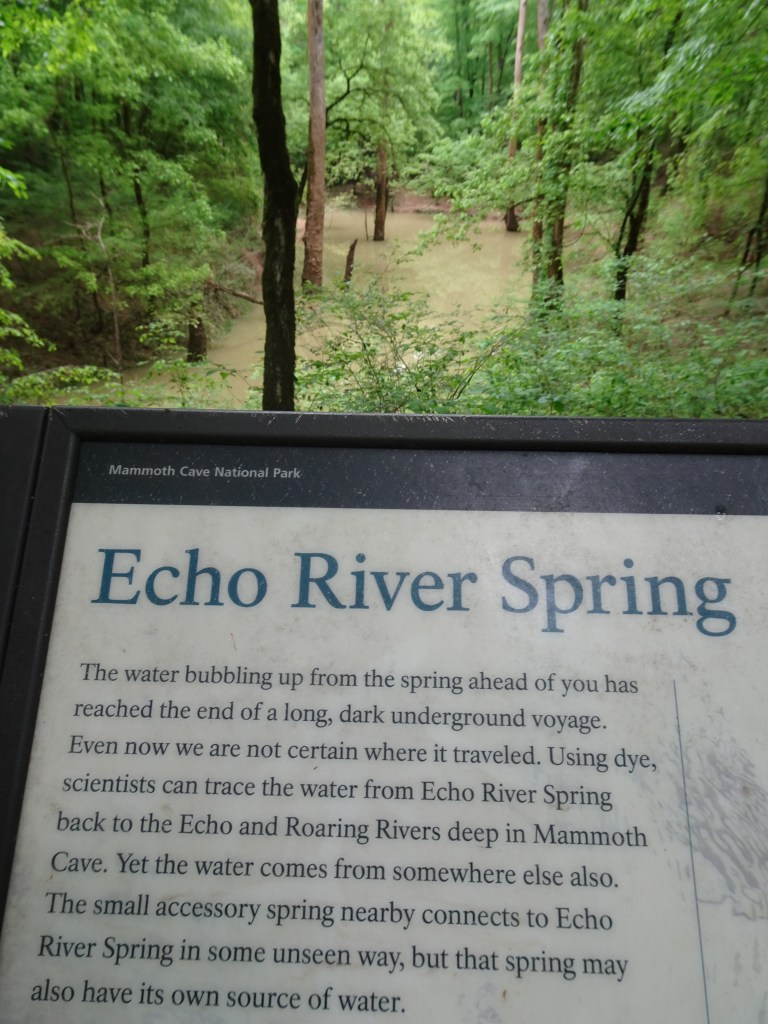
Interpretive signage is posted along the way, including some with Braille. In addition to the Braille, an audio speaker stood next to the signs, providing a listening option for those with visual impairments.
Our visit was in early May, and we enjoyed both mild temperatures, and limited crowds. The cave tours filled quickly, but our walk alongside the spring was solitary. The only other visitors we encountered on our walk were fishermen, trying their luck as they stood on the bridge that spans the outlet to the spring as it flows into the river.
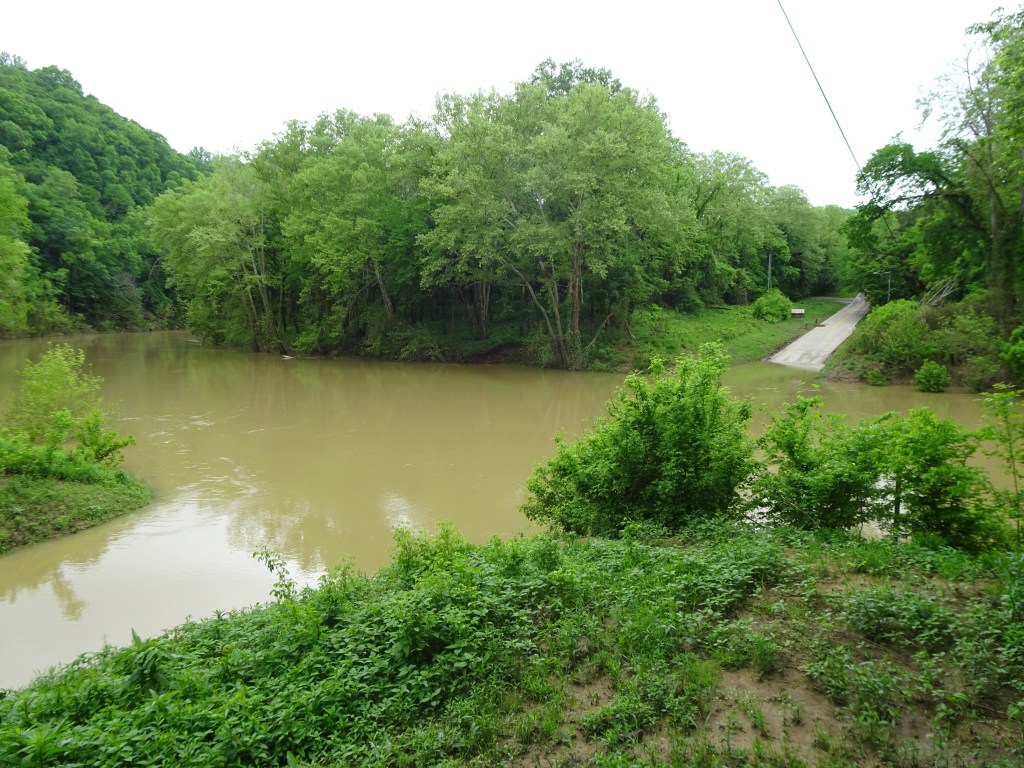
A severe storm hit the park and surrounding countryside in late April, 2025. Visiting just a week or so later, we witnessed remnants of the flooding that ensued. The ferry that carries visitors over the Green River was out of service during our visit, put out of commission by the floods. The warning signs at the road entrance to the ferry may have discouraged visitors to the path we enjoyed. Yes, the ferry was out of service, but the road to the river was quite open, as was the parking area and the trail.
Campsites in the campground in the park are wooded, well marked, and are relatively level for the most part. No power or running water is available. At least one bath house is open for campers.
Be sure to thank the rangers for their work. They care deeply for this park, and face serious challenges. A simple “Thank you,” and taking care to treat this place respectfully, can go a long way in making a difference as we can. Happy trails!
Marjorie



 Marjorie Turner Hollman