Marjorie Turner Hollman helps authors self-publish their nonfiction books. She is also a disability advocate, sharing information about Easy Walks (not too many roots or rocks, relatively level with firm footing, and something of interest along the way) in open space. Learn more.
LISTEN:
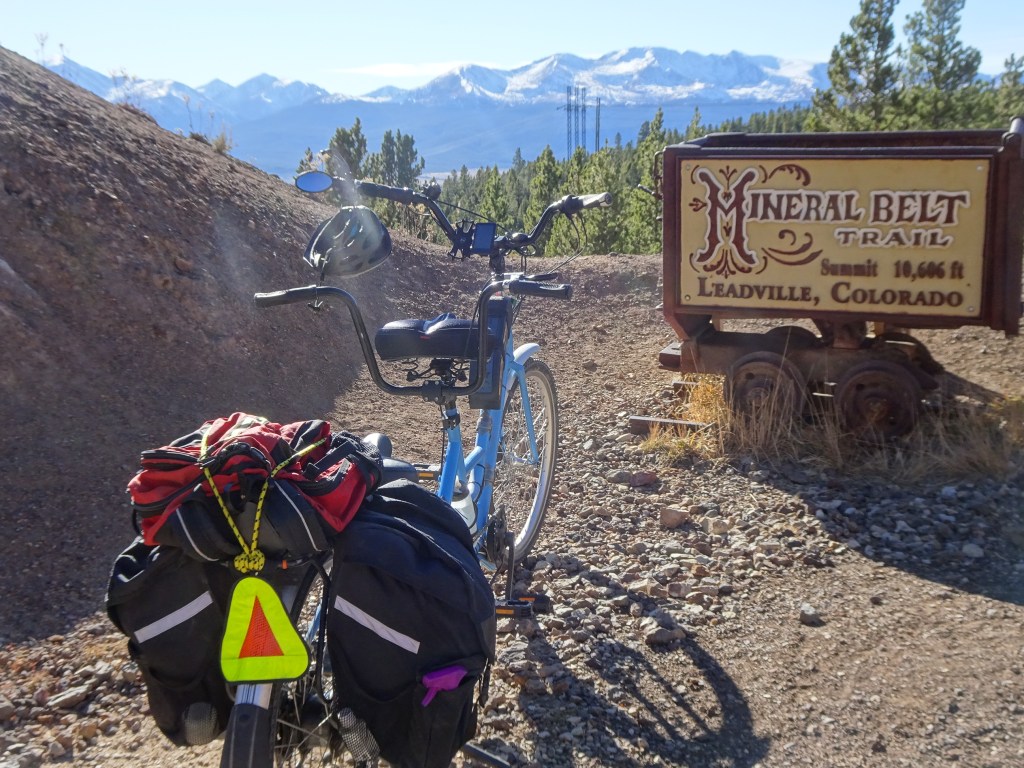
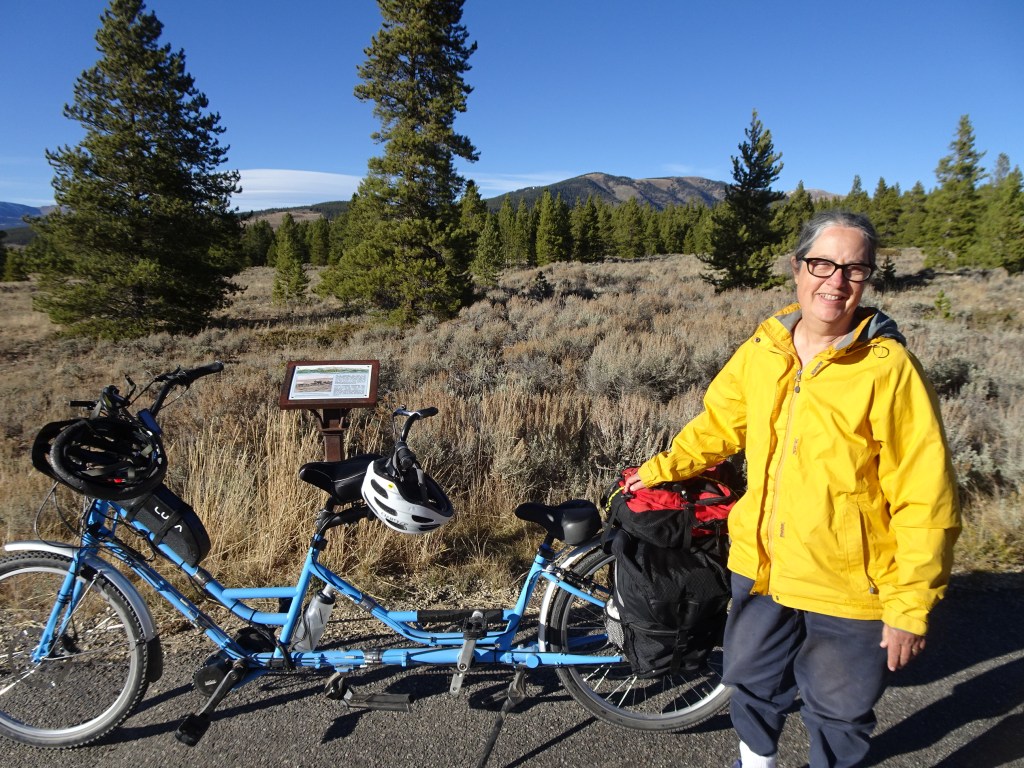
We visited Leadville, Colorado in the fall, when the weather can get very iffy. The town, elevation 10,000+ feet, has a twelve-mile loop trail, which is paved the entire length. The Mineral Belt trail travels around and through the town.
We were wearing t-shifts when we started pedaling our tandem bicycle, but the weather forecast for that night predicted 15 degree F. We did not want to get stuck out on the trail!
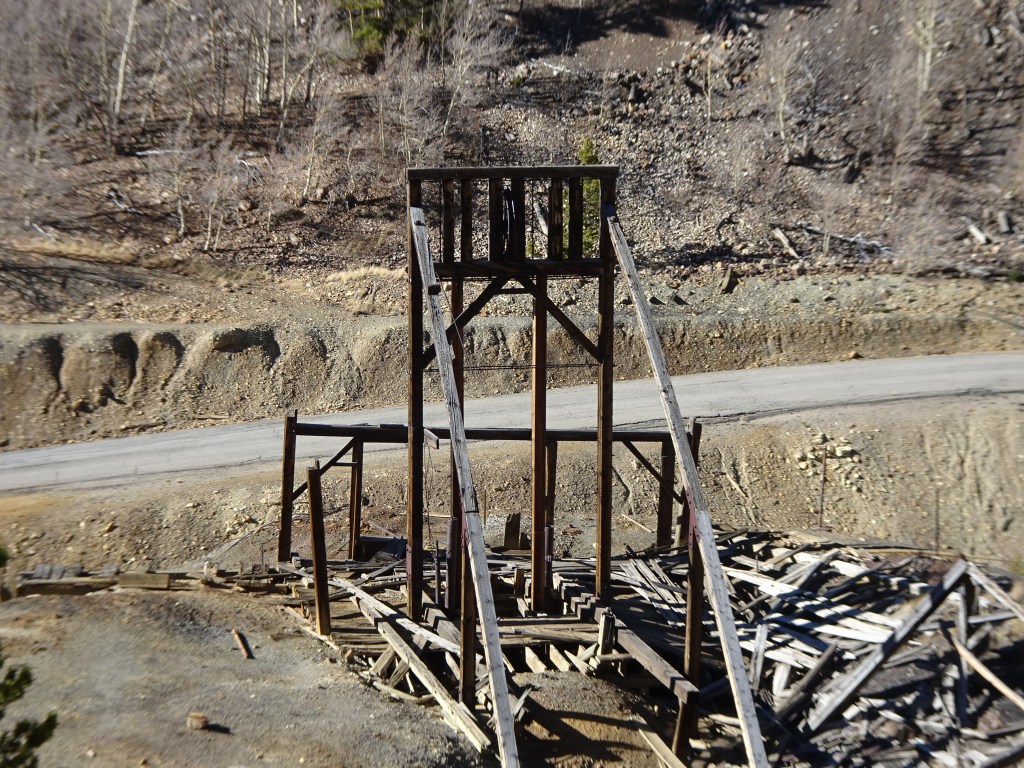
Several railroads were built to Leadville, including a narrow gauge railroad. In its boom times Leadvillle was a tourist destination. Signs of mining endeavors are visible all along the path.

Sheer walls that had been mined are held back by timbers, and other mine adits stand as reminders of the wealth that was extracted from this land. We found some nice overviews of the town.
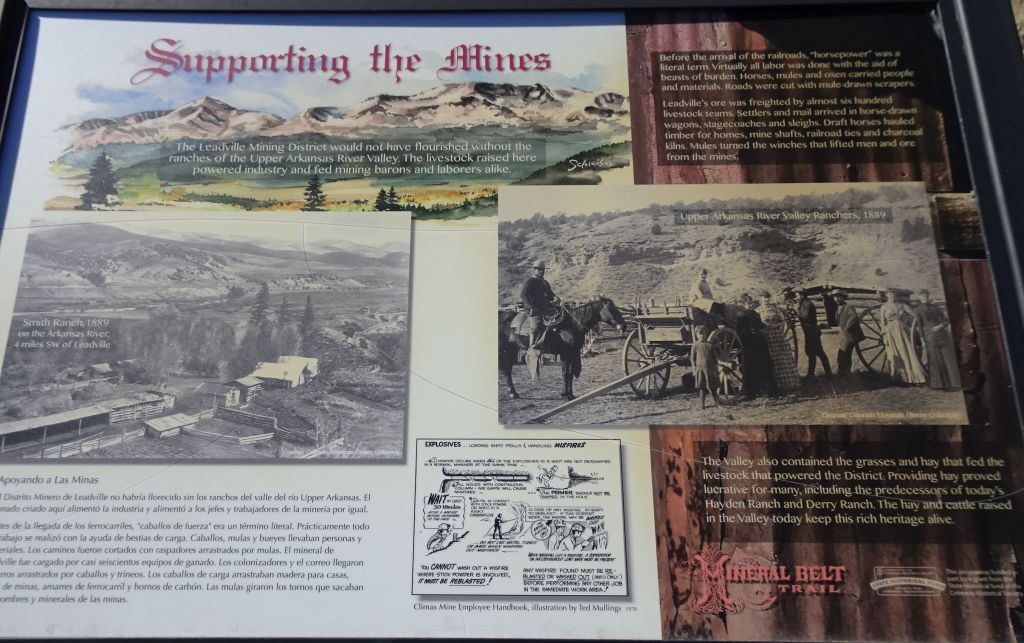
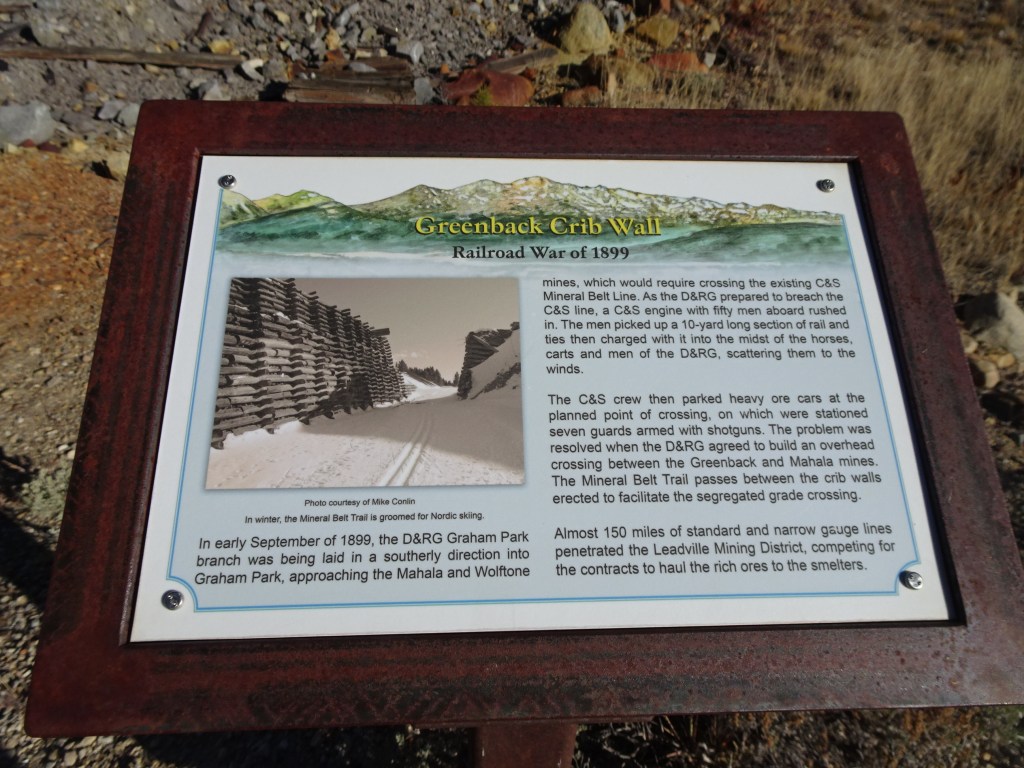
Interpretive signs are posted along the path, explaining the history of the town.
For several hundred years the Nuche/Ute Indians used this area as their summer hunting grounds around the headwaters of the Arkansas river. Once gold was discovered, Native American removal by European settlers, backed by the U.S. government, followed a familiar pattern. Discovery of mineral and other resources by white settlers in the Leadville area exerted huge political pressure to open up the land for mining exploitation.
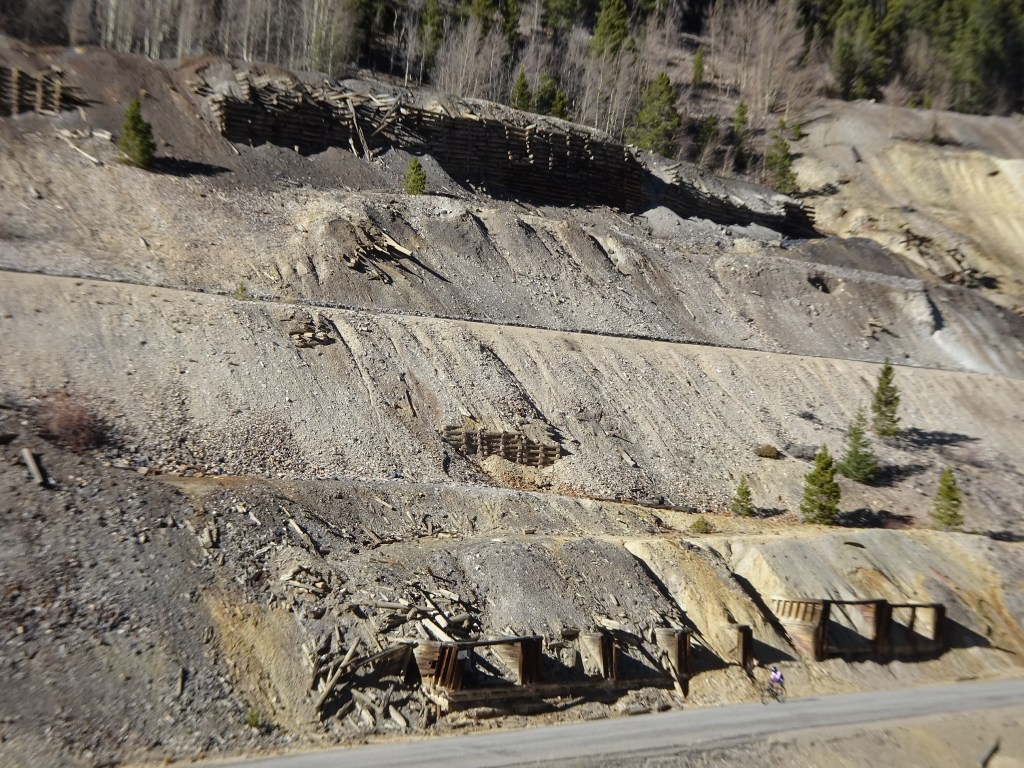
Boom and bust was the norm, with first gold being discovered in the 1860s and then once the gold had been played out, silver became the next boom town event in the 1870s. Additional mineral discoveries in Leadville found markets into the early 1900s. For all those with dreams of riches, the ones who made the most money were those who sold provisions to the miners, both food and equipment.
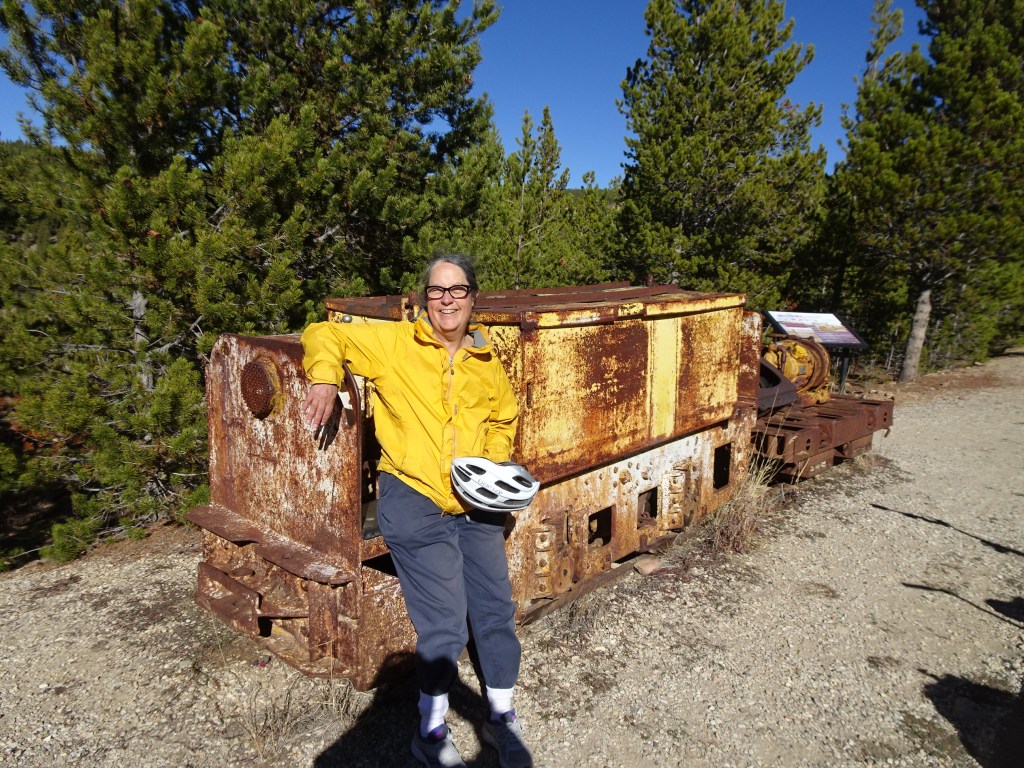
We stopped multiple times to get out and read the plaques. Mining cars and other artifacts were parked alongside the path, reminders of the town’s heyday.
Part of mining’s legacy is some pretty nasty stuff. The stunning cobalt blue pools we saw along the path are a beautiful sight, but are, in fact, mine tailings filled with toxic chemicals. Not something you’d want to dip your toes into.
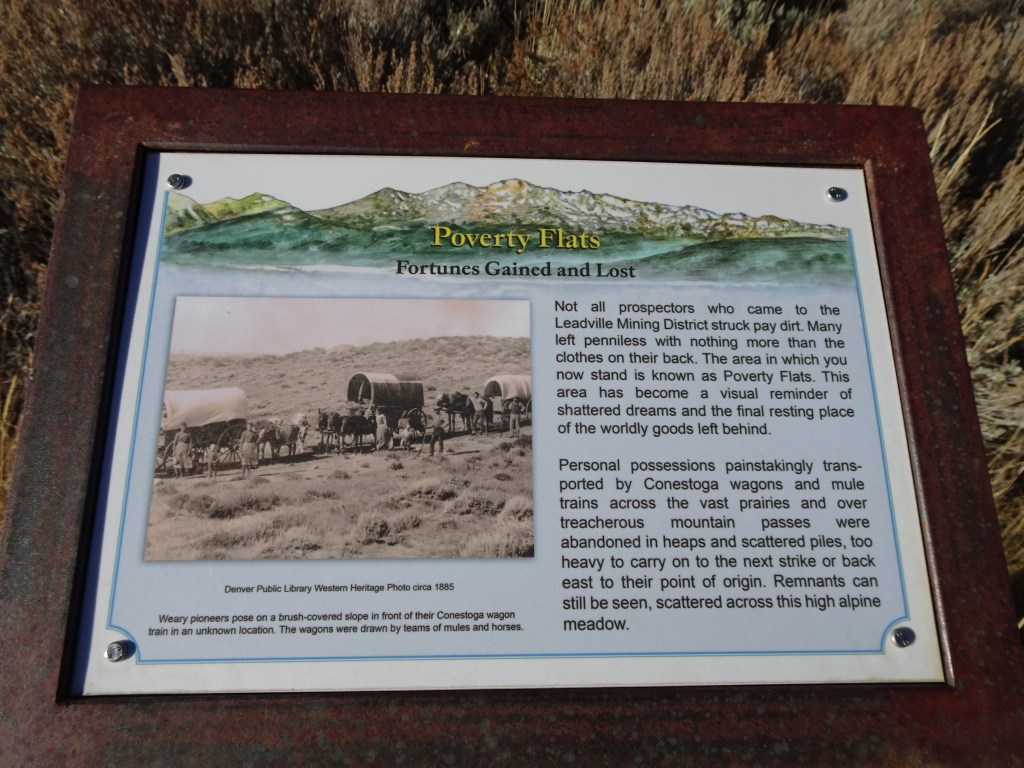
As we got closer to the town, after having pedaled through the woodland and miles of mining remains, we rode alongside an open area. A sign explained that in that field had been discovered countless artifacts that had been discarded by miners who failed in their efforts to strike it rich. The sign suggested that additional artifacts were likely still in that area. I felt a deep sadness, imagining the countless crushed dreams left behind, and wondered what these hopeful miners went on to do with the rest of their lives.
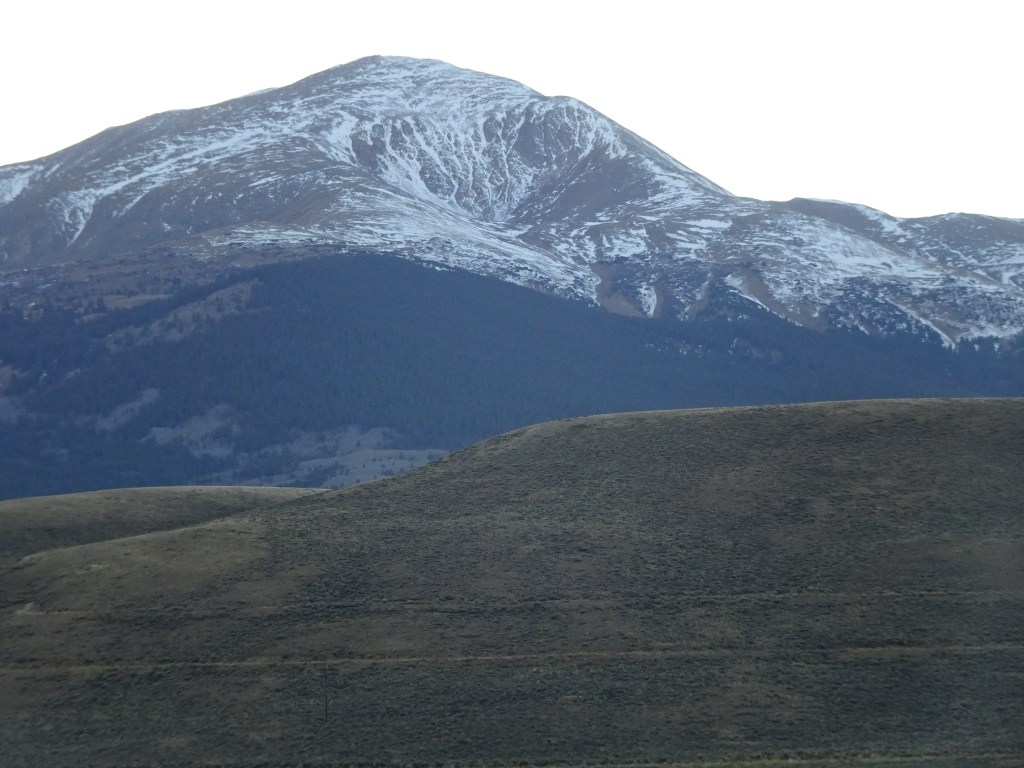
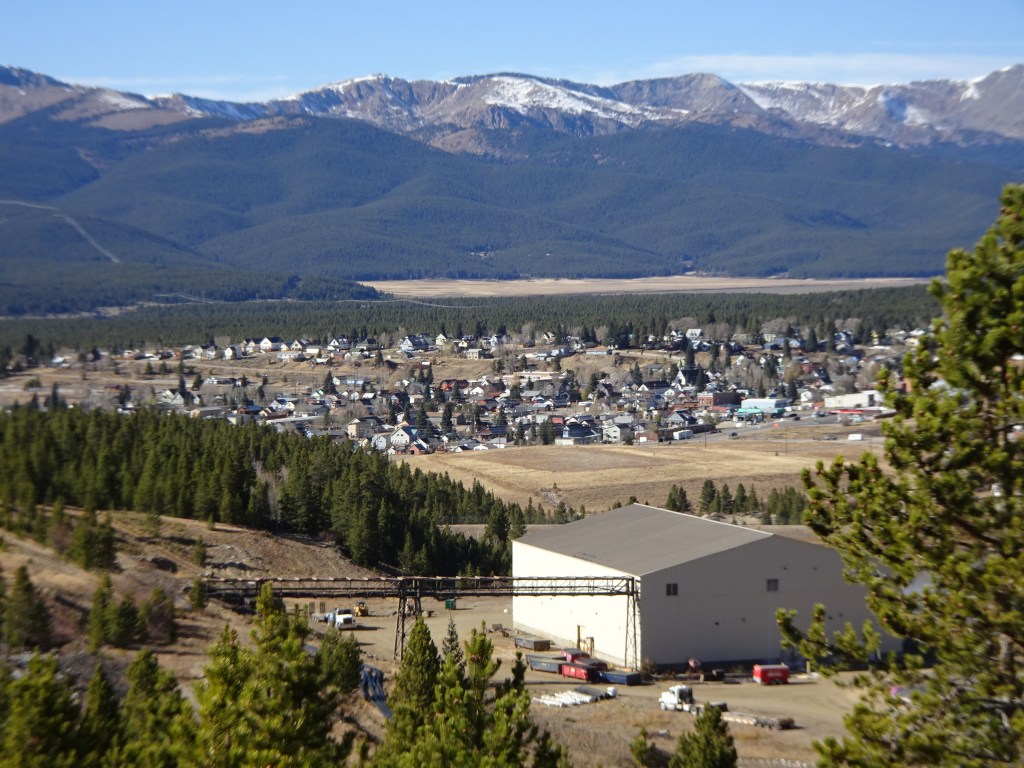
We ended our ride back where we started, with a brief jaunt through the very small town that exists there today. At the height of the boom times, Leadville had up to around 30,000 residents. Today, around 2000+ people call Leadville home.
And yes, the temperatures did get down into the teens the night of our visit. By nightfall, we were packed, bundled up and on our way back to our cozy camper. In Leadville, it always pays to note the weather. It’s going to change on you. Count on it.
Marjorie
 Marjorie Turner Hollman