Marjorie Turner Hollman helps authors self-publish their books. She is also a disability advocate, sharing information about Easy Walks (not too many roots or rocks, relatively level with firm footing, and something of interest along the way) in open space. Link to all Marjorie’s books.
LISTEN HERE:
My biggest surprise on our outing to western Massachusetts was spotting a large, open marble quarry. Hoping to get a closer look, we took a few wrong turns along the way. After dipping into Connecticut we finally got close enough to view the edge of the excavating operation. Specialty Minerals Inc. in Canaan, Ct. runs the quarry, but you will not find photos of it on their website. A locked gate and massive machinery next to the road prevented us from getting any usable photos, but others have managed. Do an online search for “specialty minerals inc.” and you will find some great pictures by photographers of the white, chiseled hillside.
After leaving the quarry, we stopped in East Canaan, Ct. at a sign for the Beckley Iron Works. It is Connecticut’s only official state Industrial Monument.
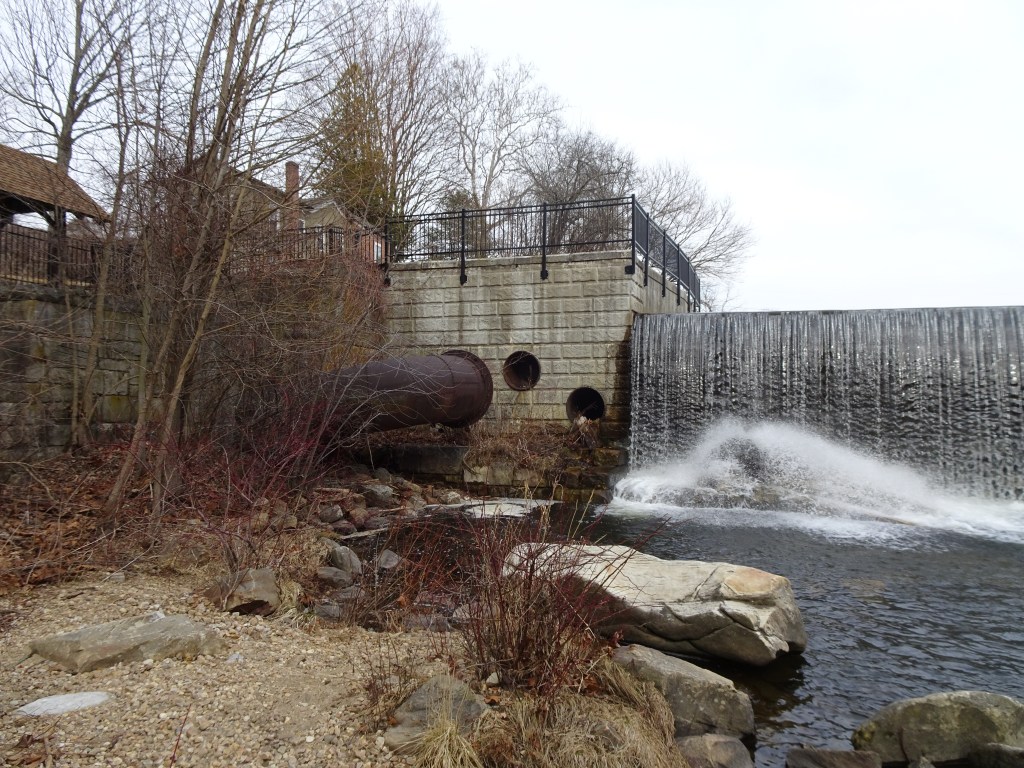
The Beckley Iron Works Furnace is situated next to the Blackberry River, and operated from 1847 to 1919. The dammed river provided its source of power.
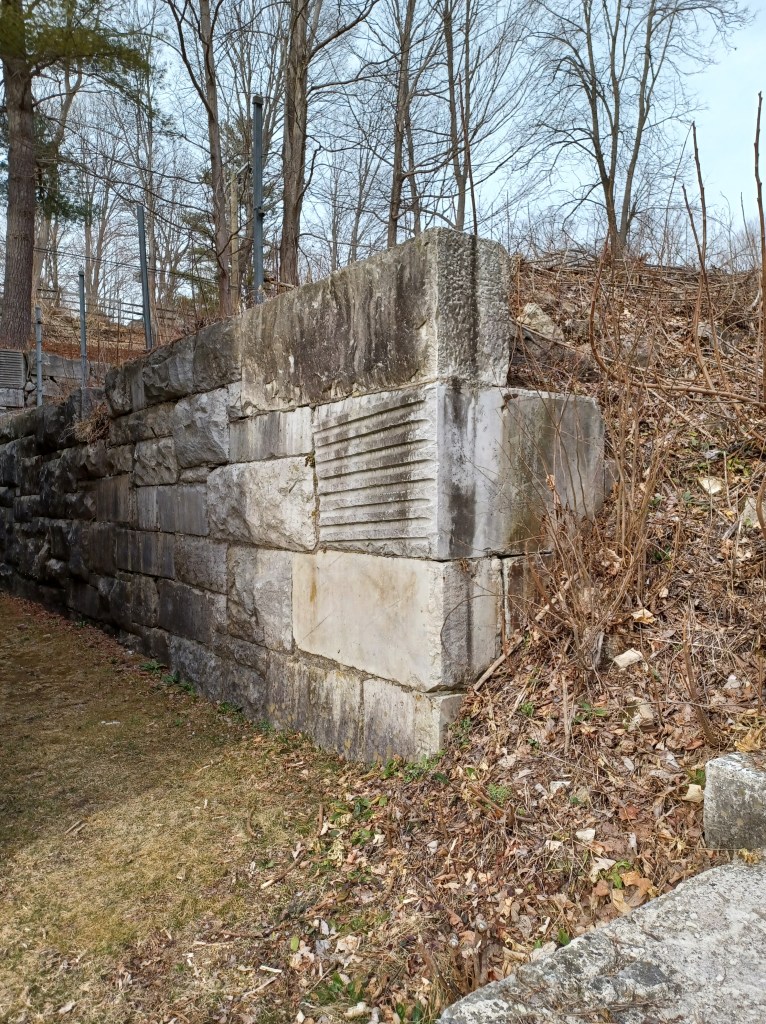
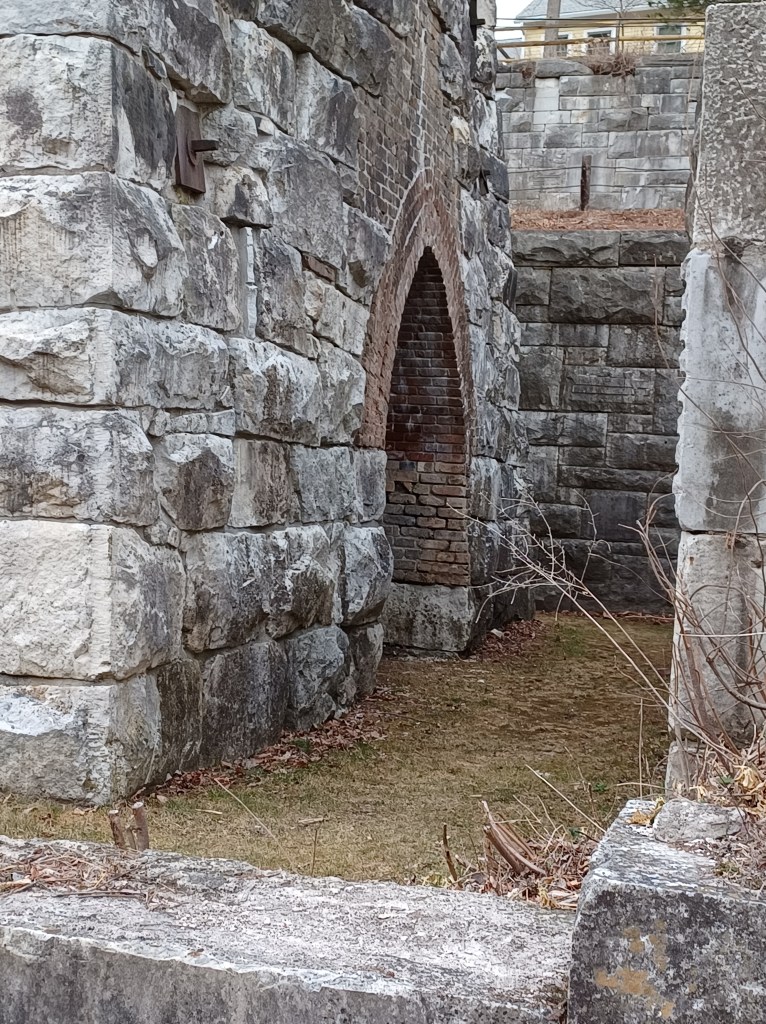
It seemed obvious to us that the stone used at this site had come from the nearby quarry we had just visited. A retaining wall, which holds back the steep slope that rises above the river, is constructed wholly of marble, gorgeous white rock with black streaks.
As we wandered the site, we got a closer look at the marble used to create the blast furnace, which is essential to the manufacturing of iron castings. Once trains became an important mode of transportation, the railroad car wheels this furnace was known for became much prized as railroads expanded beyond the northeast. Other cast-in-place products were also produced alongside the river.
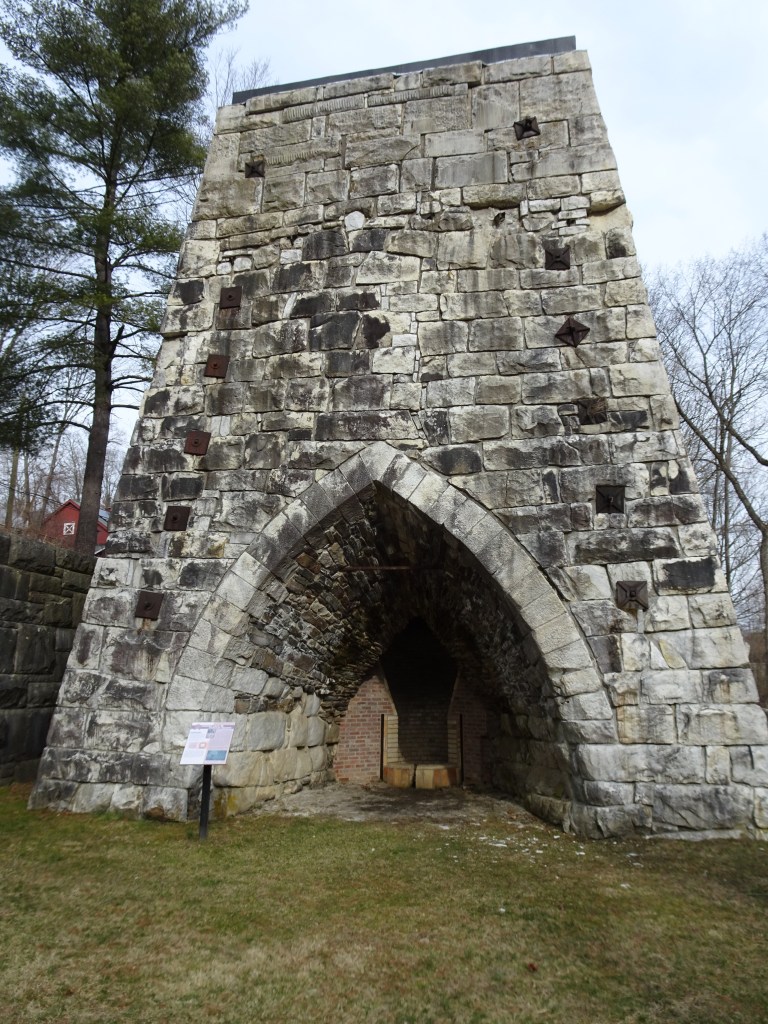
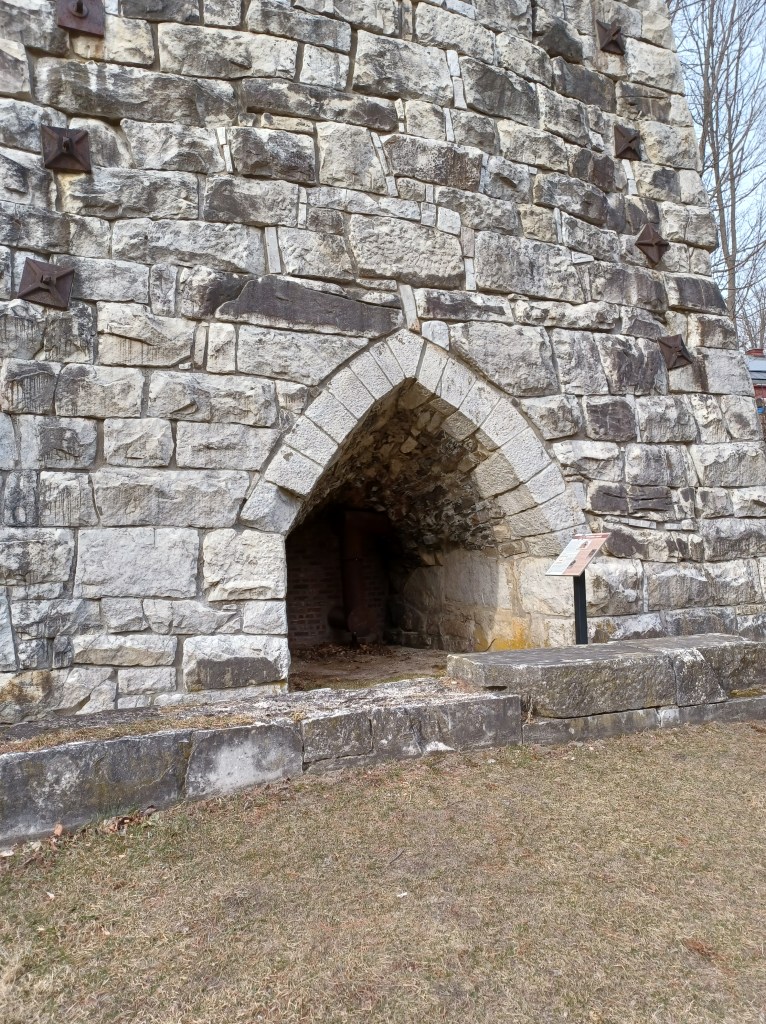
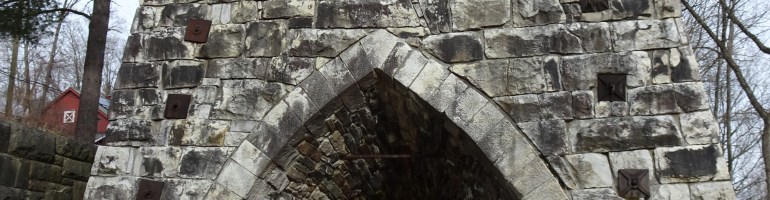
The stone furnace features multiple arched openings, all necessary to produce the conditions for casting iron products. The principles of using a keystone to support arch structures remain in use to this day. The furnace offers some great examples of keystones and how these arches appear to defy gravity. https://housing.com/news/keystone-architecture/
If you go be sure to admire the multiple stone arches built into the furnace—each arch has an iconic keystone, essential to maintaining the integrity of the structure.
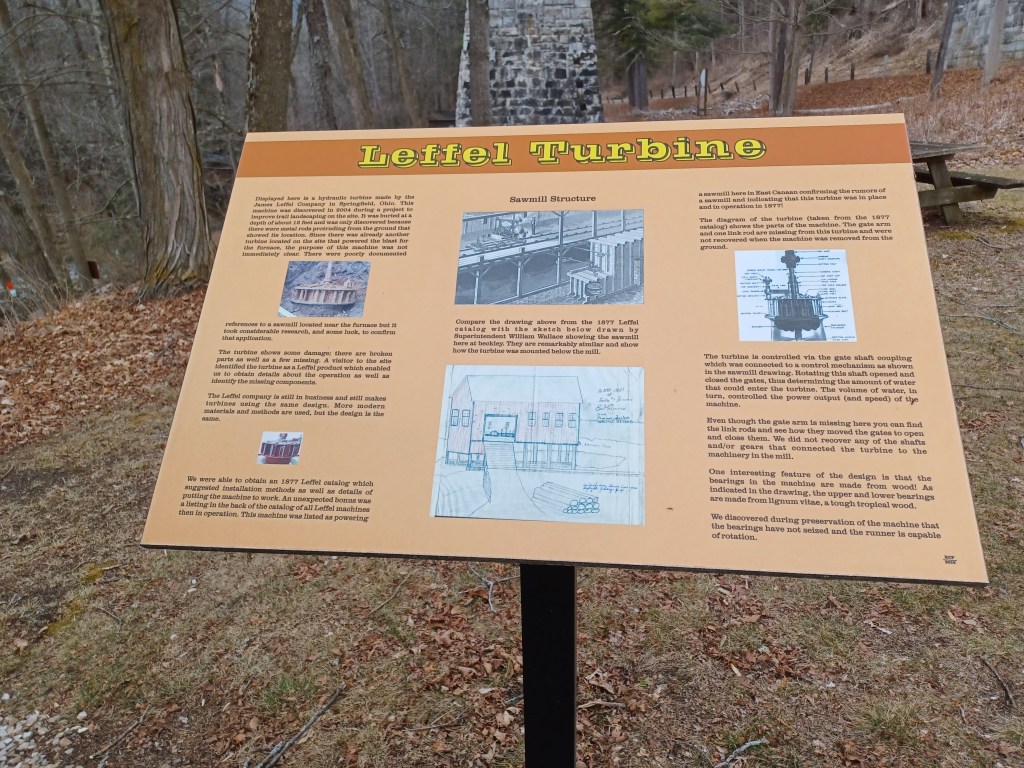
Interpretive markers are in place throughout the site, explaining in detail the process of casting iron into useful forms our rapidly industrializing country required.
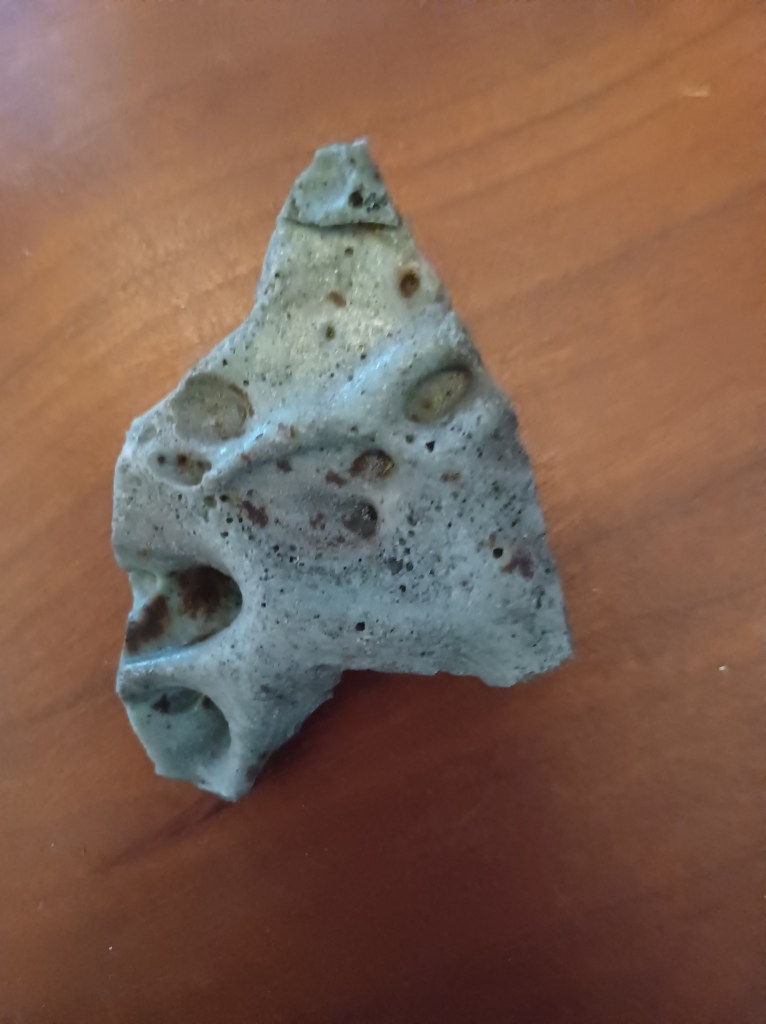
Across the river, an “Iron Trail” leads visitors up a wooded path. The incline is not part of the original landscape. The remnants of the iron casting process were dumped in a pile across the river, creating a gigantic mound of rock over the years, now covered by trees and leaf debris. Along the path we found pieces of slag, evidence of the massive quantities of waste byproduct removed from the blast furnace.
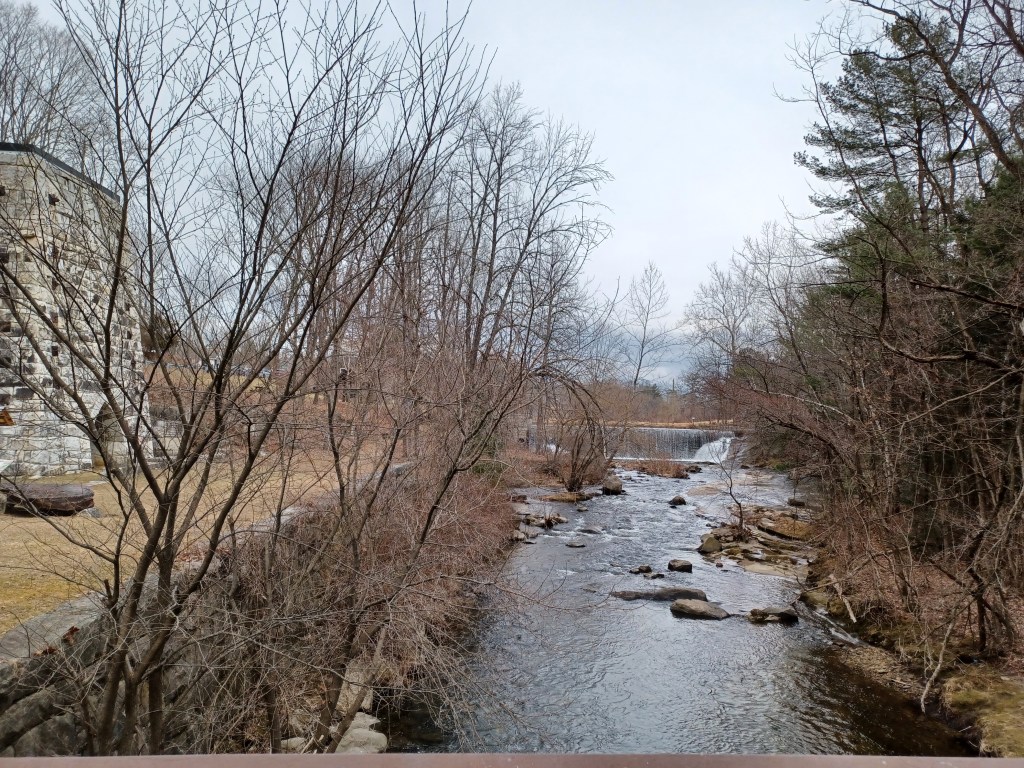
We spent nearly an hour wandering this small riverside park. The area directly around the furnace itself was relatively level. Elsewhere the site is steeply sloped down to the river and back up to the roadside.
As we were leaving, a fisherman, carrying his pole and net, headed for the rocky shoreline of the river. It was a steep climb down to the water. Posted alongside the waterway are warnings not to eat fish caught there. Presumably he intended to use the time as most fisherfolk do, enjoying the outdoors.
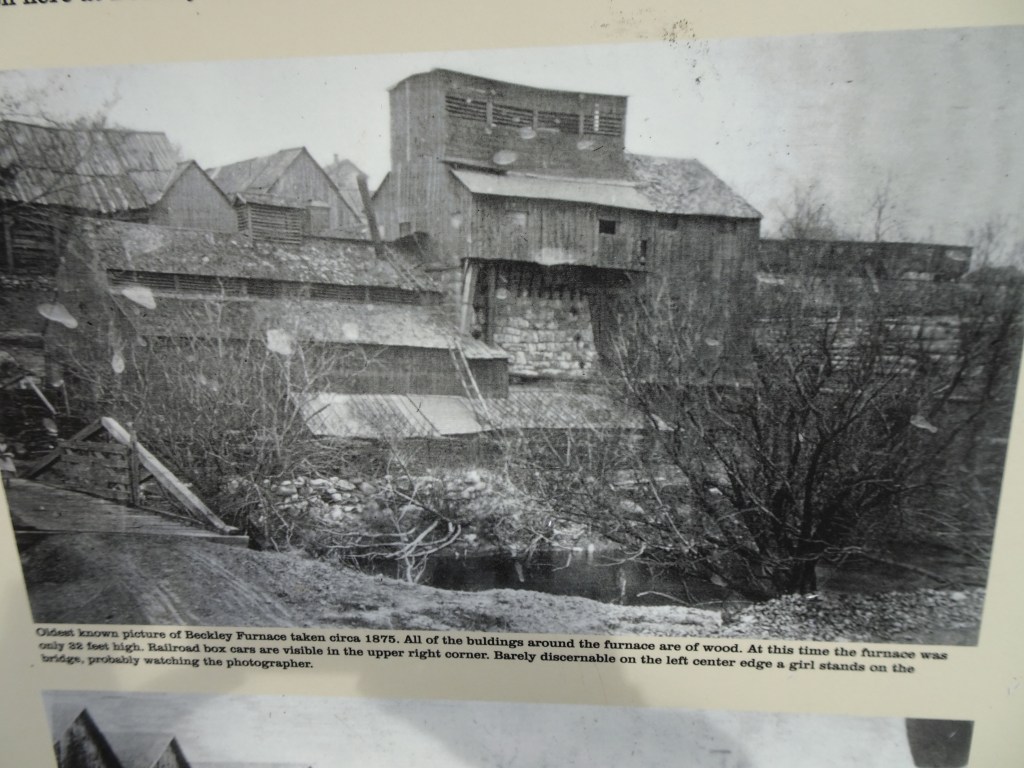
The area looks quite different than when the site was a bustling manufacturing area. A large wooden complex of buildings at one time almost totally encased the marble blast furnace. These days, the stone furnace is about all that remains. A hundred plus years after the furnace ceased operation, there is no trace of the massive wood structures that were an essential part of the manufacturing enterprise.
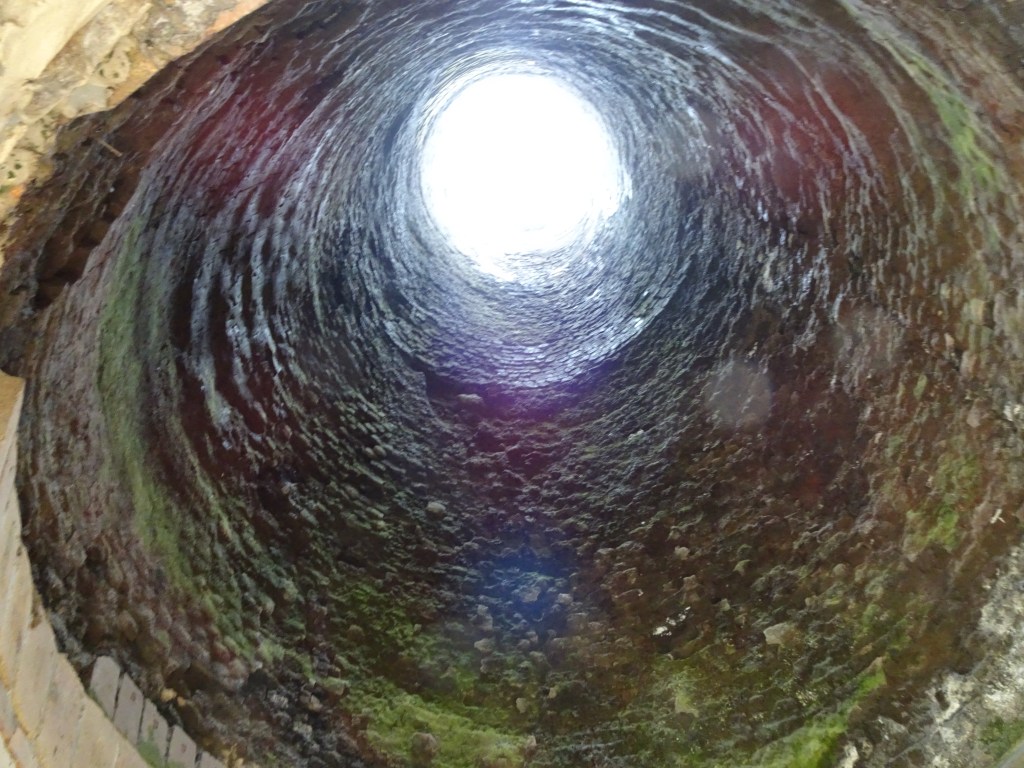
Visitors can now closely examine the stone arches and the various openings that were required to allow the furnace to process raw iron into useful castings.
We get the opportunity to walk alongside rivers on many of our wanderings. Combining a river walk along with being transported back in time through these roadside stops makes our explorations even more memorable.
A river, history, and geology—what’s not to love? Happy trails!
Marjorie
 Marjorie Turner Hollman