LISTEN:
Glancing through the glass window, she tucked an unruly lock of her dark, shoulder-length hair behind one ear. She leaned inside the office door, her dark eyes scanning the room; her knee-length skirt covered substantial hips.
“Marisol?” she asked, hoping my co-worker was nearby. My eyes darted down the piece of paper on my desk, hoping to fix on a useful phrase. “Marisol não está aqui,” I told her. Marisol isn’t here. I read with care from my “cheat sheet,” the unfamiliar syllables of Portuguese tumbling awkwardly off my tongue. The woman nodded, drew her head back and strode off.
My pulse slowed. I had begun work at an agency in Milford, Massachusetts that offered help to young families. A number of our clients spoke Portuguese or Spanish. Our English as a Second Language (ESL) classes drew many inquiries. Each day I struggled to make myself understood by those whose second (and sometimes third) language would one day be English. Some day, but not the day they walked through our door.
My Portuguese was non-existent, and my only Spanish lessons had been in fourth grade, the highlight of which was the staging of Goldilocks and the Three Bears. In the role of Goldilocks, I was to bellow, upon sighting the three bears, “Tengo mucho miedo!” I am very afraid! Evidently my performance was quite convincing.
Diving into the deep end
After having had no way to immerse myself in another language, I was plunged into the deep end in this job, finding myself in another culture, each day meeting immigrants who knew no English. My limitations were obvious to them and to me, and frustrating for all of us.
The telephone presented me with a deeper level of discomfort. In person, I could convey remarkable amounts of information with hand gestures, shrugging, or shaking my head. My large desk calendar helped clarify dates. Phone calls, however, begat much confusion, voices being our sole means of communication. “Não falo Portuguese”—I don’t speak Portuguese—felt like an inadequate response during these stressful encounters.
Marisol suggested I meet her friend Renata, a former elementary school teacher from Brazil. Renata offered Portuguese reading and writing classes to Brazilian children. These were skills parents wanted their children to learn to assure they could communicate with grandparents and other family members who remained in Brazil. They would not learn to read or write their native tongue in American schools. She agreed to add me to her student roster.
The narrow stairs to Renata’s apartment led me into an even more intense new world. While her students labored over their Portuguese worksheets, Renata endeavored to teach me the language. She smiled, yet most of what I heard her say was unintelligible. I listened with incomprehension while Renata directed her young charges. They understood what she told them. The strange rhythms and tones of Portuguese conversation washed over me, drawing me into a new experience of language. I tried to remember phrases. The children glanced over at me and grinned.
Renata knew little English; our conversations became comical exercises of jumbled sentence fragments in English and Portuguese. We spent half the time on my studies, the other half on English for Renata. “Difícil,” Renata muttered with a discouraged shake of her curls, her brow furrowing as I encouraged her to try simple English phrases. Upon resuming my Portuguese lessons, however, her confidence returned. She often said that I must “práctica, práctica,” assuring me that this was the secret to learning another language. Her kindness, sense of fun, and willingness to tell me of her own struggles washed away my fear. Encounters with those who spoke little English became less stressful as I continued my studies.
Comprehension dawns
One day a young couple stepped hesitantly into my office. Suspecting they were Brazilian, I greeted them. “Tudo bem?” Everything’s fine? “Tudo bem,”—Everything’s fine, they agreed, their faces brightening at my welcoming phrase, spoken in Brazilian Portuguese. A torrent of words cascaded over me after these social niceties, and I was soon overwhelmed with language that beyond my comprehension. Hoping to get back in the game, I requested, “Fale devegar, por favor”—please speak slowly. Nodding, they smiled, looked directly at me and enunciated careful, simplified phrases. I grasped enough of what they said to respond appropriately. After they left, it felt startling to realize I had conversed with this family solely in Portuguese. I had understood them and been (I hoped) understood. With each similar ensuing conversation, more and more pertinent Portuguese phrases came to me with ease.
While I studied with Renata, I also spent time at home listening to Portuguese movies and Spanish “novellas,” somewhat akin to American TV soap operas. My comprehension of Spanish increased with this submersion in yet another language similar to Portuguese, however I had fewer occasions to interact with native Spanish speakers.
A young mother from Guatemala smiled as she entered my office. Her short stature and shiny black hair reflected her Central American Indian heritage. We spoke alternately in English and Spanish. She answered my questions about life in Guatemala, her family, and the differences she observed between her native country and the U.S. “I like it here. I don’t hear gunfire at night,” she confided. “I can also wear my wedding ring. In Guatemala, any jewelry I wore would have been stolen.”
One day I said something to her in Spanish and she giggled. “What is it?” I asked her.
“You are speaking Spanish with a Portuguese accent.” We laughed together at my confusion as I straddled the different languages that bubbled through my office.
With the loss of agency funding, my job ended, and with this loss, regular reasons to interact with immigrants in the area were removed as well. I no longer “práctica, práctica” and my Portuguese and Spanish skills have declined markedly.
Lending a hand
Several years after I had last spent time working with local immigrants, we visited my dad in Florida, and went to a nearby bird sanctuary. As we strolled through the aviary enjoying the tropical birds moving about unencumbered in the large enclosure, a young dark-haired girl being pushed in a wheelchair came toward us. Her hands clasped over her head, she cried out in Spanish, “Miedo! Miedo!”—I’m afraid!
The birds were beautiful yet all had been injured, unable to fly; her fears were unfounded. I searched my memory for simple words that would assure the child; the languages I’d worked so hard to acquire had eluded me in the years since I had left the center for families in Milford. I recalled one simple phrase, and spoke directly to the child, (in Spanish) “No peligroso”—they aren’t dangerous.
Dropping her hands, she gazed at the birds that surrounded us. She understood. I continued, “Qué lindo,”—how beautiful; I smiled and indicated the colorful birds. She smiled back, then spoke to her mother, pointing at the huge wood stork that had frightened her.
Moving away from the girl and her mother, I thought to myself, “No tengo miedo”—I’m not afraid. No; not so much anymore.
In the four years I spent working in this nearby community I discovered a world that was quite different from my own. I felt such respect for these brave travelers who had had the courage to leave home and all that was familiar to immerse themselves in a country, a language, and a culture so different from their own. My work in those years helped me see that I too had much to give, not in spite of, but because of difficult experiences I had survived and learned from. What strange, strange grace, indeed.
Marjorie
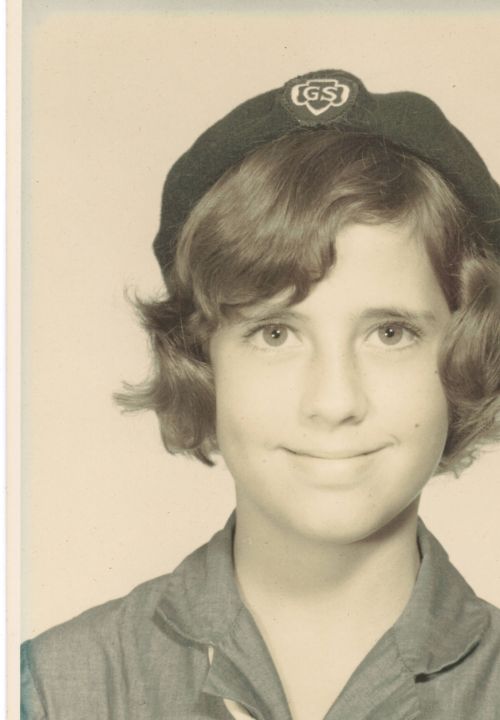
This is an excerpt from My Liturgy of Easy Walks: Reclaiming Hope in a World Turned Upside Down. Marjorie Turner Hollman helps authors self-publish their books. She is also a disability advocate, sharing information about Easy Walks (not too many roots or rocks, relatively level with firm footing, and something of interest along the way) in open space. Link to all Marjorie’s books.
 Marjorie Turner Hollman
Lovely!
Thanks for reading!
This story touched my heart, Marjorie! Very timely too…
Thanks so much Jill.
Marjorie, Thank you for sharing this excerpt from your book! I enjoyed your perspective of overcoming fear of things not fully understood. Your discoveries in life are relevant for any time period, but especially now.
Dear Kit–thanks so much for reading and letting me know your thoughts. It means a lot.