Marjorie Turner Hollman is an author, creator, observer, and disability advocate who loves the outdoors. Link to all Marjorie’s books.
LISTEN HERE:
When we planned our trip to the Gaspé peninsula we had no real idea what we might find. Online photos can offer some clues, and descriptions (like this!) may help potential visitors decide if they want to make the effort to spend time in any particular place. We have found that “on the ground” experience is so much more helpful than other ways of learning about an area can convey.

When it came time for us to head to Percé I was reluctant to leave Carleton-sur-Mer, where we had spent several days exploring the area. The sense of place, the joy of spending hours simply taking in the sounds of the waves, the scent of sea air and feel of the breeze, made me reluctant to move on.
My reluctance, however, was short lived. Each new coastal area we encountered on the Gaspé peninsula has charms of its own that made me want to stay longer. Taking the coastal route (counter clockwise) meant that we had amazing ocean views daily, very little traffic (this was late September) and opportunities to stop at little “halte municipales” (town parks) along the way. Few of these stops had an identifying name, and there were so many along the coast it was difficult to keep track of all of them!


These roadside stops offered some surprising wildlife encounters. We pulled into a small park next to a river flowing out to the sea. As we stood on the shoreline, a seal floating in the water caught our attention. It was taking a rest, its nose in the air. No sooner than we had spotted this one seal, we realized another one was next to it. Then another, and yet more. In total we counted sixteen seals, waiting for lunch as the ocean tide flowed inland. These transition zones, fresh meeting salt water, appear to consistently draw wildlife, both sea birds and seals. The seals stayed near the far shore, but we were able to get a few photos with our “not great but adequate” camera to remind us of this sweet encounter.


Another stop required more effort. We first spotted the sign for Parc du Colborne (Colborne town park), on our map, then navigated a several kilometer dirt road down to a parking area. From there we found a foot path, mostly an Easy Walk, with a few areas of roots.

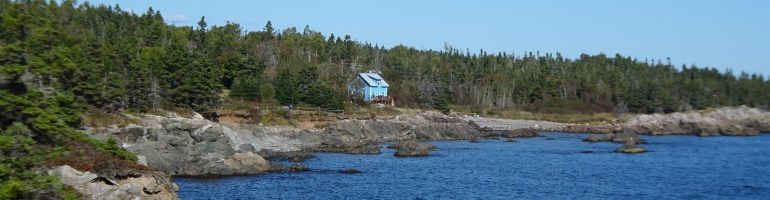
The path hugged the shoreline so we had stunning views of rocky cliffs all the way out to a promontory.

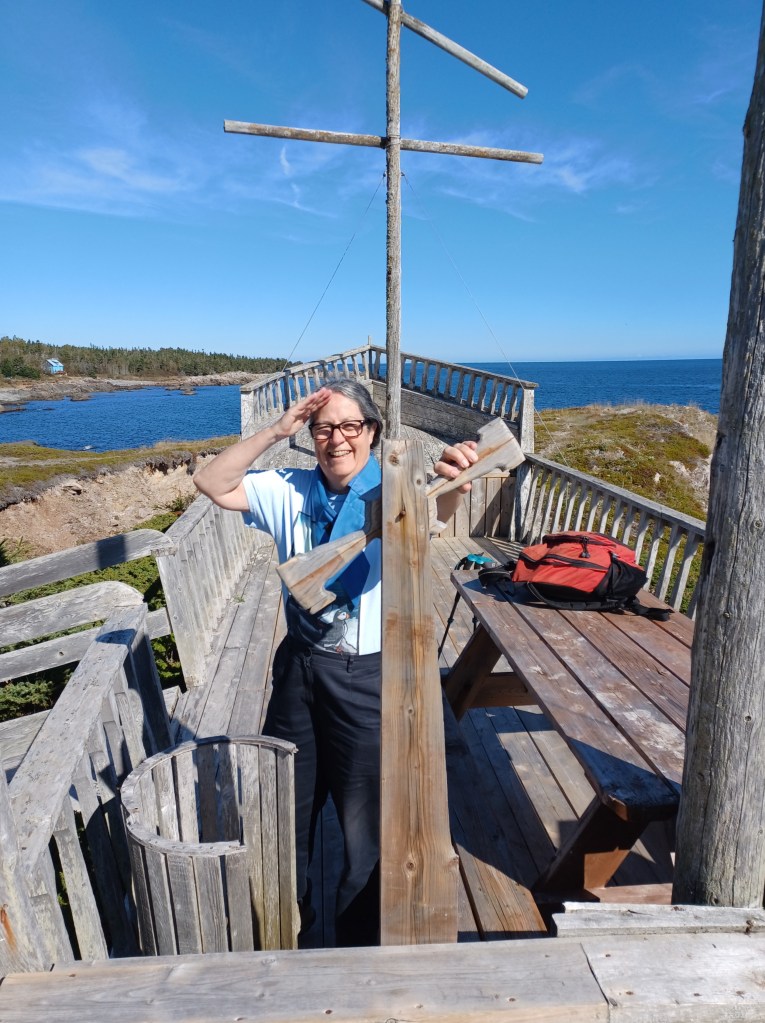
There we found a replica boat of sorts, erected to commemorate the Colborne ship wreck that had occurred nearly 200 years ago.

The story of the wreck was challenging for us to decipher. Numerous portions of the story were written in French on large painted boards, with no English translations. My French is rusty, but we were able to pick out enough to understand that there were questions about why the ship wrecked, what happened to the cargo, and that the wine and other goods had been intended as payment to the British troops stationed in that area. We also learned that much of the cargo was never accounted for.
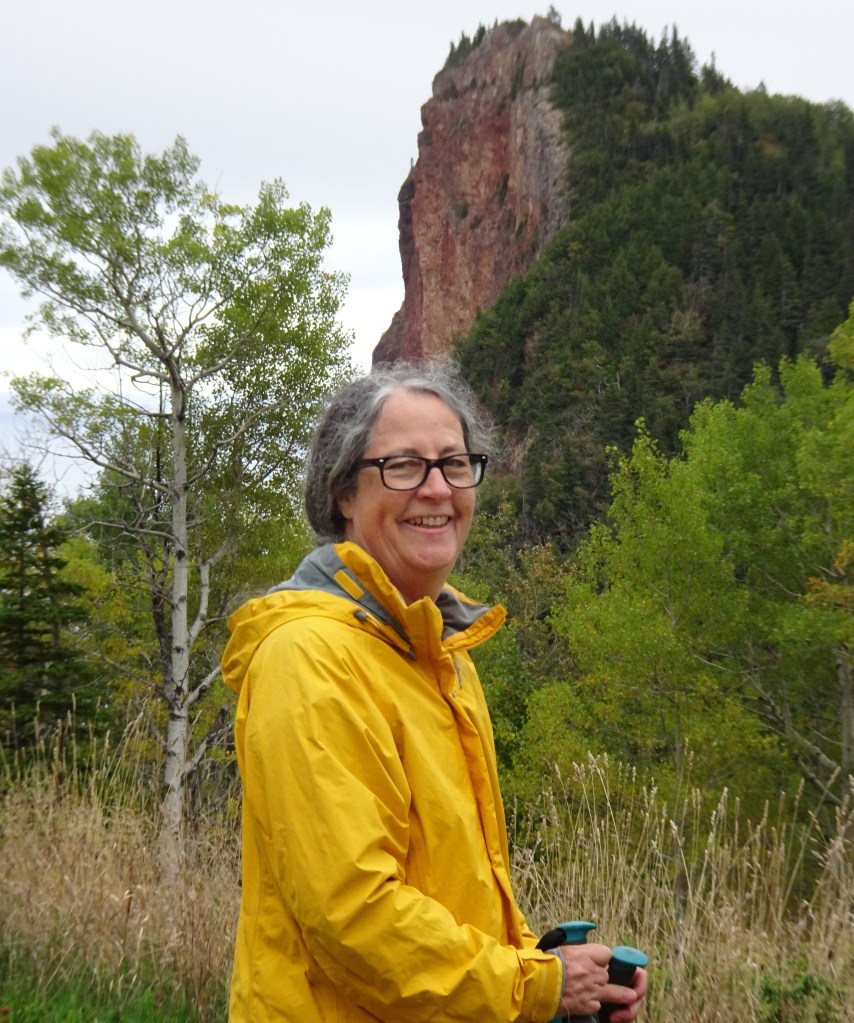
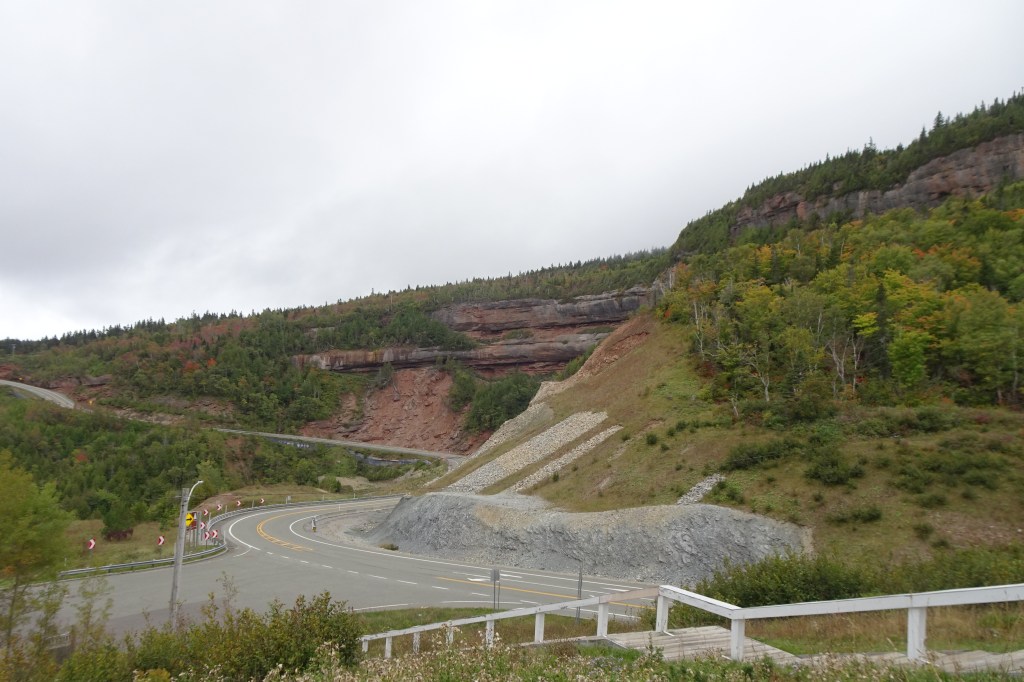
As in other places we have visited, we were grateful for local efforts to make these town parks accessible. Not all are handicapped accessible, but usually they were developed enough for me to manage, using my hiking poles. We found benches at many of these rest stops. Historical plaques detailing the history of specific locales help visitors to understand better the importance of each settlement, and how they were affected by the geopolitics of the European countries that controlled these areas.
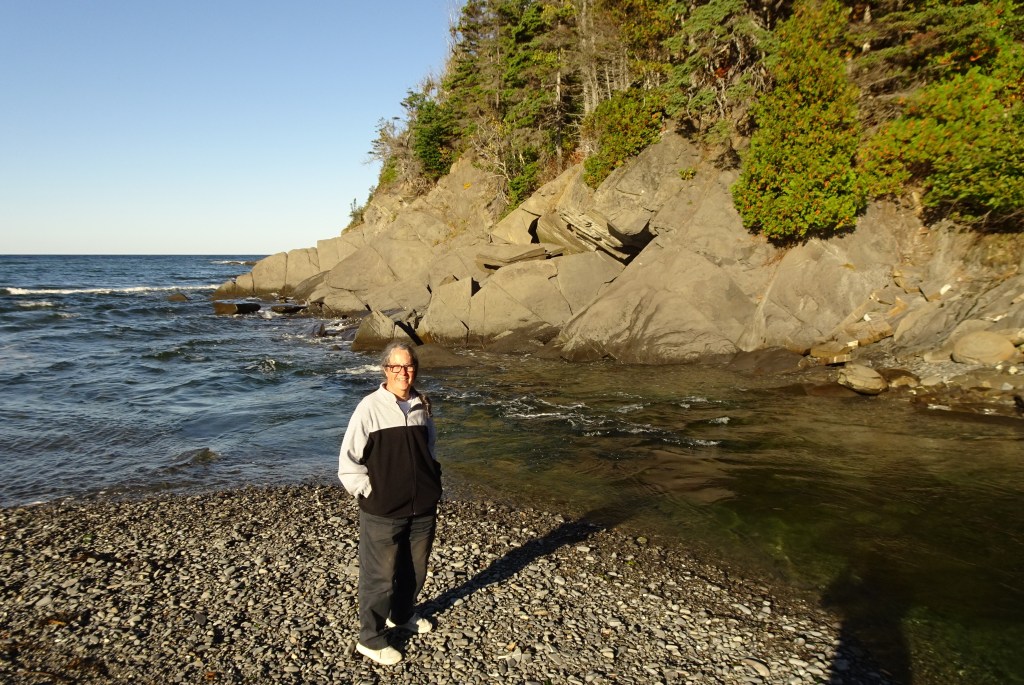
On our travels along the coast of the Gaspé Peninsula we saw many small streams flowing from the nearby mountains and relatively small ponds into the sea. At these confluences, locals and visitors will find easy access for fishing, picnicking and opportunities to simply enjoy the outdoors. The multitude of these streams prompted us to reflect on how different the settled shoreline of Massachusetts is. A very few rivers empty out into the ocean. Many of them are dammed, channelized, and otherwise have been altered by dikes for the purpose of harvesting hay from salt marshes.
We wondered if the present conditions along the coast of the peninsula might offer a glimpse into the past, a hint of what the coast farther south might have looked like two hundred years ago in southern New England. Maine still has some lovely small streams pouring into the sea, but farther south it is the exception.
Our travels along the coast led us to discover so much of interest that we always took longer to get from one planned destination to the next. If you are fortunate to visit the Gaspé peninsula, plan to make time to “arrête” at some of these “Halte municipales.” You may simply find a place to have a snack and learn more history of the area where you stopped.

But you may also be lucky enough to encounter wildlife you had not anticipated. If you hurry on by, you will never know what you might have missed. Traveling at a slower pace and being willing to make a few detours along the way can provide some wonderful experiences you had never imagined. But you will need to “halte” to find out. Happy trails!
Marjorie
 Marjorie Turner Hollman
The Halte Municipales are from smallest to grandest are gems!
They really are. We had such amazing experiences see these places along the way. Thanks for reading and commenting.