

Marjorie Turner Hollman is a writer who loves the outdoors. Link to all Marjorie’s books.
LISTEN HERE
The Bay of Fundy is world famous for its tides. Up to 50 feet in some places. Hopewell Rocks Provincial Park has perhaps the most famous portion of the Bay’s spectacular shoreline to visit, but there are so many other locations where you can witness the tides in this unique area.


Our first stop on a trip north from New England was at the Reversing Falls in Saint John, New Brunswick (NB). Some references name this the Reversing Rapids, or the Reversing Rapids Falls.
Many other reversing falls exist in areas along the northeastern coast of the Atlantic. The phenomenon requires a river flowing to the sea to meet substantial tides, both of which share a small space which makes the opposing forces of water visibly churn.
Each of the reversing falls we have witnessed is dramatic, (at times) but Saint John has the tides of the Bay of Fundy powering the river and tide’s collision so the result is quite stunning (and dangerous for those who have ended up in the maelstrom over the years).

On our first trip to the area we took a slight detour from Rt. 1 at Saint John and followed the signs for the falls. We arrived just in time to witness the surging waters rushing through a narrow spot basically in the middle of town on the Saint John River. The rocks in that area are geologically significant since they provide evidence of the collision of continents.
The strongly flowing river meets the rising and falling tides of the Bay of Fundy underneath the bridge that spans the river. This dynamic, ongoing event can be seen from several viewing points on either side of the river.
The Reversing Falls and sky walk (now called The Plank) in Saint John provide a view out over the river (there is an entry fee). Next to the restaurant is a cement sidewalk that offers views of diving cormorants and bobbing seals in the river when the tide is right.
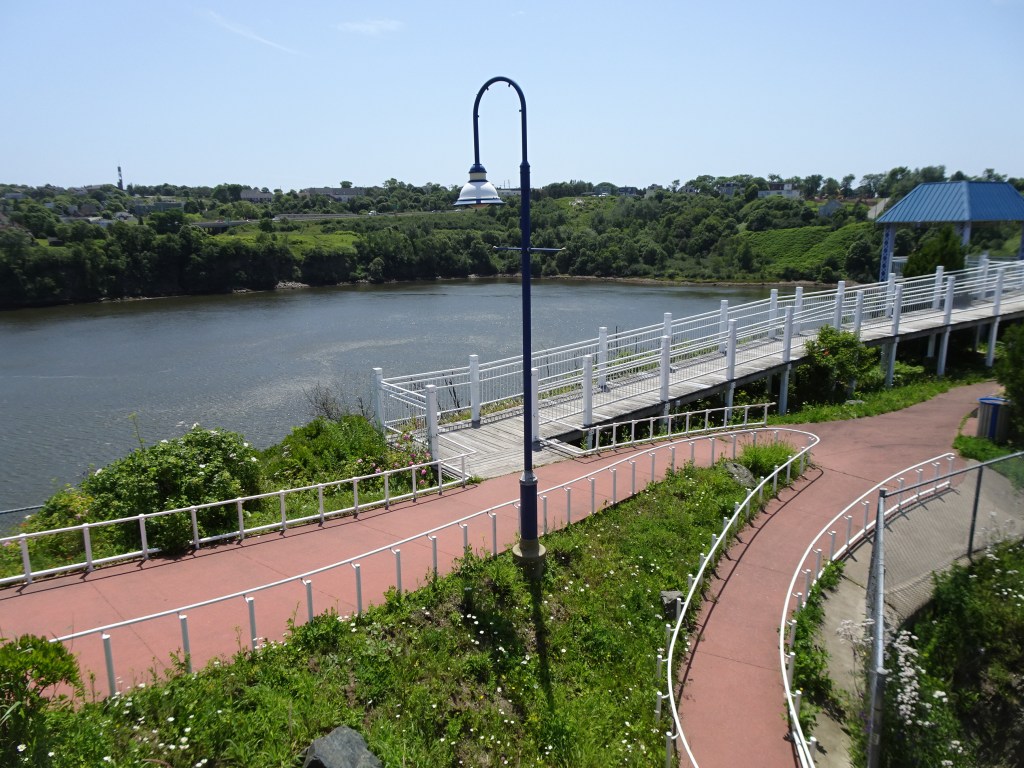
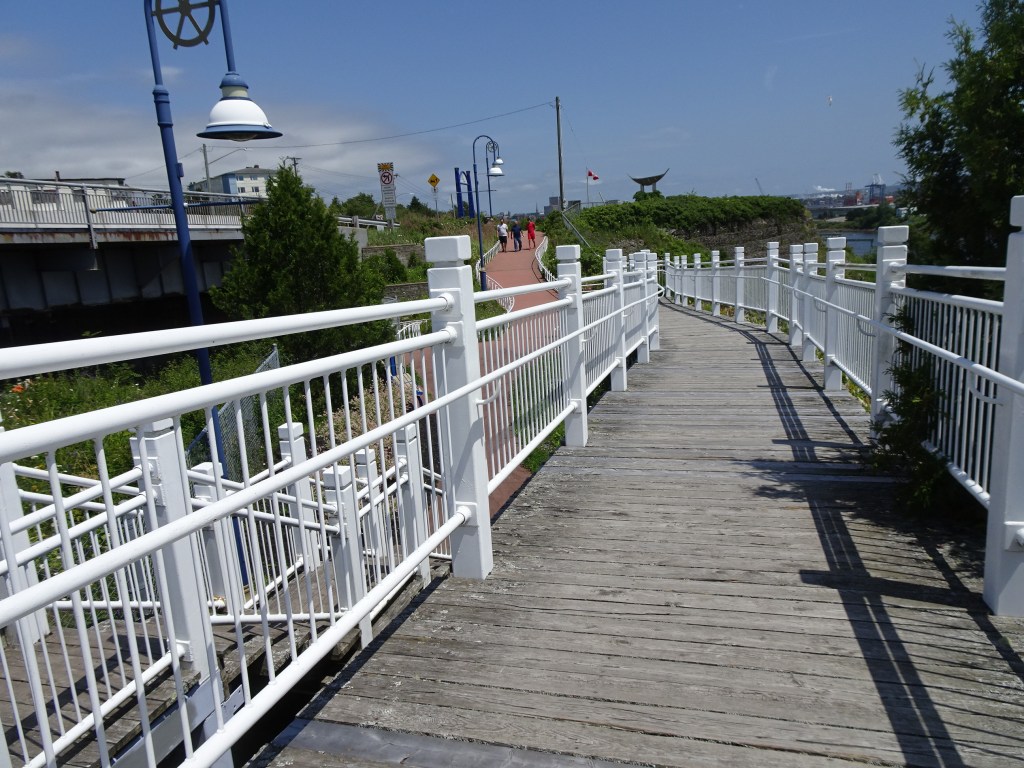
Across the bridge that crosses the river (there is a pedestrian sidewalk on the bridge) is a handicapped accessible walkway out to the opposite side of the river. This offers some different views and some shade. Depending on the tides, the river may be calm, but it does not stay that way for long. Just when you think nothing is going to happen the current begins churning again.
Another very cool spot to witness this daily show is just east of the river. Douglas Ave. to Fallsview Ave. is a short drive north of the bridge that crosses the river. There you will find a viewing area, a portion of the Stonehammer UNESCO geopark. On our first two visits to this shoreline spot we found few other visitors. But on our most recent visit we shared the small parking area with about five tour buses and a whole lot of folks anxious to see the river. We waited them out, the tour buses left, and then had the park almost all to ourselves.
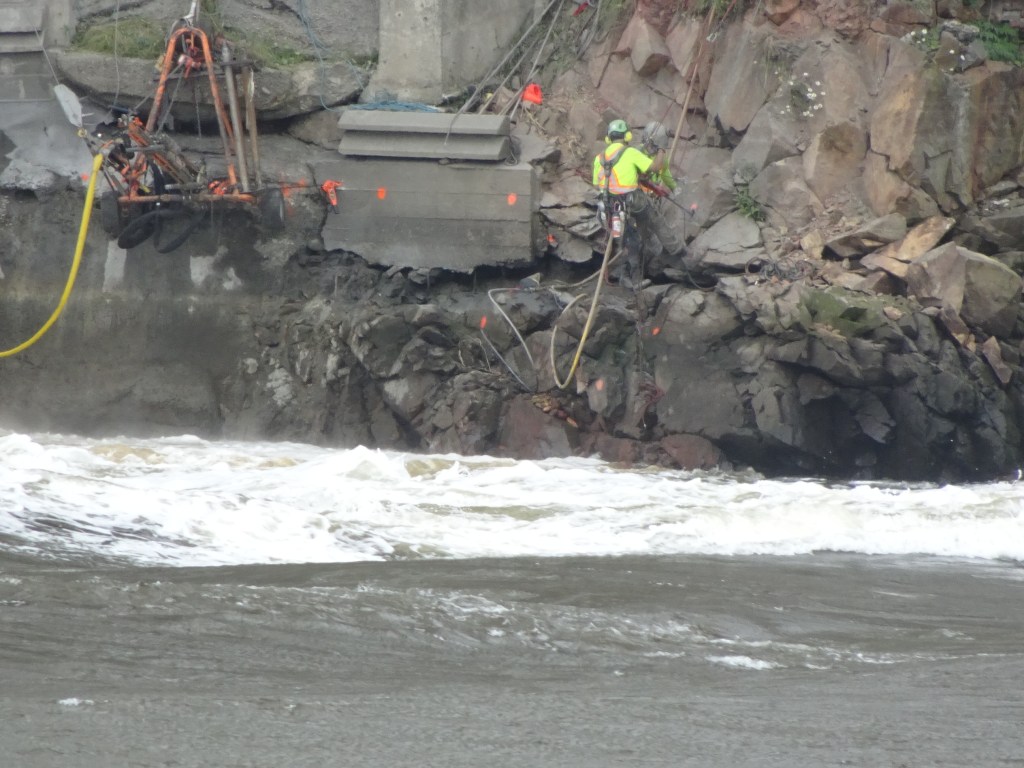
On one of our visits to this small park area along the river, the paper mill across the way that is directly on the river was undergoing construction of some kind. Watching workers dangle over the churning river was breathtaking. I did not envy them the view they (enjoyed?).
The Bay of Fundy touches two Canadian provinces, New Brunswick (NB) and Nova Scotia (NS). Countless small inlets create varying manifestations of the tides in the region. Some areas are rocky while others feature muddy shorelines and what looks like a chocolate river flowing to the sea.
St. Martins, NB has several campgrounds along the bay that are ready to welcome visitors. We spent a couple nights at one of these shoreline spots, falling asleep to the sound of waves in the Bay as the tide flowed into and back away from the shore line. A nearby harbor provides graphic evidence of the ebb and flow of the tide. When the tide goes out, boats that had been floating when the water was high wallow at the end of their ropes and dangle from the lines that secure them to the dock .
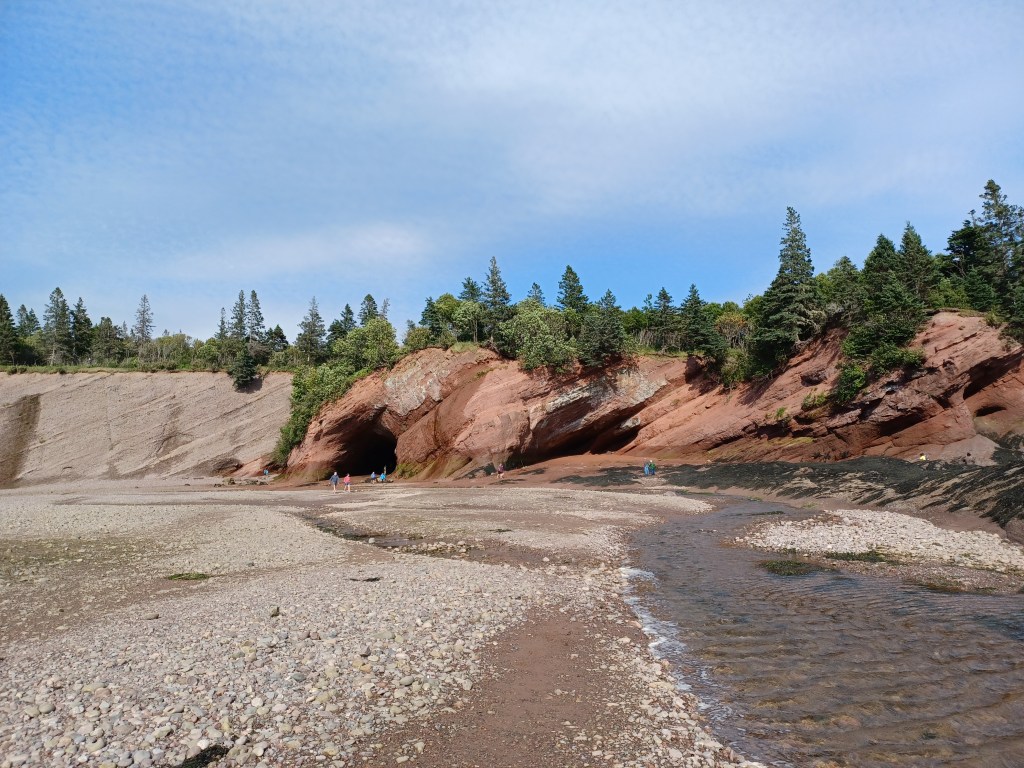
The nearby St. Martin’s sea caves are only accessible (not handicapped accessible) at low tide. The Bay of Fundy fills the entrances to the caves as the waves return.


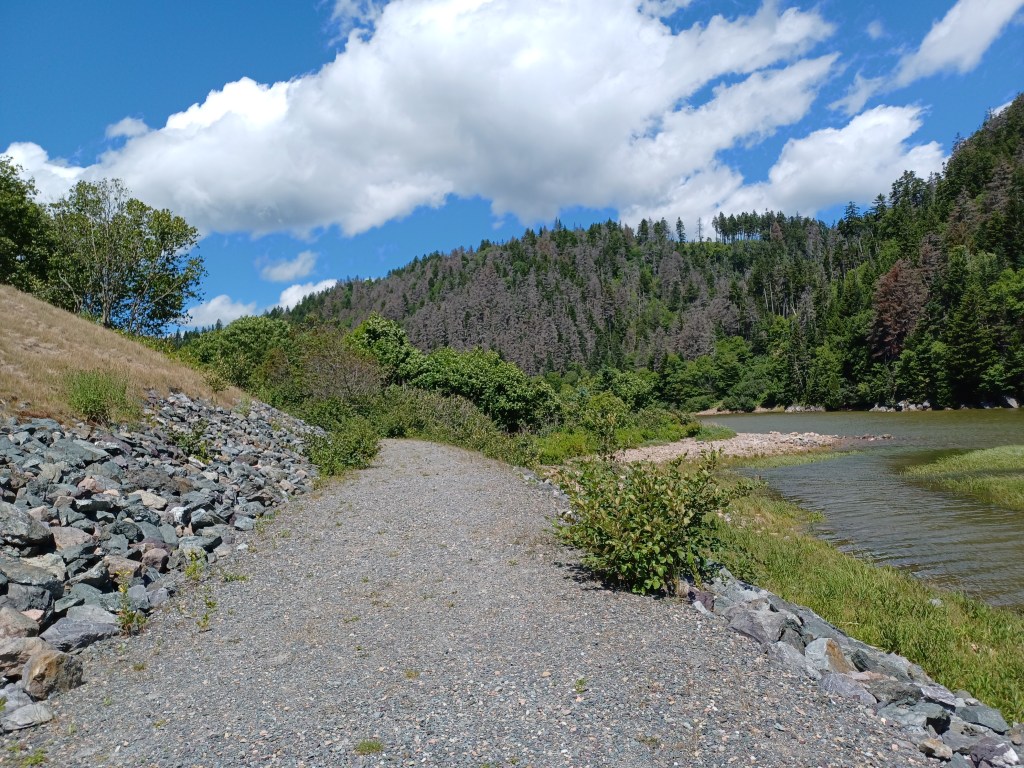
Just beyond the sea caves is the Fundy Trail Parkway, a grassy walking path along the shoreline that is worth making the time to explore. At the end of 2023 the area including the trail will become an offical provincial park. A road follows the footpath along the shoreline, so you can either explore by walking or driving. You will discover great views regardless.

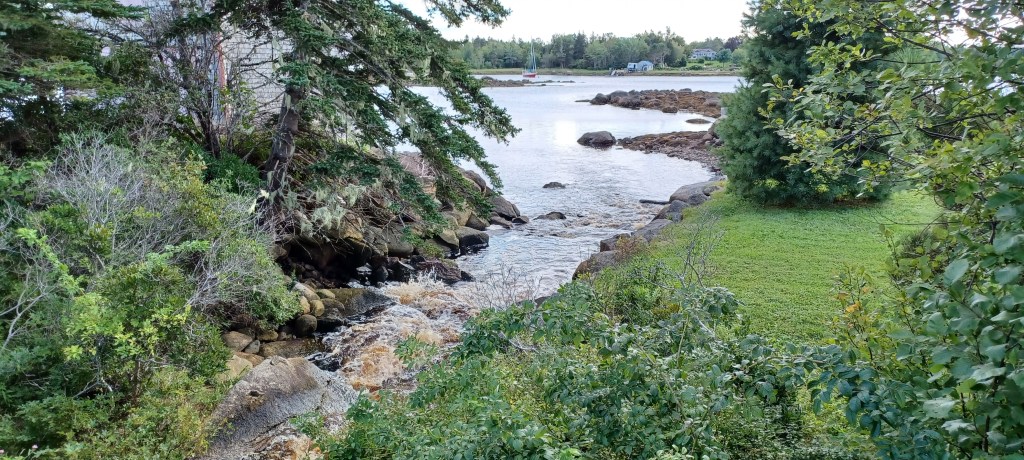
We found a small park the (Fundy Discovery Site) along the highway in Truro, NS with an Easy Walk gravel path alongside the Salmon river that flows into the Bay. This area is known for its daily tidal wave of sorts (a tidal bore) that steams up the waterway that is part of the Bay of Fundy, pushing the river back upstream. We were not able to time our visit to witness this phenomenon, but enjoyed walking alongside the river regardless. Tides wait for no one, so checking a tide chart (the high and low tides by about an hour each day) is essential if you want to witness specific events.


We typically do not stop at museums on our trips, preferring to spend time outdoors. However, two museums where we stopped both offered views of the Bay of Fundy. The first was the Fundy Geological Museum in Parrsboro, NS, with views of the Bay. There we saw examples of dinosaur footprints, some quite tiny. The other museum was the Joggins Fossil Cliffs in Joggins, NS. Built on top of a former coal mine, the center has intriguing fossil displays and offers a half-hour tour of the cliffs (with fossils in place) just below the center. We opted not to join the tour but were still able to see the Bay from the grounds of the center.



Cape Chignecto Provincial Park on the Cape Chignecto peninsula in West Advocate Harbor, NS, offers views of the Bay of Fundy from the Nova Scotian side of the water. When we arrived at the park we were advised to get off the beach within the hour since the incoming tide would soon close off our escape route. We kept an eye on the clock (and the tide!), wandered the shoreline and some of us (not me!) climbed on the orange-ish sandstone rocks that have been sculpted by the wind and waves. It felt like we were visiting an outdoor sculpture park.

The curves and hollows of the bedrock jutting out into the Bay appeared to have been chiseled by a genius artist. Each new vantage point revealed another aspect of how the rock has been carved over the eons. I could have spent hours there, well, at least until the tide would chase us back inland again. We returned the next morning and found the tide rapidly receding from the shore, which allowed us another opportunity to explore the exquisite stone sculptures.

Our overnight stay at the Old Shipyard Campground (open seasonally) on Spencer’s Island, Cape Chignecto, gave us yet another opportunity to fall asleep to the sound of waves as the Bay sloshed up and then back away from the beach.
Our last stop on our way home from spending time in Nova Scotia was at St. Andrews, NB, where we found yet another campground on the shores of the Bay of Fundy. Our camp site was not where we could hear the waves, but we enjoyed a leisurely Easy Walk from the campground to the walkway just above the waters of the Bay.


St. Andrews hosts a developed rail trail that carries visitors out to the shoreline, and we were able to explore by foot a portion of the path. Lacking time on this visit to get our bike out to see more of the trail, we will just have to go back!
When you visit this remarkable area you will be impressed by the rugged shoreline. Despite appearances, we found a number of places where I was able to move comfortably, walking with confident strides on paths that had not too many roots or rocks, were relatively level with firm footing, and oh, so much of interest along the way. That’s my definition of an Easy Walk, and once more we were able to find places that were possible for me, with limited mobility, to explore. Happy trails.
Marjorie

Marjorie Turner Hollman is a writer who loves the outdoors, and is the author of Easy Walks in Massachusetts, 2nd edition, More Easy Walks in Massachusetts, 2nd edition, Easy Walks and Paddles in the Ten Mile River Watershed, Easy Walks South of Boston and Finding Easy Walks Wherever You Are. Her memoir, the backstory of Easy Walks, is My Liturgy of Easy Walks: Reclaiming hope in a world turned upside down.
 Marjorie Turner Hollman