

Marjorie Turner Hollman is a writer who loves the outdoors. Link to all Marjorie’s books.
LISTEN HERE
Our place for the week, King Neptune Campground, quite near the famed Peggy’s Cove in Nova Scotia, afforded multiple camping spots next to the ocean.


We were able to spend time sitting next to the shoreline at our little piece of campground and watch the tide flow into and out of the small cove we were situated on.
An otter hopped over the rocks just below where we stood looking out over the water.

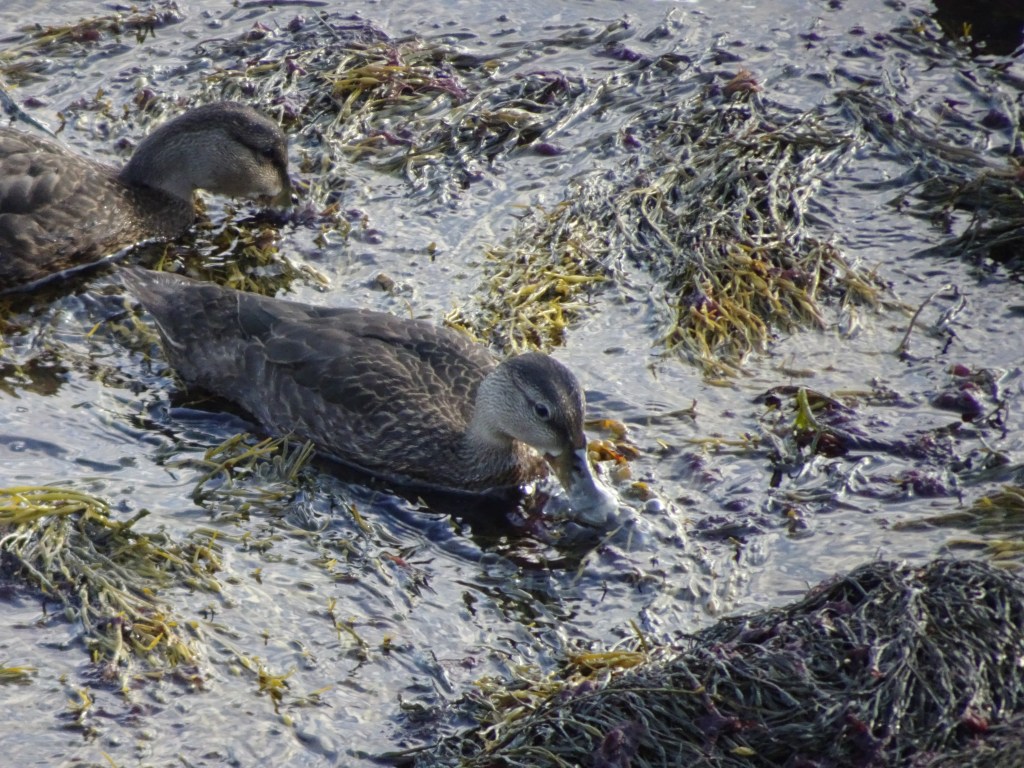

Cormorants and gadwalls dabbled and dove, hunting for food. A seal visited and spent a half hour surfacing in front of us, giving us ample time to get out our spotting scope and watch him watching us. Rocks emerged from the receding tide, then were submerged again as the tide returned.
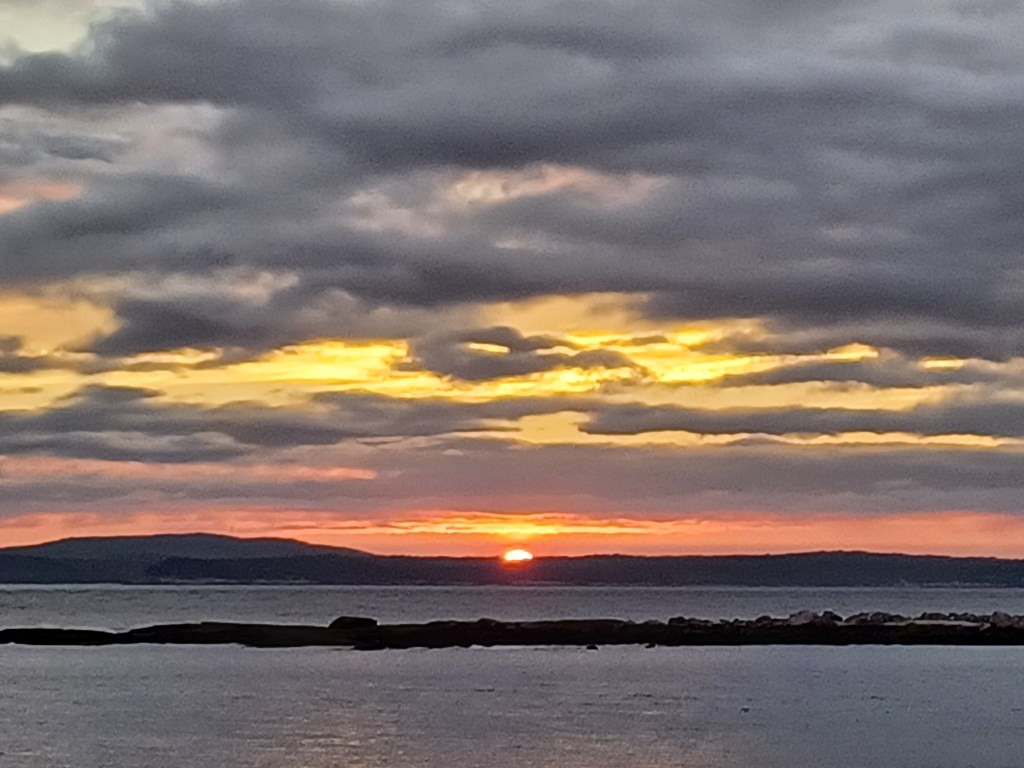


Witnessing the sun go down across the water is a nightly event at the campground where we stayed. We shared space with other campers as we stood along the shoreline. A cluster of us gathered each evening, waiting for the orange glow to light up the skies. Some returned to their campsites as soon as the sun slipped below the horizon. We lingered as the changing light altered the heavens, transforming daylight into shadow. Attending the show was a priority. We stopped what we were doing so as not to miss the curtain rise as the light diminished.

Peggy’s Cove is renowned for its lighthouse and for being the most photographed lighthouse in Canada. It is certainly a destination. The countless tour buses headed that way the week we stayed in the area provided an up close and personal view of what it is like to live in a tourist attraction. Sort of like Cape Cod in the summer, with lots more rocks and bogs. And quite Canadian


Yes, Peggy’s Cove is lovely. Set up for tourists by the thousands. Parking for buses. Sidewalks that carry visitors out onto a shoreline that features spectacular rounded rocks. A restaurant. A visitor’s center. Art Galleries. Colorful cottages in the village. Warnings to watch for black rocks which can be slippery and can lead to death….
We waited until a rainy day to visit and went in the morning before the busses from cruise ships docked in Halifax disgorged their hundreds (thousands?) of passengers. I kept to the sidewalks, as do most visitors. A few ventured out on the rocks. A deck cantilevered over the rocks offers additional perspectives of the famous lighthouse. As we left, the tour busses arrived. We wished them well, wondered how they might manage in the rain, and were glad to be on our way.
We drove on a small road along the coastline just east of Peggy’s Cove and found other much less crowded spots to explore.
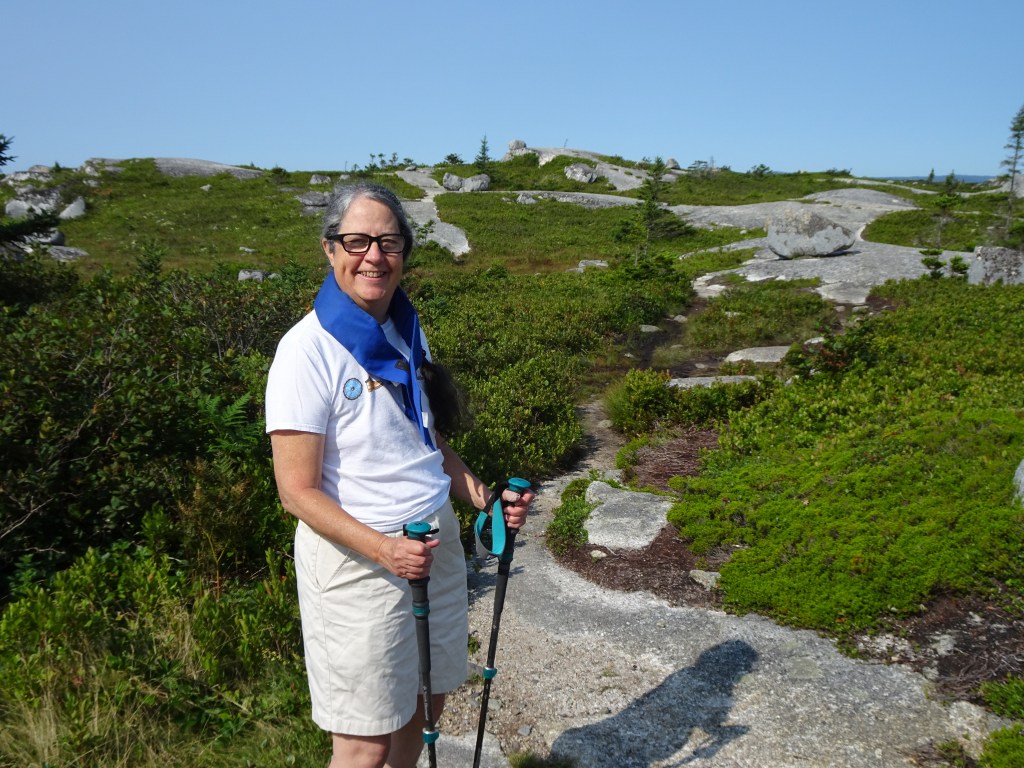
Polly’s Cove, just past its more famous neighbor, offered a small, somewhat developed trail out to magnificent views out to sea. With support, I managed to navigate my way to the ocean view. From this overlook some visitors clambered down the smooth face of the rocks to take in the sights from other vantage points.


The rocks, smoothed by wind and waves, are actually “sticky” or “grabby,” meaning that they are indeed relatively easy to walk on and offer solid footing. This is as long as you can manage relatively steep ups and downs (which is not something I attempt).

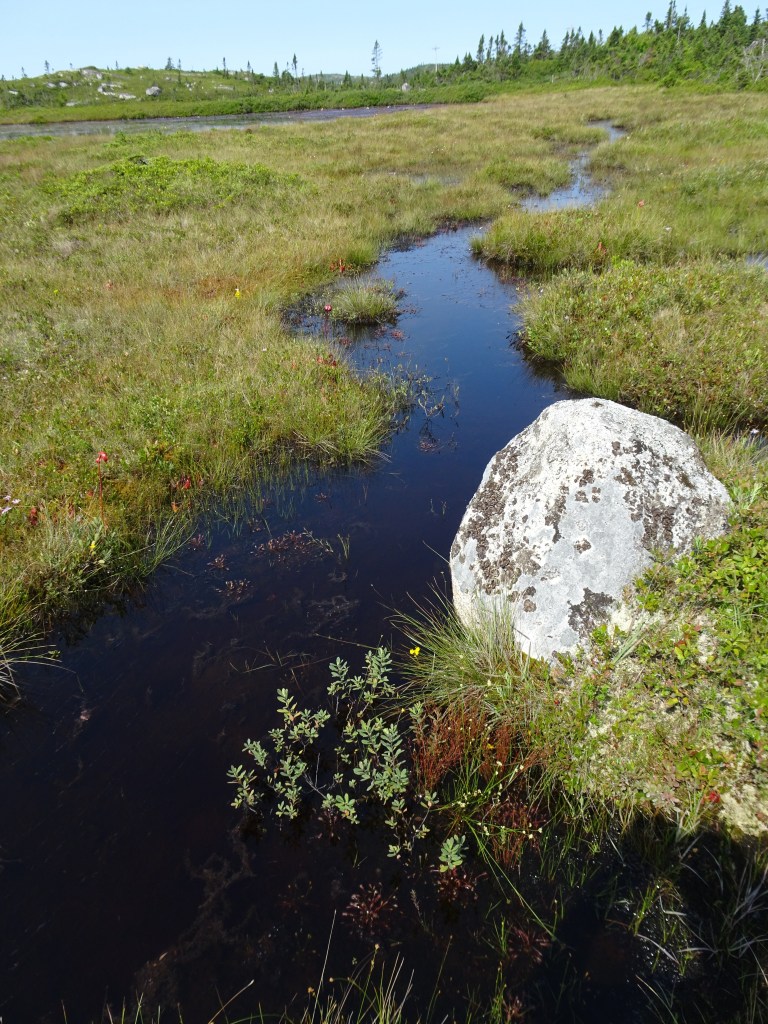
On this visit to Nova Scotia we marveled at the similarities between the Nova Scotia and Newfoundland landscapes. Both provinces offer miles of bogs with ponds. These ponds collect acidic (tannic) water from the surrounding bogs. The burnished, bronze-colored water in these ponds slowly migrates to rivers and streams that tumble into the ocean nearby.

On our trip to Newfoundland we encountered multiple pitcher plants, the provincial flower of Newfoundland and Labrador. To my delight, we discovered that the bogs we visited at Polly’s Cove also host multiple pitcher plants that have found nourishment along the streams flowing next to the trail that had taken us out to the shoreline.


Some plants sported their characteristic pitchers, filled with water that invites insects in for their last drink. Others flourished in this inhospitable landscape to the extent that they flowered, sporting adorable vegetative umbrellas offering little shade but a huge supply of whimsey.
What I had not seen before (I feel sure biologists will not be surprised, though I was) were tiny baby pitcher plants, just beginning their existence in this harsh, acidic landscape. They were in various stages of infancy, from quite tiny buds to small fingerlings nestled together with their litter mates. The fully grown adults that had spawned them stood nearby awaiting their next meal of tasty insects.
FYI, there is a reason these carnivorous plants thrive in the bogs. Plan to use bug spray or else expect to become part of the life cycle of mosquitoes that feed on visitors before being eaten by pitcher plants.


We were off the main beaten path but reached this little pitcher plant nursery with ease. An Easy Walk, but not one commonly traveled. We chose the lesser traveled track, and were rewarded with both baby pitcher plants, cranberries, and late season dewberries that others had missed.
Both paths to stunning shorelines, the official Peggy’s Cove lighthouse and small community, and Polly’s Cove, offered relative ease of access. Peggy’s Cove offered an almost cityscape infrastructure, albeit along a rugged coastline. Polly’s Cove had been improved to a point, but had some rocks in the path, and I required assistance in a few sections where the track was rougher, despite having the support of my hiking poles.
Other than local rail trails (of which there are many miles in this portion of Nova Scotia) and city and village sidewalks, do not expect to find handicapped accessible places in this area when seeking to get outdoors. Those in wheelchairs will have difficulty reaching much of the rugged shoreline. Ocean views are readily available from the roads that hug the shore. Some small parks and local beaches provide water views, but access is limited for those with mobility challenges. Our campground is one of the few places I would point to that provides gravel paths throughout the area, allowing for shoreline views for visitors with limited mobility.
Despite the commercialization of Peggy’s Cove, the overwhelming sense we got from the places we explored was a sense of ruggedness. We found some Easy Walks, extensive rail trails with gorgeous views, and life lived in rhythm with the tides.
We came specifically to this area near Halifax so we could ride our adaptive tandem bicycle on the multiple miles of rail trails that the area features. We did indeed enjoy the local rail trails, and we also found so much more to love. Rail trails will be another post. Happy trails.
Marjorie

Marjorie Turner Hollman is a writer who loves the outdoors, and is the author of Easy Walks in Massachusetts, 2nd edition, More Easy Walks in Massachusetts, 2nd edition, Easy Walks and Paddles in the Ten Mile River Watershed, Easy Walks South of Boston and Finding Easy Walks Wherever You Are. Her memoir, the backstory of Easy Walks, is My Liturgy of Easy Walks: Reclaiming hope in a world turned upside down.
 Marjorie Turner Hollman