
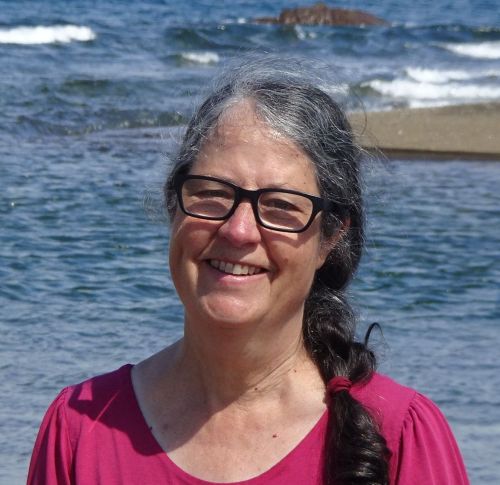
Marjorie Turner Hollman helps nonfiction authors self-publish their books. She is also a disability advocate, sharing information about Easy Walks (not too many roots or rocks, relatively level with firm footing, and something of interest along the way) in open space. Let’s get in touch.
“Comfort” is a personal thing. What may bring me comfort can cause someone else discomfort. What rings true for me might be incomprehensible to you.
We seek out comfort in different ways: physically, spiritually, and emotionally. A warmer or cooler room, a favorite sweater or bathrobe, a chair that’s not too hard or too soft, but just right—these can offer physical comfort. Companions who give us support, empathy, and respect can provide emotional comfort. Many of us find spiritual comfort through ritual, sacred texts, prayer, and religious community.
And then there are books. I call certain ones my “Comfort Books.” I hunger for their soothing balm at different times. During seasons of loss or displacement, immersing myself in a different world in a story can give me clarity and calm. Many are books I’ve read before. When I pick one up, I feel confident in its power to provide familiarity and reassurance, especially at times when I have had little else to feel confident about.
My attraction to these stories is strong because they delve into emotional and often spiritual experiences. Most of them are fictional, though not all, as I often find factually untrue stories more powerfully true than the facts related in history books.
At the beginning of the pandemic, our libraries here in Southeastern Massachusetts quickly closed for an extended period of time. Like so many others, my husband and I hunkered down as our world shrank amid world-wide fear and uncertainty. Luckily for us, we had boxes and boxes of books we had stashed in closets. Our small home has shelf space for only a few of our many beloved books.
Feeling the need for comfort, I began digging through the boxes, sorting through them. Books on gardening? Interesting, but not what I needed right then. I had collected others during the years I was a storyteller. Some contained fairy tales, kids’ books, or moving stories with a twist I’d found intriguing for performance. Nope, not what I needed.
Then, in the corner of one closet, I found my comfort books. I took an armful of the best ones downstairs to join me by the chair where I sit nightly to read or when friends or family come to visit.
A common denominator of these stories for me is that they aren’t single volumes but series written by a single author. For me, each of these authors’ voices carries almost audibly through from one book to the next. The familiarity feels comfortable, novelty not being what I need in these times. When the world is unsettled or frightening, a predictable story in the midst of uncertainty satisfies a deep need.
Thus—a partial list of the Comfort Books I keep on my shelves for when they’re needed:
James Herriot’s All Creatures Great and Small series offers humor and perceptive, respectful, endearing insights into human and animal behavior. Herriot’s writer’s voice is warm and self-effacing; and his stories affirm that, despite difficulties, most people and animals are well intentioned. His use of language and observation enrich his perceptive stories, offering comforting themes that are part and parcel of being surrounded by the majesty of the Dales in England. Herriot often manages to include a thought that affirms universal truths.
Like this: “She was a fine pedigree pig and instead of lying on the butcher’s slab today she would be starting to bring up her family. As though reading my thoughts she gave a series of contented grunts and the old feeling began to bubble in me, the deep sense of fulfillment and satisfaction that comes from even the smallest triumph and makes our lives worthwhile.”
C. S. Lewis’s Narnia books transport us to another world that’s recognizable but enriched with the wonder of animals that can speak. The stories tackle large spiritual issues, including good and evil, and repentance and redemption in allegories aligned with the Christian faith, my faith.
One encounter between Aslan (the Christ figure) and Lucy, one of the four main characters, is a scene I have pondered over the years. Lucy feels sure that Aslan is calling her to follow him in a direction her siblings are not willing to go. She reluctantly follows them rather than going on her own to follow Aslan. Later, they are forced back to where Aslan had indicated. Lucy is still the only one who can hear the lion’s voice. She meets him and asks, “How could I—I couldn’t have left the others and come up to you alone, how could I? Don’t look at me like that … oh well, I suppose I could. Yes, and it wouldn’t have been alone, not if I was with you.”
In the midst of difficult times, the stories comfort me, reminding me that love is stronger than hate, that sacrificial giving is a noble thing, and that inner strength may shine through in even the most unexpected characters.
Madeleine L’Engle’s A Wrinkle in Time and many others that are nominally for young adults. However, L’Engle always insisted that they were not particularly “children’s books,” but rather books about children as the main characters. Soon after I discovered A Wrinkle in Time books, I was delighted to find that the trilogy was only one of her multiple series.
Her stories consistently explore themes of faith. When asked, she explained that there are Christian books, and books written by Christians. She placed herself in the latter category. She explored concepts of death, betrayal, physical and psychic peril, anxiety, romance, jealousy, family dynamics, and sibling rivalry. The Austin family and the Murray-O’Keefe family series offer similar explorations of the themes she felt drawn to. Some stories are set in prosaic locales, while others transport familiar characters to exotic destinations, but all delve into struggles that both children and adults face.
Janet Evanovich’s “Stephanie Plum” series is a dependable source of out-and-out belly laughs, offering predictable yet consistently silly adventures. The hapless heroine finds herself in absurd situations, often of her own making. I read and reread this series after enough time has passed since I last dove into the world of Stephanie’s Trenton NJ-based adventures. When I find myself in unexpected, sometimes vexing circumstances, escaping to Stephanie Plum’s world is a reminder that life can always get stranger and more bizarre. There is a sweet comfort in this perspective.
Agatha Christie’s Hercule Poirot and Miss Marple are warm, caring characters determined to obtain justice for the defenseless. These tales offer me great comfort, despite all the murders. Even though murder, as a category, is hardly a comforting idea, for some reason, murder mystery series are another regular entry in my reading list of Comfort Books. I suspect I’m not alone.
Victoria Thompson and Jacqueline Winspear also fit into this genre with warm main characters driven to fight for the underdog. Thompson’s whimsical Counterfeit Ladies series focuses on dishonest financial shenanigans, and her Gaslight Mysteries, are all set in New York City between 1893 and 1900. They consistently supply romantic, cozy mysteries that never glorify murder.
Winspear weaves an intriguing spirituality throughout her Maise Dobbs books, usually set in England between the world wars. Her main and supporting characters are flawed and relatable. Maisie regularly consults with the supporting character, Maurice Blanche, her mentor and counselor. Whether they meet “in person” or when Maisie reflects oh his words, she finds guidance when confronted with difficult choices. In the first volume of the series, she reminds herself that “Maurice had taught … that silencing the mind was a greater task than stilling the body.”
Wisdom is sprinkled lightly throughout the stories, pointing readers toward ideas that might challenge their view of the world. The small insights are never heavy handed. They are an integral part of the series.
In normal times, comfort is not something we need every minute of every day. However, especially in challenging times, finding a balance between tension and comfort can be difficult, as too much comfort or too much anxiety can both be harmful. Being aware of what brings us comfort is helpful when we need it. Unlike other sources of comfort, books are patient; they’re quite prepared to wait until we need them.
Marjorie
 Marjorie Turner Hollman