

Marjorie Turner Hollman helps nonfiction authors self-publish their books. She is also a disability advocate, sharing information about Easy Walks (not too many roots or rocks, relatively level with firm footing, and something of interest along the way) in open space. Let’s get in touch.
LISTEN:
So, how do you start? Write something. Toss in some photos. Dip your toes into the blogging world. Find a place to put your writing up on the internet. Tell your friends. Blogs are meant to be shared, not kept secret.
Some ideas
These days, we usually say, “blog post,” meaning one individual piece of writing. A “blog” (as opposed to “blog post”), refers to a specific internet destination dedicated to offering a series of articles, some on specific themes, others a simple journal of someone’s thoughts. They can be used as advocacy for a cause. You may find resources for various interests. Travel writing. Opinion pieces. Humor. Meditations.

The variety and organization of this type of writing cover the gamut. No interest is too small. No topic is too big. There are as many ways to create a blog as there are people who write them. But how do you actually write a blog post?
Some tips
Have fun. Some blogs are quite serious, but many are playful, seeking merely to entertain. We all need to find things to smile about.
Start by writing something short—or not. Some experts will tell you that no one wants to read long pieces of narrative anymore. Others will insist that long-form narrative is the way to go. But this is your blog. No grades are going to be handed out. You get to do what you want.


The old adage, “Write what you know” applies here. Talk (well, in written form) about something you know. Something you care about. Something you can add photos to (if you wish).
You might want to start writing on an MSWord document rather than an online platform (like WordPress, or other platforms that host blogs). I have fumble fingers and frequently hit keys that trigger a startling variety of options, suddenly blocking my entire computer screen, and sometimes disappearing everything I was just writing.
If I’m lucky, my typing can be saved. Too often, though, everything I have just written disappears. MSWord is pretty forgiving. It will allow you to recover what just vanished. Writing on an internet platform is less friendly. That thoughtfully worded article you were inspired to write? One unintentional bump of one finger and it’s all gone. Ask me how I know….
What’s your goal?
Think about what your goal is in undertaking this practice. And it is a practice, not a one-off effort. Do you want to express some opinions? Great. Teach something? Wonderful. Rant about something you care deeply about? Sure, why not?
Understand that your goal(s) may change. Be open to new interests, and/or opportunities that present themselves. This type of writing has the potential to take you places you never imagined.
I have been writing blog posts for at least twelve years. Lots of posts. 500+ last I checked. How did I write that many? One post at a time. One idea at a time. One travel destination at a time.
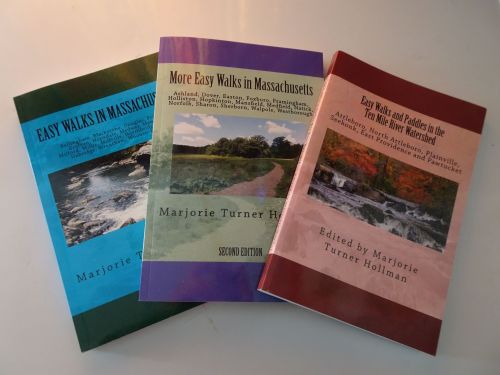
So, what was my own goal when I started? Initially, it was to help publicize my first Easy Walks in Massachusetts trail guide. Over time, the trail guide project took on a life of its own. A combination of factors, including regular blog posting, has helped spawn multiple books in the series. A 14,000 member Facebook group, Easy Walks in Massachusetts, RI, and Beyond, is an offspring of my efforts, and one place in social media where I share my travel posts.
For someone, like me, who cannot easily get out to events in person, writing is a tool that helps me foster connection. These days, I write more about writing (like here!). It’s a way I “show up,” and help other writers to do the same. After starting out as a very reluctant writer, I now get great joy in supporting others to move past their own reluctance.
Some folks manage to earn money from their blogs. Substack is an up and coming reader-supported avenue for sharing ideas and being paid to share them. Other platforms also offer reader-supported paid options, and some use paywalls to generate income.
The rules
The first rule is that there are no rules for how to begin. Other than, um, to start.
You are allowed to initiate a blog with one focus and then change your mind. It’s OK. The more I practice my own writing, the more obvious it is to me that there are few, if any rules. No regulations to hew to. No “must haves” you must obey.
Some suggestions
Ask for help. Talk to friends. It’s likely someone you know is already writing a blog. Really. Talk to friends about what they would like to learn that you might be able to teach. Or ask yourself. You could make it a (fun!) research project, seeking out information about something you want to learn, just to please yourself.
Take a look at blogs you already read and enjoy. Study them. Listen to the tone of their (written) voice. Pay attention to how these blogs are presented. Color themes? Straight text? Weird fonts? Pictures?
Oh yes, please avoid writing things that will get you kicked off some platforms. Pornography is not a focus I would recommend. Foul language is not helpful in developing a following. Support for violence in any form is not a winning formula (at least in my world).
Options
Internet platforms feel like they are reproducing like zucchinis. Every time I turn around there is another place to express your thoughts online. Audio, video, Instagram, Facebook, Reddit, Substack, Pinterest, Tik-Toc (and more?) offer venues where you can share ideas that are important to you.
Pick one or two. Do not try to be everywhere all the time or it’s likely that before long you will be nowhere, anytime.
My blogs are on my website, marjorieturner.com, but I also share them on other social media platforms.
If you’ve read this far, here’s one thing I can promise. If you’re willing to share your writing, you risk getting feedback. Or silence, which is also feedback, but a uniquely difficult type to understand. Lack of feedback can be baffling when trying to pinpoint the cause for it. After we have shared our writing with the world, almost anything is worse than silence. Some comments may make you feel great. Others? Not so much. It comes with the territory.
By being willing to pay attention, you are going to learn things. One of the most important lessons? Taking a risk, putting yourself out there, is OK. In fact, it may be the start of something amazing. You’ll never know unless you try. Or not. That’s up to you.
Good luck!
PS. Everyone is talking AI these days. LLM is an acronym that’s also used. If you search for something using Google, you are already using AI, whether you realize it or not. As with all powerful tools, use it wisely, and do not allow it to steal your soul, or do your writing for you. I leave the rest of the topic to those who have much more to say than I ever will.
Marjorie
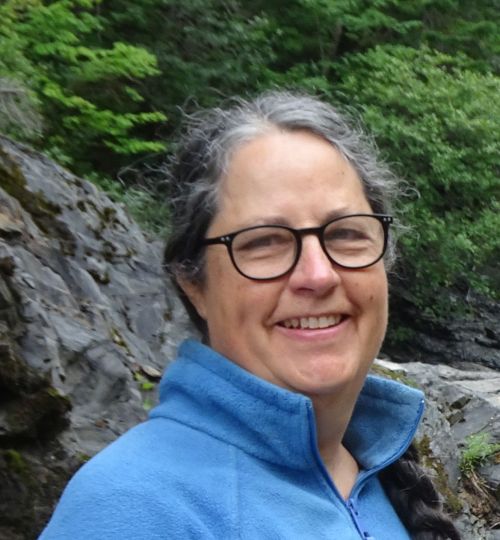
 Marjorie Turner Hollman
Good comments! Thanks for this post for those of us who are new(ish) to the blogging game.
Thanks for reading and letting me know!