
Marjorie Turner Hollman helps authors self-publish their books. She is also a disability advocate, sharing information about Easy Walks (not too many roots or rocks, relatively level with firm footing, and something of interest along the way) in open space. Link to all Marjorie’s books.
LISTEN:
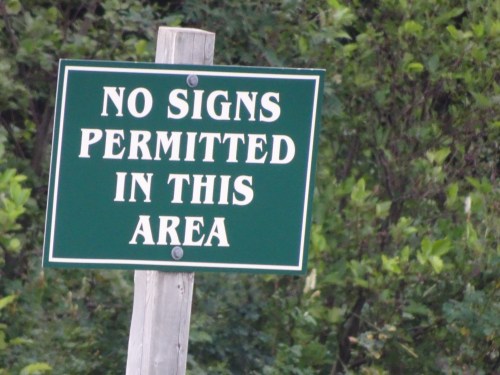
Yes, you can edit your own writing. But should you? Well, sure. In fact, you really do need to edit your own writing. Raw writing is almost never the best you can produce. The very least you can do is take a good look after the flame of writing has died down a little.
The most important question is this: Who is your audience? Are you writing a note to yourself? First of all, make sure you can read your own handwriting. (I can’t. It’s why I type out my grocery lists.) Spelling, grammar, and punctuation are minor concerns at this stage. The point of writing here is to help you remember something.
Sending a letter to a friend or family member? Hopefully, you’ll be forgiven for errors of spelling and broken grammar rules (a topic for another day!) if your nearest and dearest are your audience.
Are you producing a term paper or other writing you’ll be graded on? Here’s where self-editing and asking for help comes in. Whether it’s for school or business, you’re likely to be graded on the quality and care you took to provide your best work. Teachers most likely will assign letter grades. Business writing will be judged too, but the assessment won’t always be as transparent as with academic submissions.

Writing for publication often means that whoever you’re providing content for (whether it’s an organization, a news outlet, or some other format), will already, you hope, have a process in place for editing your work. This is not an excuse for being sloppy. It’s just a different category of putting your thoughts down (most often virtually) on paper.
So…self editing? I often say, and have heard others insist, that you really cannot edit your own writing. However, you can employ a number of simple and effective approaches to catch errors.
Using any of the following strategies will help. Going through these steps will catch many small things that you might otherwise overlook when doing a simple read-through of your first draft. Try one or more of them and see what works best. By using them all you’re practically guaranteed to obtain a much better result.
1. Write something—anything—then walk away
At least for an hour, preferably. If you are not under deadline, let it cool for a day, or even two. When you come back to it, you may be surprised at what you find. Maybe you’ll end up rewriting everything. It can feel like you’re starting over. But all is not lost. In fact, whether you start fresh, or rearrange paragraphs, you’re ahead of the game. You have dodged the “blank page” bullet. By getting something down and gaining some perspective, you’ve accomplished much more than you’d thought.
2. Read your writing aloud
Yes, out loud. Not just in your head. It might feel awkward at first. Back in the middle ages people believed that you could only read if you did it out loud. Honestly, if we still believed and acted on this concept, our world would be even noisier than it is now. Here’s an article that describes how attitudes about reading aloud have changed.
3. Read backwards
Wait… how? Starting at the end, try reading each word from right to left. Or try reading each sentence normally, but moving backwards, sentence by sentence. Keep an extra copy on your split screen, noting where you found errors.
4. Take another run-through, checking for possessives, apostrophes, and other small punctuation issues.
“Its” and “it’s” is something many people confuse. “It’s” is short for “it is.” “Its” is a possessive like “his” or “my.” So in the sentence, “The cat scratched its nose,” there is no apostrophe in “its.”
Commas? Are there too many? Too few? Run-on sentences? Capitalizations? Paying attention to separate aspects of language helps keep our focus narrow as we comb through a piece So many pesky errors can slip in as we strive to more clearly express our thoughts. Trying to catch everything in one read-through is expecting a lot.
5. Run spell-check in MSWord (which is really both a spell check and grammar check)
This may not feel like real self-editing, but in fact, spell-check makes all sorts of weird suggestions, especially pertaining to grammar, that will force you to take a closer look at your writing. You may reject some suggestions. That’s okay. Spell-check hates sentence fragments, but sometimes using that structure makes an important point. Telling the automated checker that you are ignoring it can be quite satisfying, in the restrained sense of satisfaction that many of us writers experience.
6. Ask a friend or family member to read through what you’ve written
Does this count as self-editing? I would argue that it does. While it’s not professional editing, it can be helpful to have another set of eyes look through what you’ve written. You may discover that they don’t understand your point, or that a sentence feels confusing to them. What makes sense to you may not make any sense to someone else. Much better to learn this before you share your writing more widely.
7. Vary word choice
Repeating words can begin to feel like hammer blows to your reader. Must you avoid repetition entirely? That’s an impossible goal. However, if you notice that a specific word occurs twice in a sentence, or in a paragraph, challenge yourself to find a variation of the word if possible.
I found several words that recurred often when writing this article. Using a thesaurus can be helpful in identifying alternate words or phrases when you realize you’re reusing the same words over and over. This is not a fix-it though. Thesauruses can suggest multiple options, many (or most) of which are wildly inaccurate. If you choose to vary your word choice, make sure you understand the meaning of the term or phrase you are substituting.
An exception: Sometimes you may want to emphasize a list of ideas. Employing a phrase or single word multiple times can help make your point.
8. Vary sentence length
Repeating the same word repeatedly (see what I did there?) can feel like a hammer hitting your head. Writing multiple sentences of similar length sequentially can make your audience feel like they’re reading a first grade level primer.
Like this: “They deserve to get paid. Their insights have been hard-won. You will see the difference. Your writing will have greater clarity”. (This is from my original first draft.) I varied the length of these consecutive sentences differently when I included them at the end of this article.
A steady drumbeat is great for dancing, but not so nice when reading. Short sentences are useful, but breaking up a paragraph into shorter and longer sentences offers our brains a break from rhythms that can put us to sleep. Sleepy readers stop reading. You really don’t want that.
Being clear about the purpose of your writing (is it a grocery list? a doctoral dissertation? somewhere in between?) can help you decide whether professional editing is called for. In many instances when we put pen to paper, or tap out letters on a keyboard, there is no need for close inspection. Good enough is…good enough. When the stakes are higher, seek out someone skilled in editing who has a sound grasp on language, grammar, punctuation, and sentence structure.
These editors deserve to get paid. Their insights have been hard-won, and you will see the difference. Your writing will have greater clarity. Readers will grasp your ideas, not gasp at typos and awkward wording. I asked a skilled editor to review this. Just in case, you know, I missed anything. Mistakes have surely snuck in (tricky buggers) since I rewrote this piece some more after her close inspection.
Despite the adage, “practice makes perfect,” it really isn’t true—in writing—or in life. You can get close, and that in itself is worth the effort, except when you are jotting down grocery lists!
Marjorie Turner Hollman, MarjorieTurner LLC Self-Publishing Support
How can I help you? Email me!

 Marjorie Turner Hollman
Nice!
🙂 Thank you!