
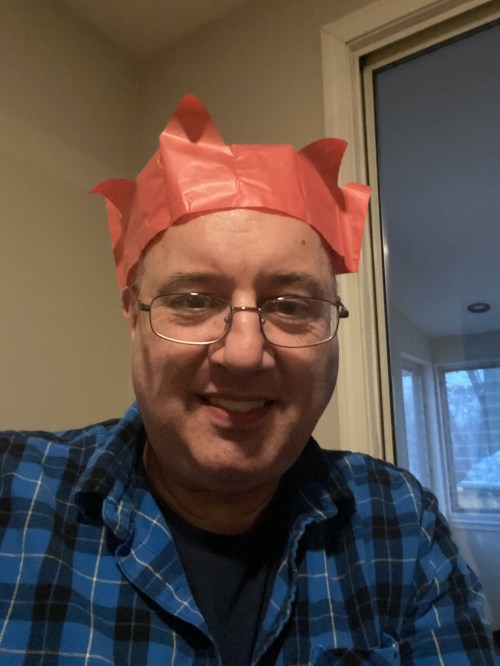
GUEST POST: Neil Dailey lives in the suburbs of Boston, Massachusetts, where his family has deep roots. He enjoys caring for and cooking for his family. He also enjoys gardening and collecting ephemera. An eclectic range of books fill his home. Henry Van Dyke’s “Poems of Tennyson,” “The Picture of Dorian Gray,” Michael Connolly, Nikos Kazantzakis, Robert Wilson, Martin Limón, Anthony Everitt’s biography of Hadrian, J.T. Maxwell’s “Red Brick Road,” Faulkner, and Joseph O’Callahan’s “A History of Medieval Spain” all find space. His battered copy of “Candide,” alas, crumbled. He is also a lawyer, and practices criminal defense law full time.
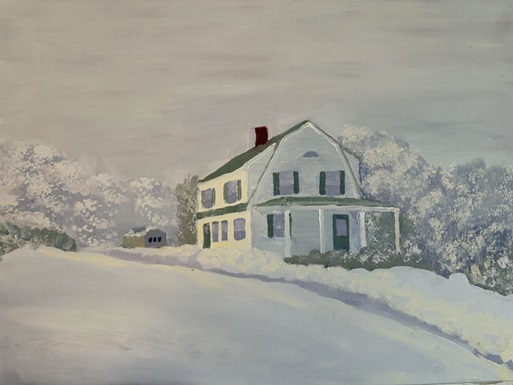
Here’s a peek at the latest creation from my “art studio.” I’ve been trying my hand at oil on canvas again. The image is a place I knew as a child as “Desmond Farm.”
Fragments of stone wall and the granite outcroppings scarred the land. Each stone seemed to appear from nowhere without logic or purpose. Even so, the stones appeared with insistent determination. When I heard the old New England farmer’s joke, it made sense. “This is the best land to farm, if you want to harvest stones.” The rocks and stones jostled and interrupted an uneven landscape. In summer, the land bristled brown and gold with grasses and dry prickly weeds which waved and shimmered in the bright summer sun.
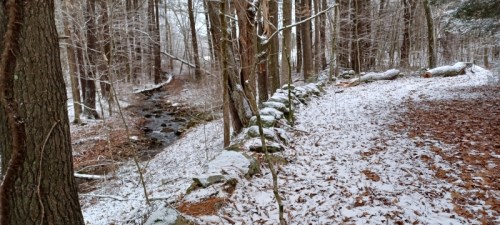
I became fascinated by this farm when I was a child. I knew it as the home of my father’s cousins, Helen and David Desmond. For several years, my family was invited to join Helen and David for a summer cookout at the farm. Often, other cousins of my father joined in: Jim, Nellie, and Mary. As a child I was not clear about how we were all related, but the idea that we had some connection to a family farm kept my boy-mind busy.
I liked to listen to the adults catch up, and learned that when he was a child, my father lived a short distance away. Sometimes the adults would muse about how Jim, Nellie, and Mary spelled their last name “Daley,” different from the rest of the Daileys. I never got to listen long to the adult conversations. As a child, I was expected to explore the farm. I was expected to want to explore the farm. I was encouraged to move on.
Each time we arrived at the farm, Helen and David were always welcoming. They also seemed perplexed. “We told you the children should wear old clothes. This is a farm. We thought they could explore and get dirty,” It sounded good to me.
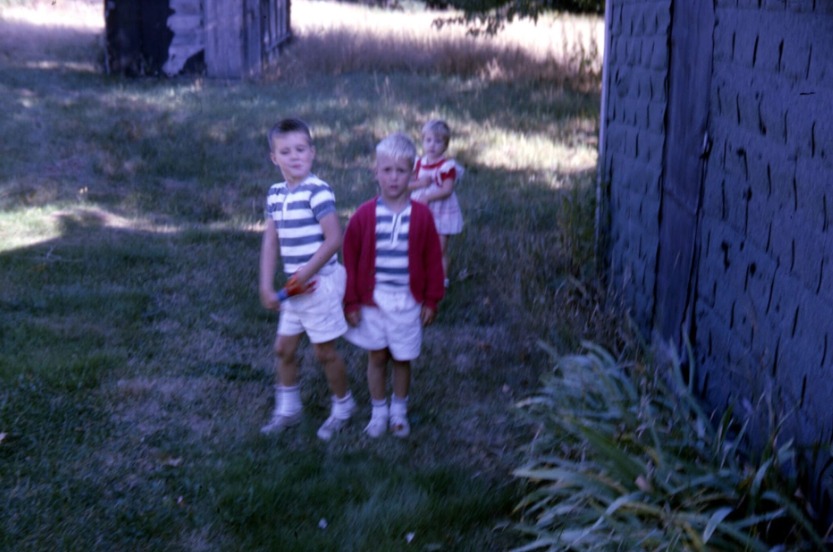
“They can explore and stay clean,” my mother replied, aiming a quick glower at the younger members of the family. That glower dared anyone to defy her. Staying clean and exploring the farm became the imperatives for the children on these visits. We were placed before our relatives for inspection.
I did explore the farm. My child-mind wondered what life was like on the farm back when cows stood in the fields and chickens filled the coops. I wondered what it had been like for my father to come here as a boy to spend time with his cousins. I explored the farm believing that it held secrets, secrets which hid from me like the magical little people in fairytales.
On his first visit to the farm, my youngest brother, Chris, was a baby, kept close to the grownups. On his last visit, he was a toddler. Nonetheless, he then remained in a playpen where the grownups could keep a watchful eye on the amateur escape artist. The rest of the children were shooed off to the fields and thickets.
I had my own methods of exploring the farm. I would sometimes stay closer to where the adults chatted. I once heard Helen mention that she had a childhood memory of my grandfather being a very nice man. He had died young. My father and David had no memory of him. Helen is the only person I ever heard mention an actual memory of my grandfather. For me, I knew it was time to explore further away before the adults insisted I move on. I would wander back later and listen some more, investigate this history more.
When we moved from West Concord to Needham, the visits to the farm stopped. It was “too far away” and the number of children in my family had grown from four to six. The grownups, at least one of them, had deemed the trip to the farm unfeasible under the circumstances.
In 1985, Massachusetts took the farm by eminent domain. The state planned to use the land as a drainage area for the construction then planned for Route 495. Helen and David moved to a more modern house nearby. A sign went up at the end of the driveway. “No Trespass.”
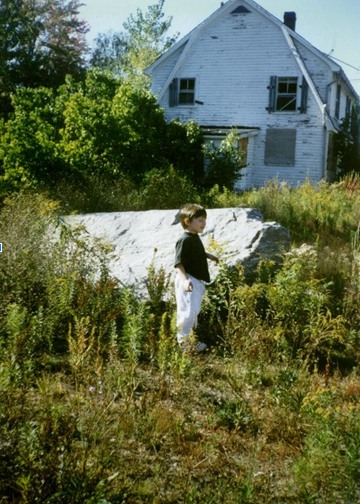
In spite of the sign, I still felt drawn to the place. As an adult, on several occasions I ignored the sign at the end of the driveway. I drove up, and walked along the driveway, and I strolled across the land. The house had been boarded up. I could still hear the hiccupy New England country twang of Helen and David drifting on the lightest breeze.
As time went by, in my memory I continued to visit the farm. The place still held secrets. The farm still called to me.
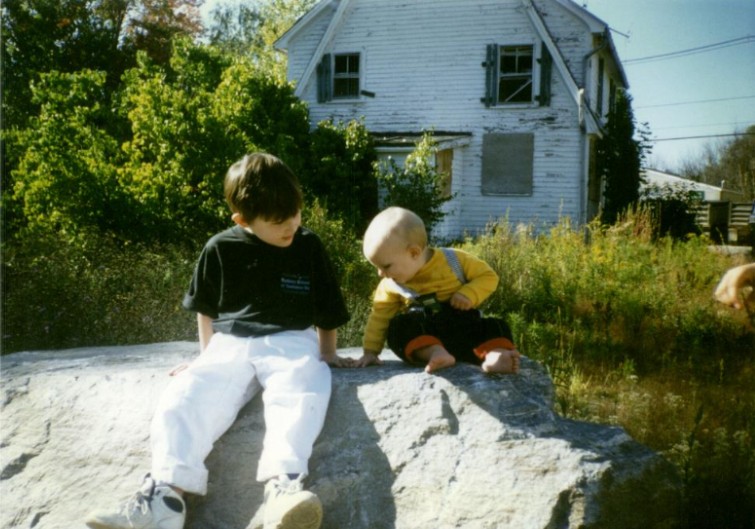
As a young father, I again ignored the “no trespass” sign and drove my sons up the driveway. I wanted them to see and feel this place that had captured my imagination. I wanted them to sense the secrets hiding in the air and in the land. I hoped that they might hear long ago voices still carried on a gentle breeze.
A year after I brought my sons there, the state sold the farm to a developer who razed the structures, leveled the land, and erected an office building in its place. I have never visited there again. The echoes of yesteryear have dissipated. I now know that through the years only two families and their descendents ever farmed this land. Then, with a sudden bureaucratic flourish, the thread that had tied our family to this land had been severed.
I still visit the farm in my memory. It sometimes surprises me at how often. I remember the smell of the food. I remember the warren of rooms that made up the kitchen, and I remember the slopes of the cobbled wooden floors. I remember the chicken coops and the garage.
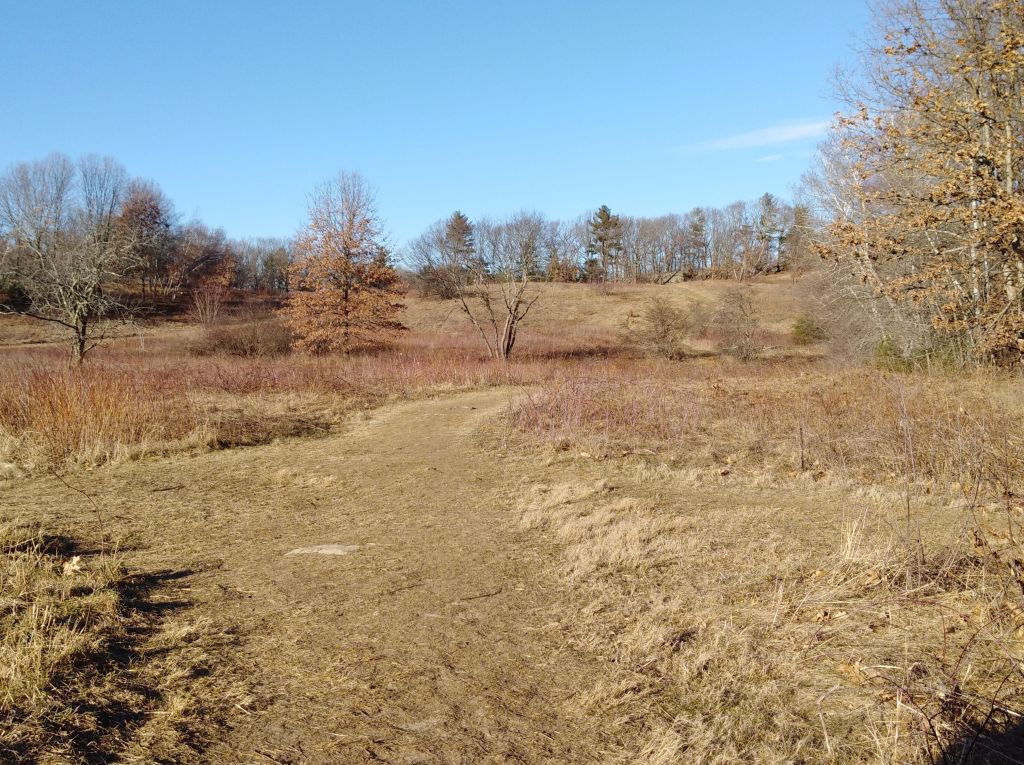
Just behind the house was a dramatic grassy slope that we tumbled down. Faster and faster we rolled, with younger Vincent and Monica following behind me. A voice (surely my mother) chased after us shouting “Don’t you dare get dirty!” I remember being dizzy and laughing at the bottom of the slope, even as the clouded face above mine demanded to know why I did not follow the rule about not getting dirty.
The unknowns intrigue me, and as I research my family history, a single secret is sometimes revealed. Other secrets remain tantalizingly out of reach. I learned that my grandfather actually lived on this farm in the years before his marriage. My great grandparents, too, lived in this house with their extended family to the end of their days.
My diligent explorations (and eavesdropping) had never tipped me off about these fascinating tidbits of our family history. If I had known these facts as a child I might have explored the farm differently. Perhaps I would have listened to the breeze with more care, hoping to catch a whisper of those long ago voices.
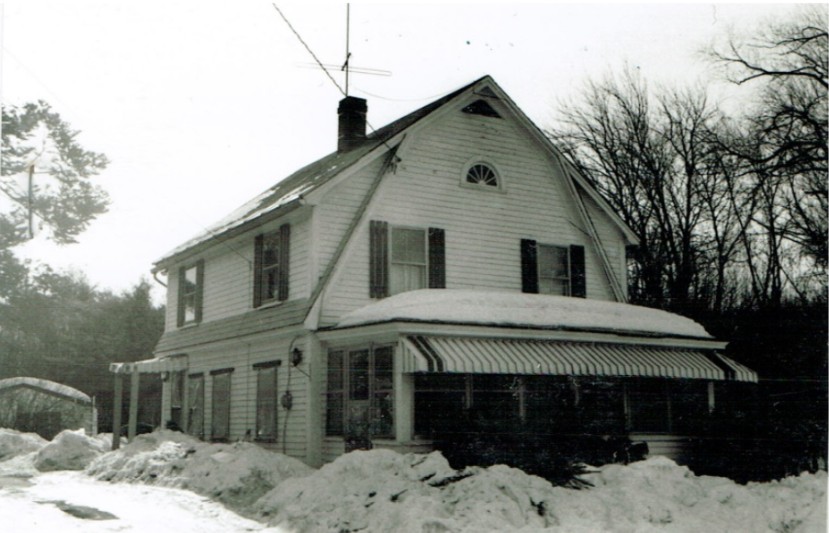
I recently found a photo of the farm in the historical collection of the Fletcher Library. The photo had been taken as part of a Massachusetts Historical Commission survey to identify buildings of historic significance in Westford.
Knowing what happened, I wonder how the historical committee failed to understand the importance of the place. A single check mark in the box, “not historically significant,” likely sealed its fate.
The photo at the library had been taken in winter, a season I had never experienced there. This was the first image I had ever seen of the house blanketed with snow.
This farm still draws me, speaks to me. I think it has stories still to tell, so I continue to listen.
In the meantime, my memories and knowledge of the place offer a inexplicable comfort. The farm is as real to me now as when I first visited it as a boy.
Oddly enough, I find comfort and a refuge in this place that no longer exists, a home that was never really mine. For me, this farm remains a real place, a family farm, a place I can visit whenever I want, lacking any sign that reads “No Trespass.”
Neil Dailey
Marjorie Turner Hollman helps authors self-publish their books. She is also a disability advocate, sharing information about Easy Walks (not too many roots or rocks, relatively level with firm footing, and something of interest along the way) in open space. Link to all Marjorie’s books.
 Marjorie Turner Hollman