
Marjorie Turner Hollman is an author, creator, observer, and disability advocate who loves the outdoors. Link to all Marjorie’s books.
LISTEN HERE:
We left New England in late September. It was the beginning of our Gaspé Peninsula Tour, which soon became our East Coast Foliage Tour.
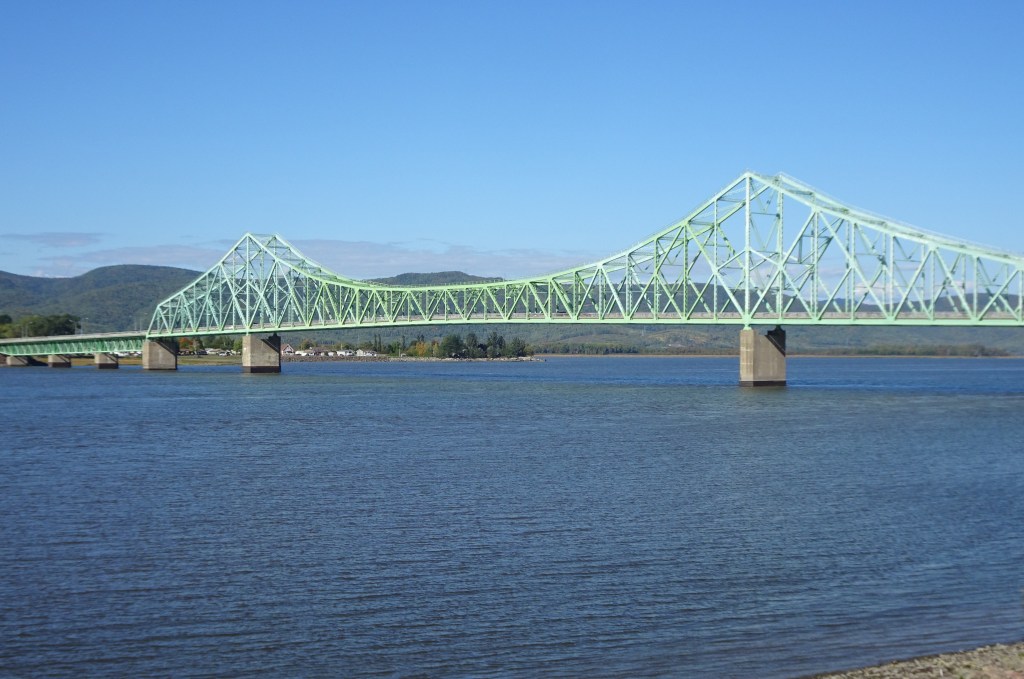
After crossing the bridge over the Chaleur Bay from Cambellton, New Brunswick to Pointe-a-la-Croix, Quebec, we headed to Carleton-sur-Mer (Carleton by the sea). There we found our way to a campground (the website has a choice of French or English at the top of the page) situated on a spit of land jutting out into the Bay.of Chaleur.
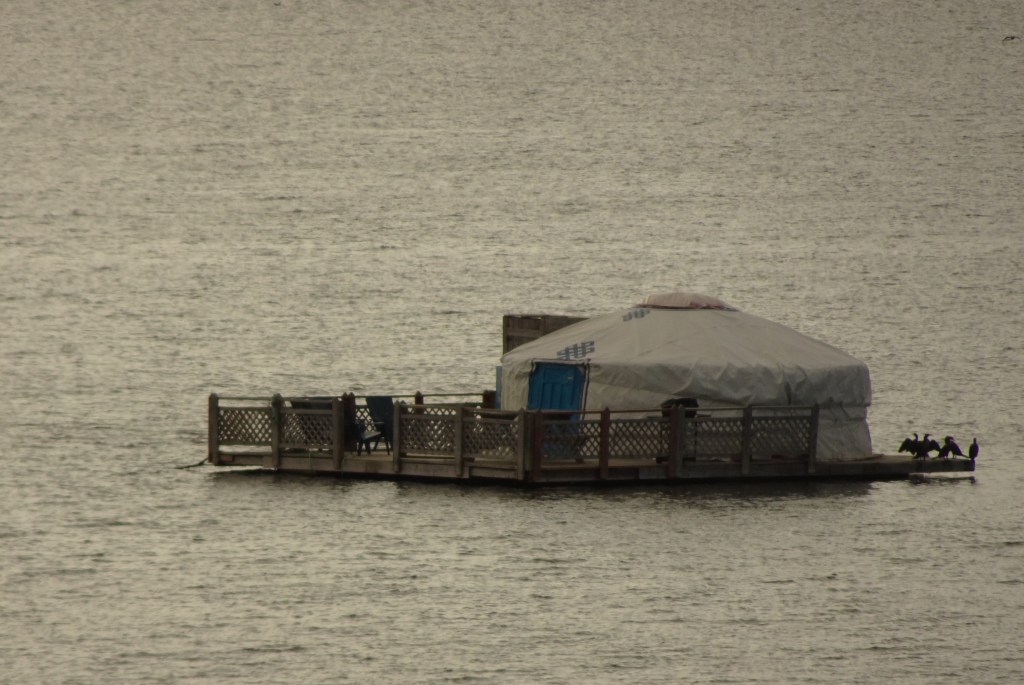
On the inland side of the campground is a small bay, a barachois. If you have no tent or camper, you might want to sleep in the barchois in a yurt!
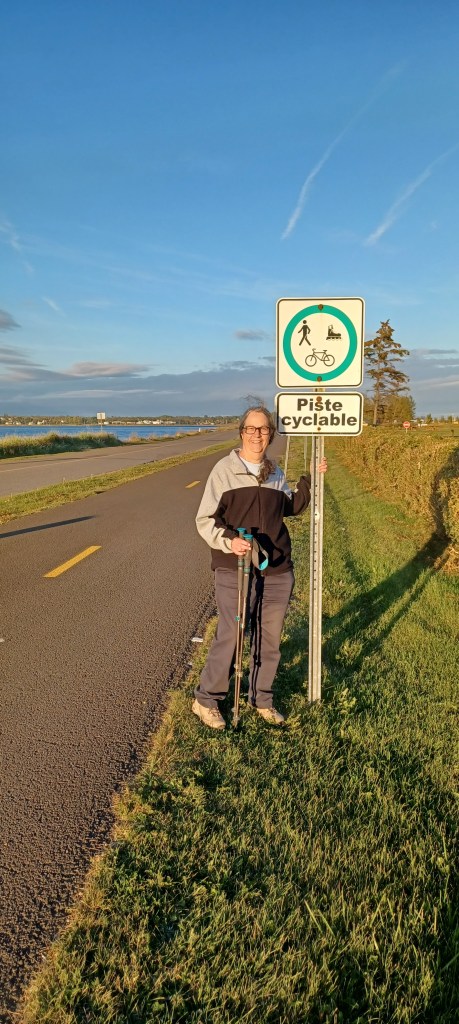

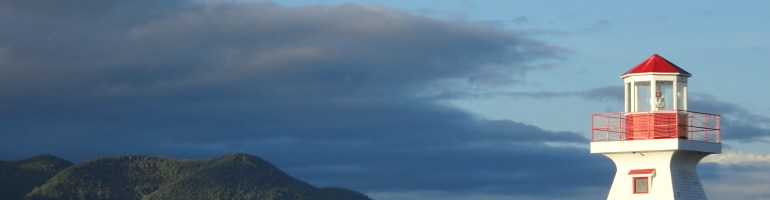
A paved rail trail, which is an Easy Walk for sure, originates at the tip of the peninsula at the lighthouse, then follows the shoreline into town.
Carleton-sur-Mer is clearly a tourist destination, but we were interested in the natural history of the area. Camping by the ocean on what is basically a barrier island connected to the mainland by an extremely narrow stretch of sand was a highlight of our stop here. In a few steps we were on the beach, taking in the views of the bay.
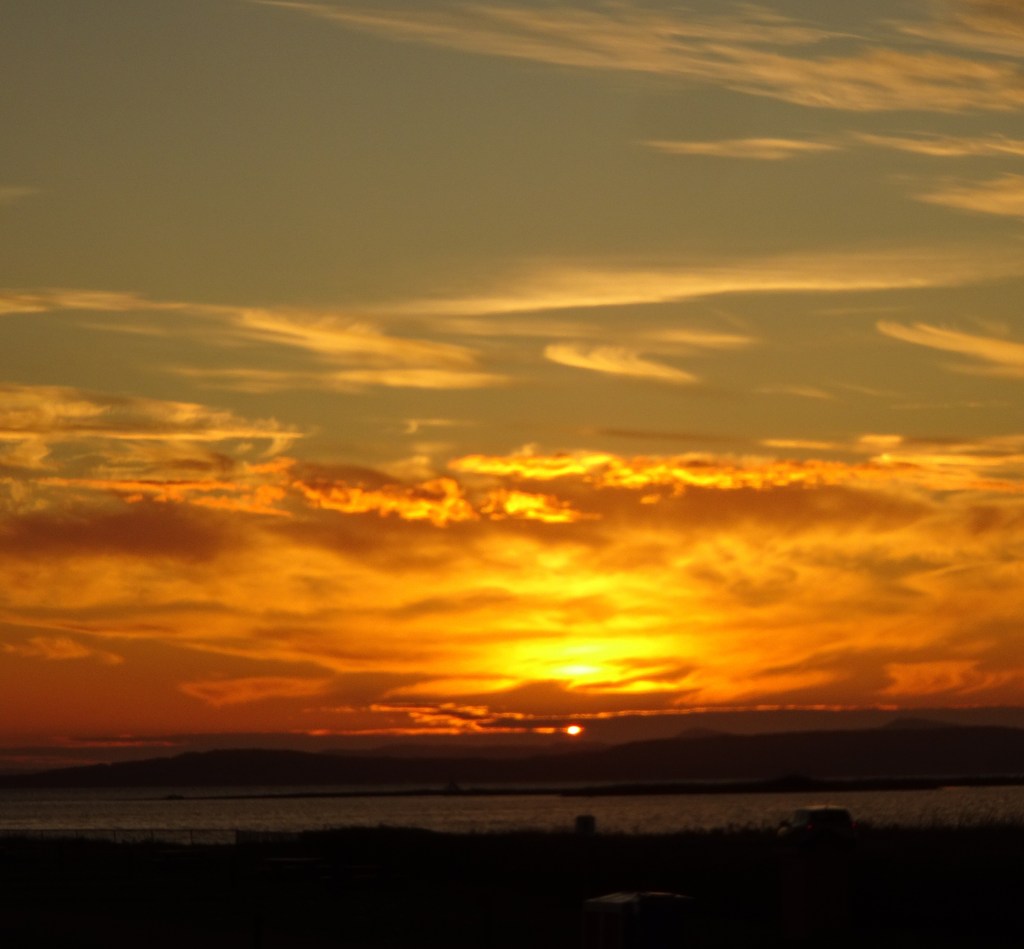
From our campsite we watched birds feeding in the barachois, and paused to enjoy spectacular sunsets that lit up the sky and the nearby mountains.
While at Carleton-sur-Mer, we made time to visit the nearby UNESCO World Heritage Site, Miguasha National Park. Miguasha in Nouvelle, Quebec, just a few miles west of our campsite, was a delightful surprise. At the time of our fall visit, only one daily tour in English was available to educate us about the seaside cliffs that contain a wealth of fossils. (Additional tours are available daily in French.)
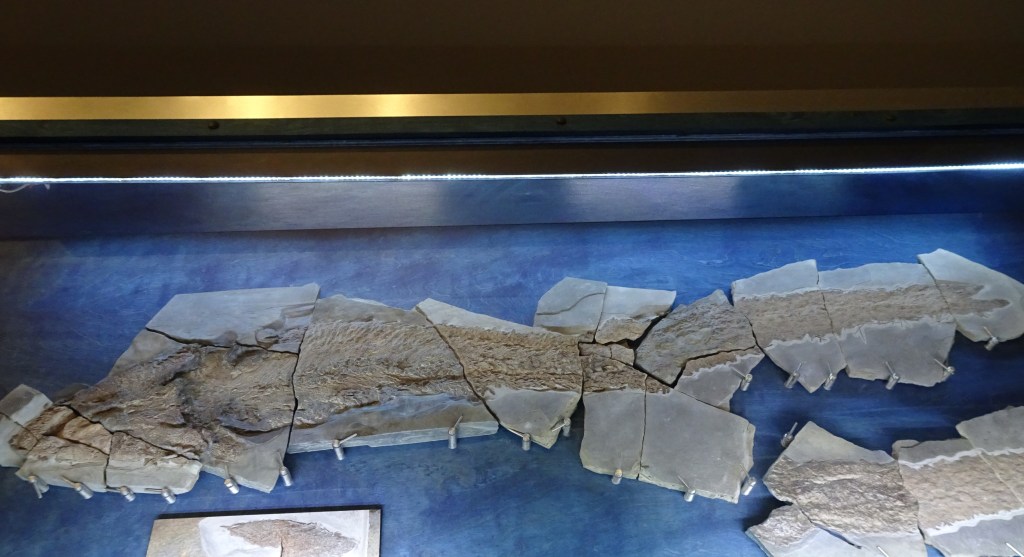
The UNESCO World Heritage website describes the significance of this park:
“Miguasha National Park is the most outstanding fossil site in the world [with]… its representation of vertebrate life and its illustration of the Devonian period known as the Age of Fishes. The site …has the largest number and the best-preserved fossil specimens in the world of sarcopterygian fish, which gave rise to the first four-legged, air-breathing terrestrial vertebrates—the tetrapods. …Miguasha National Park protects and presents the Escuminac Formation, a rock formation with a rich fossil heritage…with a large number of exceptionally well-preserved fossil specimens…which are representative of the Devonian period. The fish, invertebrate and plant fossils at Miguasha bear witness to life as it existed on Earth 370 million years ago.”

The path from the parking area down to the seashore is quite steep. The footpath portion offers solid footing. The stairway down to the shore is challenging for those, like me, who have balance concerns.

Once down at the shoreline, we were able to see the fossil-laden cliffs. Our guide explained that the bottom layers of rock that constitute the cliff have no fossils. It is the higher (younger) layers that contain the once-living creatures and plants now turned to stone. The rock layers slope from high above our heads, parallel to the bay, down to the shoreline. Where the fossil-rich rock is thus exposed to tides, exquisite fossil specimens daily wash out the cliff, depositing them onto the beach where we stood. Our guide showed us samples that had recently been discovered on the beach.
The Gaspé Peninsula offers much more than what we saw on our first stop in Quebec. Mountains, an off-shore monolith, a wide boardwalk alongside the ocean, thousands of sea birds and multiple seals, impossible road grades up and over mountains and more awaited us. Happy trails!

Marjorie
 Marjorie Turner Hollman