
Marjorie Turner Hollman is an author, creator, and observer who loves the outdoors. Link to all Marjorie’s books.
LISTEN HERE:

Leaving from New England and traveling west, our logical first stopping point was near Buffalo, New York. Should we visit Niagara Falls? I had never been, but had heard of the massive commercialization near the iconic destination and felt sure it would be a disappointment.
With reluctance, I agreed to stop before we headed on to our next destination. This was in early spring. We arrived in the morning, raincoats at the ready. The light mist in the area, turning to rain, kept the crowds down, but did little to dampen our spirits. Regardless of the weather, visiting the falls at any time of year is a guarantee you will need to change into something dry when you leave the area. Mist from the falls looks like billowing smoke and can be seen from a distance.

What I had never understood is that there are, in fact, three distinct cataracts, two almost next to each other. I also had not realized that we could stand on the American shoreline and view the Canadian (Horseshoe) Falls. Who knew? Not me.

Views of Horseshoe Falls can be enjoyed from Goat Island, part of New York’s Niagara Falls State Park. No merchandise is for sale in this area. Views, so many views, await.

Trees, shrubs, walkways, benches, and platforms are next to the river, allowing visitors to safely take in the wonders of this area.

Horseshoe Falls spans from the U. S. side of the river to the Canadian shore. It is the tallest of the three spectacular sights. On the Canadian side are hotels and gardens. Tunnels open onto platforms and provide visitors close up (and quite wet!) views. We spotted visitors emerging from tunnels to venture onto lookout platforms next to the maelstrom.
Goat island, in the midst of the Niagara River, effectively interrupts the flow of the river, forcing a portion of the river to the left, from southwest of the island to the northwest, where it cascades over the Canadian Falls. The remainder flows from the southeast side of Goat Island to the American Falls and Bridal Veil Falls. All of these waterfalls then reunite into the north-flowing Niagara River gorge, north of the falls.

This portion of the state park offers handicapped accessible ramps down next to the water’s edge. Paved, gently sloping walkways adjacent to the churning Niagara River allow visitors to experience its power as it approaches the steep drop that makes this such an impressive sight. At any other location, the stage 4 rapids created by the rocks underneath the surface would be worth the visit. In fact, the impressive waves and deafening roar are only a preview of the drama just downstream.
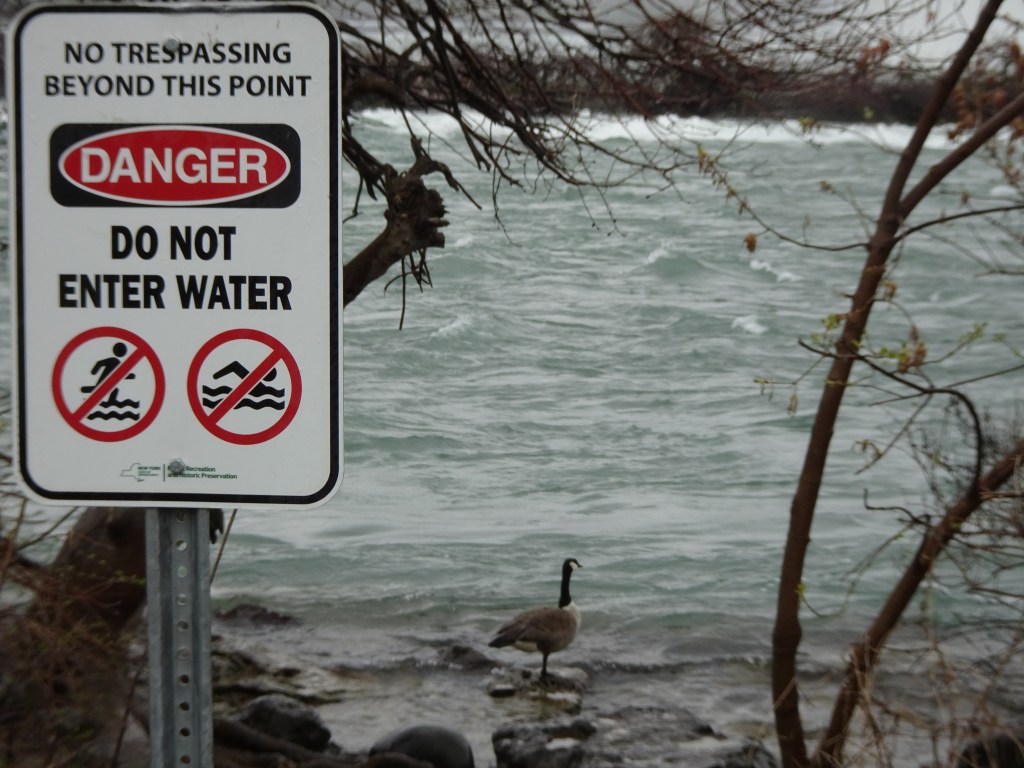
Yes, the waterfalls are impressive. For me, however, the walk alongside the rapids of the Niagara River, just upstream from the steep, drop moved me in a way that the thundering cascade of water did not. I felt shaken as we strode past the fast flowing water smashing against the rocky approach to the famous landmark.

A footpath follows the river’s shoreline upstream. The velocity of the water increases dramatically the closer it gets to Horseshoe Falls, with its massive (166 foot or so) drop from the top to the boiling cauldron below. Additional paved walking paths traverse Goat Island and wend their way through the woodlands of this distinctive state park.
For us, the American Falls and Bridal Veil Falls must wait for another trip. As it turned out, stopping at the American side of the Canadian Falls in Niagara Falls was a memorable experience. We’ll just have to go back. Happy trails!

Marjorie
 Marjorie Turner Hollman