
Marjorie Turner Hollman is a writer who loves the outdoors. Link to all Marjorie’s books.
LISTEN HERE:
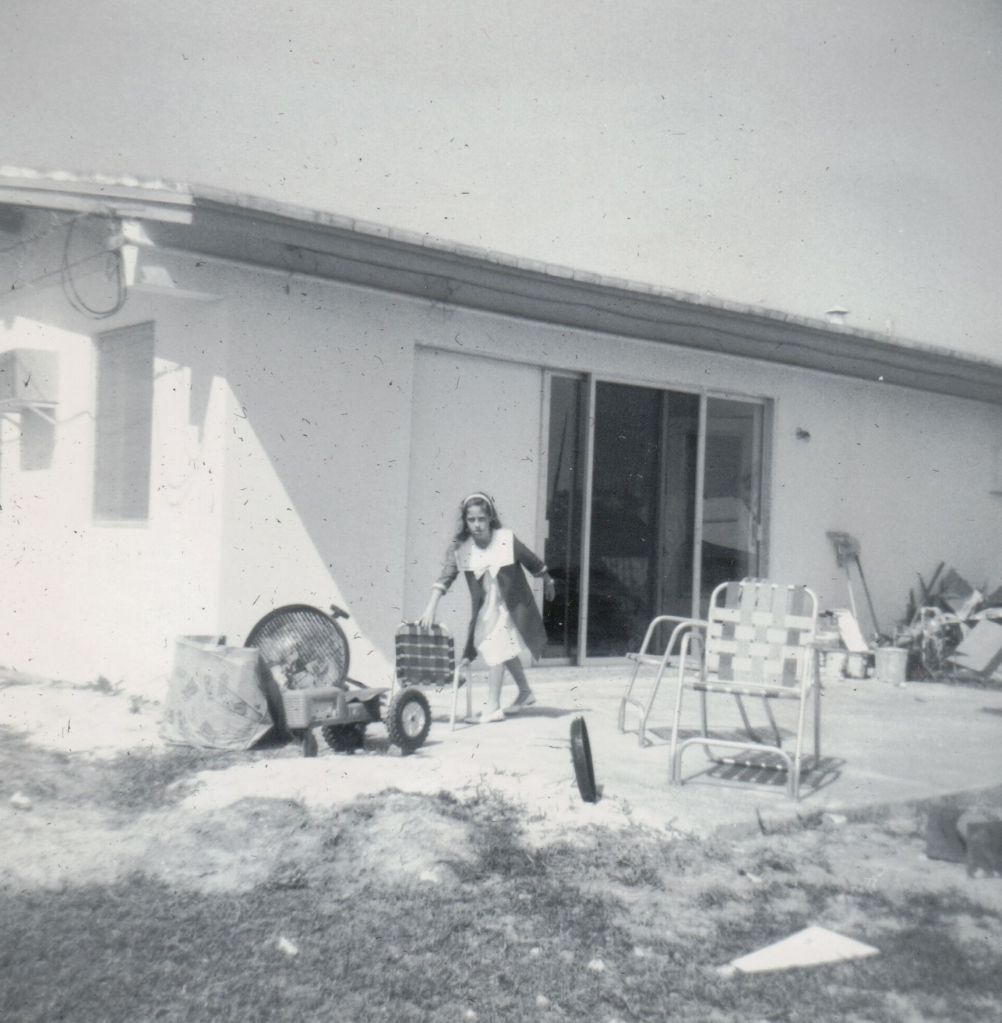
The following is my response to an exercise often suggested for groups looking to learn to tell stories. “I don’t have stories to tell” is a frequent reply. Despite resistance, participants are encouraged to simply describe a room (or two in this case) in a house where you spent a lot of time growing up. If this sounds like fun, try it! I’d love to hear what you came up with. MTH
Our house was built on land that had once been part of the Everglades. To drain the area, ditches were carved out to create buildable property for newcomers to the area. One of those ditches was in our back yard. It became a source of endless entertainment, much to our parents’ chagrin.

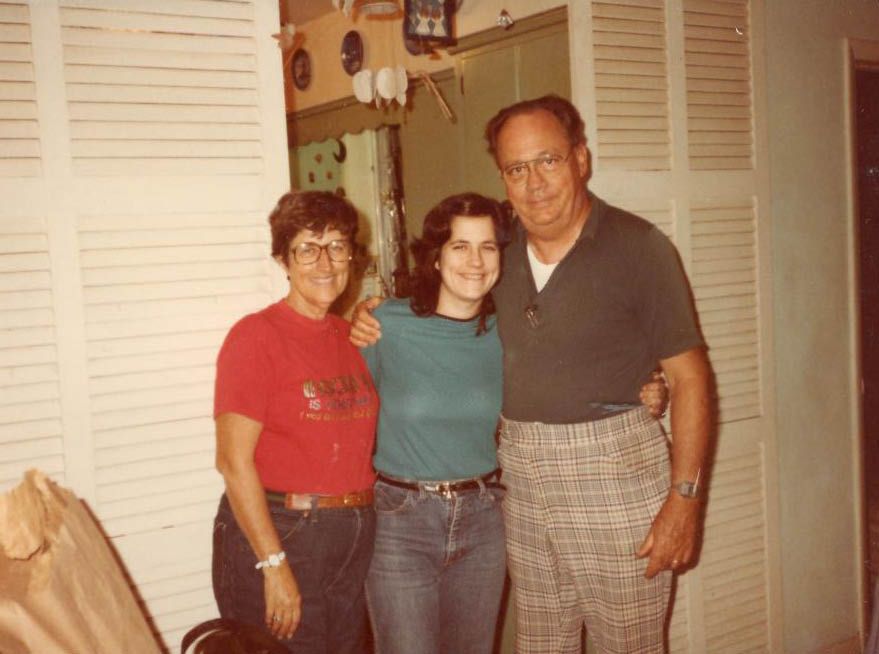
In a corner stood a 50 gallon fish tank. It was never filled with anything very exotic, mostly minnows, former residents of the drainage ditch at the back of our house. We used small nets to retrieve them after rain storms when the small canal filled with water. Pollywogs, in season, (also found in the ditch), swam about in the fish tank until they slowly became frogs, much to our delight. Were there crayfish? Perhaps. The bubbling air filter shaped like a jelly fish slowly undulated with the rhythm of the air bubbles.

The fish tank was at eye level, so I could watch the critters skitter about, up and down, around and around, and occasionally upside down. The upside down ones were dead. My memory fails me when called upon to state what happened to the deceased. I feel sure we did not flush them down the toilet. I read about solemn ceremonies in bathrooms after which these fishy pets were sent to their watery graves. We never pulled off anything so stately. We probably tossed the dead fish back into the ditch and that was that.

My father’s green reading chair was next to the fish tank. An overflowing magazine rack stood on the other side of his chair. The living room in my parents’ house in South Florida was always painted green. Repainted many times, but always green. “Any color as long as it’s green,” he would say.
A tall floor lamp stood next to where Dad sat, providing light when needed. The lamp had moved from my Grannie Kuhl’s house to ours after she died. The base was of wrought iron similar to Grandma Dado’s Grandmother clock, and had a donut of marble that anchored the base. A metal shaft emerged from the marble, supporting the lampshade and light bulbs.

Not so apparent was that the lamp offered diversion for bored children. Three separate bulbs were mounted underneath the lampshade. Twist the switch once and a light bulb glowed. Again and a second turned on. Once more and the third joined the other two. If we kept twisting the knob, with effort (and speed) a kaleidoscope effect was achieved, making me quite dizzy.
The television stood against another wall. It was often on but the sound was turned off. If someone noticed something intriguing they would run over, turn it up and try to figure out what happening. This practice, rather than satisfying our curiosity, often launched a series of speculations about the reason for reporting an event at that moment. This often proved more entertaining than whatever might have been showing on the TV right then.
The rug in my parents’ living room held an odd fascination for me. Not wall to wall or shag, it was a large area rug made of wool; thick, with a stiff texture. When brushed one direction it took on a light shade of brown. Smoothed the other direction it revealed a darker brown color. When company was coming my mother often tasked me with vacuuming the living room. I readily agreed since it gave me the chance to groom the rug into a single shade. Magic! The true purpose of using a vacuum, however, eluded me for longer than you might think.

The couch was the largest piece of furniture in the living room. Whatever couch we had was almost always a pullout sofa bed. I liked this since it meant we had a place for friends, relatives, and others passing through to stay with us. I loved having company.
The couch was almost always green. My parents recovered it many times. I marveled when it appeared, reupholstered, when we got up in the morning. My parents must have put in some very late nights to insure we kids did not interfere in a half-finished project of this scope. At the time it felt magical that the couch could be spruced up overnight with new fabric, so I never questioned how it had happened.
The bunk bed room, oddly enough, had bunk beds, one atop the other, with a ladder and a large wooden, removable guardrail for the upper bed. The beds were arranged so the mattresses rested directly on wooden slats which kept them (theoretically) in place.
I shared the room with my older brother. He agreed that I should take the upper bunk, but when he was bored he lay on his back, braced his feet on one of end of the upper mattress and kicked the bed (with me on it) into the air. It seemed to be great fun for him. I think it was fun for me. My most vivid memory was being tossed about and worrying that the slats would come out and I (with the mattress) would come crashing down on him. This never happened. He took risks, but they were calculated ones. He still does.
The rug in that room had dragons that swirled about from one edge to the other. While it was beautiful, a work of art, its best feature was that it was provided a good surface for my brother and me to play marbles. Circular patterns created by soaring dragons offered perfect boundaries for our games. We spent hours flicking marbles back and forth across the rug, like an indoor croquet game (without the wickets or mallets). We also used the space for examining and trading these colorful balls of glass.
The rug was textured, so marbles did not go skittering off unless they were pushed. If, however, they did roll off the rug they hit the cold, hard terrazzo floor. Neither the marbles nor the terrazzo chipped or broke upon impact but the round projectiles sped under the bed, the dresser, the sewing machine or the worst, the closet. The folding closet doors were set just high enough off the floor that objects that slid under them was never seen again. We worked hard to keep the marbles on the rug.

This room also held my mother’s sewing machine. She began teaching me to sew when I was in 5th grade. My first project was a dress, called a “shift.” The shapeless, sleeveless dress had no darts and no tricky sleeves. Mom invited me to choose the fabric but I had no sense that the beautiful patterned fabric might look quite different when transformed into clothing. Since that first sewing project I have learned that solid colors, or small prints, make for more attractive garments. On that first trip to the fabric store I was dazzled by all the colorful choices. The bolt of fabric with black and white swirls caught my eye. Mom never flinched. She had strong convictions about children being allowed to make their own choices and mistakes.
The tricky collar required some help from Mom, and I cheerfully handed over the hand-sewing to her too. Filling bobbins with thread was a skill that eluded me until later, when I took a Home Ec. class in 9th grade.
I loved what we came to call my hurricane dress. It slid over my head like a comfortable sack. I told anyone who would listen that I had made it (mostly) all by myself.
It took me years to grasp that sewing a garment could take less than three weeks. That’s what it always took when I needed Mom’s assistance. Friends would start a sewing project and have it finished by the end of the day. I was amazed. My own projects were completed at the pace my mother had set, squeezed in between all the other demands of her life raising five children. Fabric store one day. Cut out the pattern another day. Sew several seams until interrupted. Put off the fitted sleeves till another time. Hand-sewing could take a week to complete. Getting out the ironing board was a whole other production. I didn’t realize how much time could be saved by keeping the ironing board out from the beginning to smooth the path to finishing that tricky collar.
The biggest barrier to getting a sewing project started was picking a time when the dining room table was unoccupied and clear of other projects so we could lay the fabric out on it. The sewing machine was in the bunk bed room, but a sewing project had repercussions throughout the house. Initiating sewing projects required strategic planning.
I always took for granted the fitted bedspreads and matching curtains we had in each bedroom of our house. My mother always seemed to be making new curtains or bedspreads for one room or another. The Florida sun fades fabric. We children were rough on every part of the house we grew up in. Mom worked hard to create a home that felt cared for. She squeezed in trips to the fabric store in between meals, leading Girl Scout troops, volunteering at church, running errands and more. Getting up to use the bathroom in what felt like the middle of the night, I was often surprised to find her ironing. When asked, she responded, “It’s the only time I have the house to myself.”
I never understood this until I had my own kids. And now, I look back, and grasp what she always warned me about. She insisted, “Never wake sleeping babies.” Although I ignored plenty of her advice, on this point, I knew she was absolutely right.
Marjorie

 Marjorie Turner Hollman